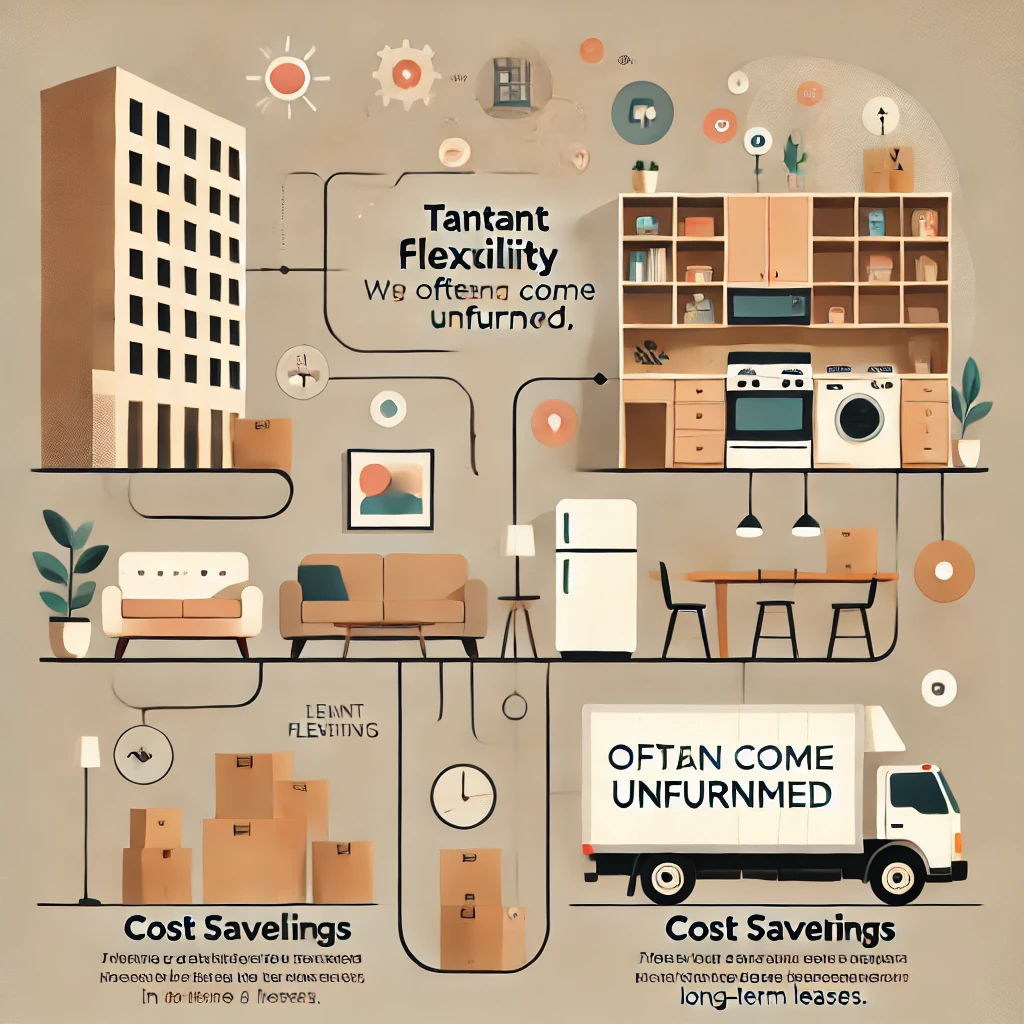
Why Do Apartments in the US Come Unfurnished?
In the United States, the majority of rental apartments come unfurnished, meaning they do not include furniture like beds, sofas, tables, or chairs. While this may seem unusual to renters from other countries where furnished apartments are more common, there are several cultural, economic, and practical reasons why unfurnished apartments are the norm in the US. Here’s an in-depth look at why most apartments in the US are rented without furniture.
1. Tenant Flexibility and Personalization
One of the main reasons apartments in the US are typically unfurnished is to give tenants more freedom to personalize their living space.
- Personal Preferences: Renters in the US often prefer to furnish their homes according to their own style and needs.
- Example: A tenant may want to choose furniture that reflects their taste or matches their budget.
- Long-Term Commitment: Many renters in the US stay in their apartments for extended periods, making it practical for them to invest in their own furniture.
Why It Matters: Unfurnished apartments allow tenants to create a space that feels like home, tailored to their individual preferences.
2. Lower Rent Costs
Unfurnished apartments generally come with lower rent costs compared to furnished units.
- Landlord Expenses: Providing furniture adds upfront costs for landlords, who then pass those costs onto tenants in the form of higher rent.
- Tenant Savings: Renting an unfurnished apartment allows tenants to save money on monthly rent, even if they need to purchase furniture.
Why It Matters: Many renters in the US prioritize affordability, making unfurnished apartments a more attractive option.
3. Furniture as a Long-Term Investment
In the US, furniture is often seen as a long-term investment that people take with them from home to home.
- Cultural Norms: It’s common for renters to own their own furniture and move it to their next apartment when they relocate.
- Mobility: Unlike furnished apartments, which often include generic or lower-quality furniture, purchasing your own items allows you to choose durable, high-quality pieces that can last for years.
Why It Matters: Owning furniture gives tenants control over their belongings and allows them to reuse the same items in future homes.
4. Higher Tenant Turnover in Furnished Units
Furnished apartments tend to attract short-term renters, such as students, business travelers, or temporary workers.
- Short-Term Leases: People looking for a furnished apartment typically need it for a shorter duration, such as a few months.
- Increased Wear and Tear: Frequent tenant turnover can lead to more wear and tear on the furniture, increasing maintenance costs for landlords.
Why It Matters: Landlords who rent out unfurnished apartments often attract long-term tenants, reducing turnover and associated costs.
5. Storage and Maintenance Issues for Landlords
Providing furniture creates logistical challenges for landlords, which many prefer to avoid.
- Storage Needs: Landlords must store furniture that is removed or replaced when tenants bring their own items.
- Maintenance Responsibilities: Furnished apartments require landlords to repair or replace damaged furniture, adding to their expenses and workload.
- Furniture Depreciation: Furniture loses value over time, making it less cost-effective for landlords to include it in rentals.
Why It Matters: Unfurnished apartments simplify property management for landlords and eliminate the need for furniture upkeep.
6. Cultural Expectations in the US
In the US, renting an unfurnished apartment is considered the standard practice, especially for long-term leases.
- Norms for Adults: Many Americans view furnishing an apartment as part of becoming independent, especially for young adults moving out on their own for the first time.
- Focus on Stability: Renting an unfurnished apartment is often associated with a sense of permanence and stability, compared to furnished rentals, which are more common for short-term stays.
Why It Matters: The cultural expectation of renting unfurnished apartments has made it the default in the US housing market.
7. Furnished Apartments Are a Niche Market
While unfurnished apartments dominate the rental market, furnished units are available for specific groups of renters.
- Target Audience:
- Corporate housing for business travelers.
- Temporary housing for students, interns, or expatriates.
- Vacation rentals like Airbnb.
- Higher Rent: Furnished apartments cater to short-term renters and typically charge a premium for the convenience of not needing to buy or move furniture.
Why It Matters: Furnished apartments serve a niche market but are not practical for most long-term renters.
8. Ease of Moving Furniture in the US
Moving furniture is relatively easy and affordable in the US compared to some other countries.
- Availability of Moving Services: The US has a wide range of affordable moving companies, truck rentals (e.g., U-Haul), and professional movers.
- Storage Options: Self-storage facilities are widely available and affordable, making it easy for renters to store extra furniture during transitions.
Why It Matters: The accessibility of moving and storage services makes owning and transporting furniture more feasible for American renters.
9. Economic Incentives for Landlords
Renting unfurnished apartments can be more financially advantageous for landlords.
- Lower Initial Investment: Landlords don’t need to spend money on purchasing furniture, which reduces their upfront costs.
- Reduced Liability: Without furniture, landlords are not responsible for damages or repairs related to wear and tear on furnishings.
- Attracting Long-Term Tenants: Unfurnished apartments are more appealing to tenants looking for long-term leases, which provides stable income for landlords.
Why It Matters: Landlords prioritize financial efficiency and reduced risks, which makes unfurnished rentals a better business decision.
10. Flexibility for Renters
Unfurnished apartments offer renters the flexibility to furnish their space in a way that suits their needs.
- Variety of Budgets: Renters can choose furniture that fits their budget, from affordable secondhand pieces to high-end options.
- Customizable Space: Tenants can design their home to reflect their personality and lifestyle.
- No Restrictions: Renting an unfurnished apartment means tenants don’t need to worry about potential damage to the landlord’s furniture or being held responsible for its condition.
Why It Matters: Flexibility is a key benefit for renters who want to make their space truly their own.
Final Thoughts
Apartments in the US are typically rented unfurnished due to cultural preferences, economic incentives for landlords, and the practicality of giving tenants flexibility and control over their living spaces. While furnished apartments are available for short-term renters or specific needs, the unfurnished rental model aligns better with the long-term rental culture in the US. Whether you’re renting your first apartment or relocating to a new city, understanding these factors can help you plan your move and budget accordingly.
For more tips on improving your photography and editing skills, check out helpful guides to take your selfies to the next level.
Добавить комментарий