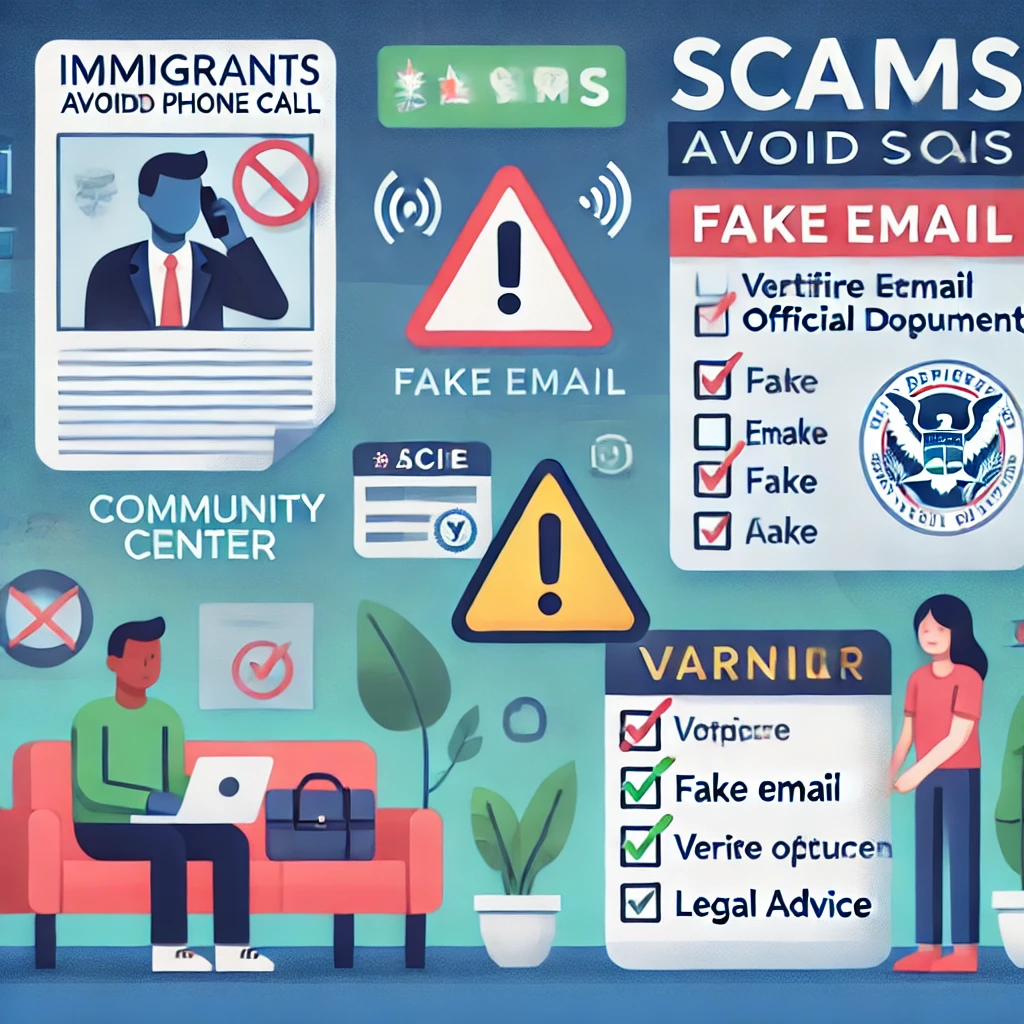
How to Avoid Scams Targeting Immigrants in the US
Immigrants in the US are often targeted by scammers who exploit their lack of familiarity with the system, language barriers, and fear of legal consequences. These scams can lead to financial losses, identity theft, or even jeopardizing immigration status. By learning about common schemes and taking preventive steps, immigrants can better protect themselves from fraud. Here’s how to avoid scams targeting immigrants in the US.
1. Understand Common Immigration Scams
1. Fake Immigration Officials
- Scammers impersonate officials from USCIS (US Citizenship and Immigration Services) or ICE (Immigration and Customs Enforcement).
- How It Works:
- Scammers may call, email, or visit you, claiming your visa, green card, or citizenship status is in jeopardy.
- They demand immediate payment or personal information to “fix” the issue.
- Red Flag: Legitimate immigration officials never demand payment over the phone or through unsolicited emails.
2. Notario Fraud
- Scammers posing as “notarios” (notaries) offer to assist with immigration paperwork.
- How It Works:
- They claim to be qualified to provide legal services but lack the credentials to practice immigration law in the US.
- They charge high fees and may submit incomplete or fraudulent applications.
- Red Flag: In the US, notaries are not authorized to provide legal advice—only licensed immigration attorneys or accredited representatives can do so.
3. Job Offer Scams
- Scammers promise jobs or visas in exchange for upfront fees.
- How It Works:
- Victims pay for fake job placements or sponsorships that don’t exist.
- Scammers may also steal personal information for identity theft.
- Red Flag: Legitimate employers don’t charge fees for job placement or visa sponsorship.
4. Lottery or Green Card Scams
- Scammers falsely claim you’ve won a visa lottery or green card.
- How It Works:
- They demand payment to process your “prize.”
- Red Flag: The official Diversity Visa Lottery is free to enter, and winners are notified through the official government website, not email or phone.
2. Verify the Identity of Officials
If someone claims to be a government official:
- Check Caller ID: USCIS and ICE do not call or email people to demand payment.
- Ask for Verification: Request the official’s name, title, and contact information, then call the agency directly to confirm their identity.
- Government Websites: Use official websites like uscis.gov to verify information.
Tip: Be cautious of anyone pressuring you to act immediately—this is often a sign of a scam.
3. Work Only with Trusted Legal Representatives
Immigration law is complex, and scammers often pose as professionals to exploit immigrants.
- Hire Licensed Attorneys: Ensure your lawyer is licensed to practice immigration law in the US. You can verify their credentials through your state bar association.
- Use Accredited Representatives: Organizations recognized by the Department of Justice (DOJ) provide affordable legal services. Find a list of accredited representatives here.
- Avoid “Notarios” or Unlicensed Consultants: Notaries in the US are not authorized to provide legal advice or represent you in immigration matters.
Tip: If you need free or low-cost legal help, look for nonprofit organizations like Catholic Charities or the American Immigration Lawyers Association (AILA).
4. Beware of Unsolicited Communication
Scammers often contact immigrants unexpectedly, claiming to represent official agencies.
- Avoid Suspicious Calls:
- Government agencies like USCIS do not make unsolicited calls requesting money or personal information.
- Hang up immediately if someone threatens deportation or demands payment over the phone.
- Ignore Unofficial Emails:
- Scammers use fake emails that mimic official domains.
- Check for typos, generic greetings (e.g., “Dear Sir/Madam”), and requests for sensitive information.
- Never Share Personal Information: Avoid providing your Social Security number, alien registration number, or financial details unless you’re certain of the recipient’s legitimacy.
Tip: If you receive a suspicious call or email, report it to the Federal Trade Commission (FTC) at ReportFraud.ftc.gov.
5. Be Cautious with Payments
Scammers often demand money in specific, untraceable ways.
- Avoid Unusual Payment Methods:
- Scammers may ask for payment via gift cards, wire transfers, cryptocurrency, or cash.
- Legitimate agencies never request payment in these forms.
- Pay Through Official Channels:
- USCIS fees are paid through uscis.gov or via checks/money orders sent to official addresses.
- Always get a receipt for any payment made.
Tip: If someone pressures you to make a payment immediately, it’s likely a scam.
6. Educate Yourself About Immigration Processes
Knowledge is your best defense against scams.
- Understand the Process: Familiarize yourself with how visas, green cards, and naturalization applications work through official government websites like uscis.gov.
- Know the Fees: Review the official fee schedule for immigration forms to avoid overpaying.
- Track Your Case: Use the USCIS online case status tool to monitor your application’s progress directly.
Tip: Scammers rely on confusion and misinformation, so the more you know, the harder it is for them to take advantage of you.
7. Watch for Red Flags in Job Offers
Employment scams are common among immigrants seeking work or sponsorship.
- Beware of Fees: Legitimate employers do not charge for job placements or visa processing.
- Verify the Employer: Research the company online and confirm the job offer is real.
- Avoid Pressure: Be cautious if the offer seems too good to be true or if the employer pressures you to act quickly.
Tip: Use trusted job boards and networks to search for employment opportunities.
8. Report Scams Immediately
If you believe you’ve been targeted by a scam, report it as soon as possible to prevent further harm.
- Federal Trade Commission (FTC): File a report at ReportFraud.ftc.gov.
- USCIS Tip Line: Report immigration scams at 1-800-375-5283 or through USCIS’s online form.
- Local Authorities: Contact your local police department to report fraud or threats.
- Nonprofit Organizations: Seek help from immigrant advocacy groups for guidance and support.
Why It Matters: Reporting scams not only protects you but also helps authorities take action against fraudsters targeting others.
9. Build a Support Network
Scammers often target isolated individuals who lack a support system.
- Join Immigrant Communities: Connect with others through local cultural organizations, religious groups, or community centers.
- Seek Advice: Trusted friends or mentors who have gone through the immigration process can offer valuable guidance.
- Educate Your Family: Make sure everyone in your household understands how to recognize and avoid scams.
Tip: A strong support network can help you identify potential scams and provide resources for legal and financial issues.
Final Thoughts
Immigrants in the US are often targeted by scammers who exploit fear, confusion, and lack of experience with the system. By staying informed, verifying communication, and relying on trusted legal representatives, you can protect yourself and your family from falling victim to fraud. Remember, if something feels suspicious or too good to be true, it probably is. Take your time, ask questions, and always verify information before taking action.
For more tips on improving your photography and editing skills, check out helpful guides to take your selfies to the next level.
Добавить комментарий