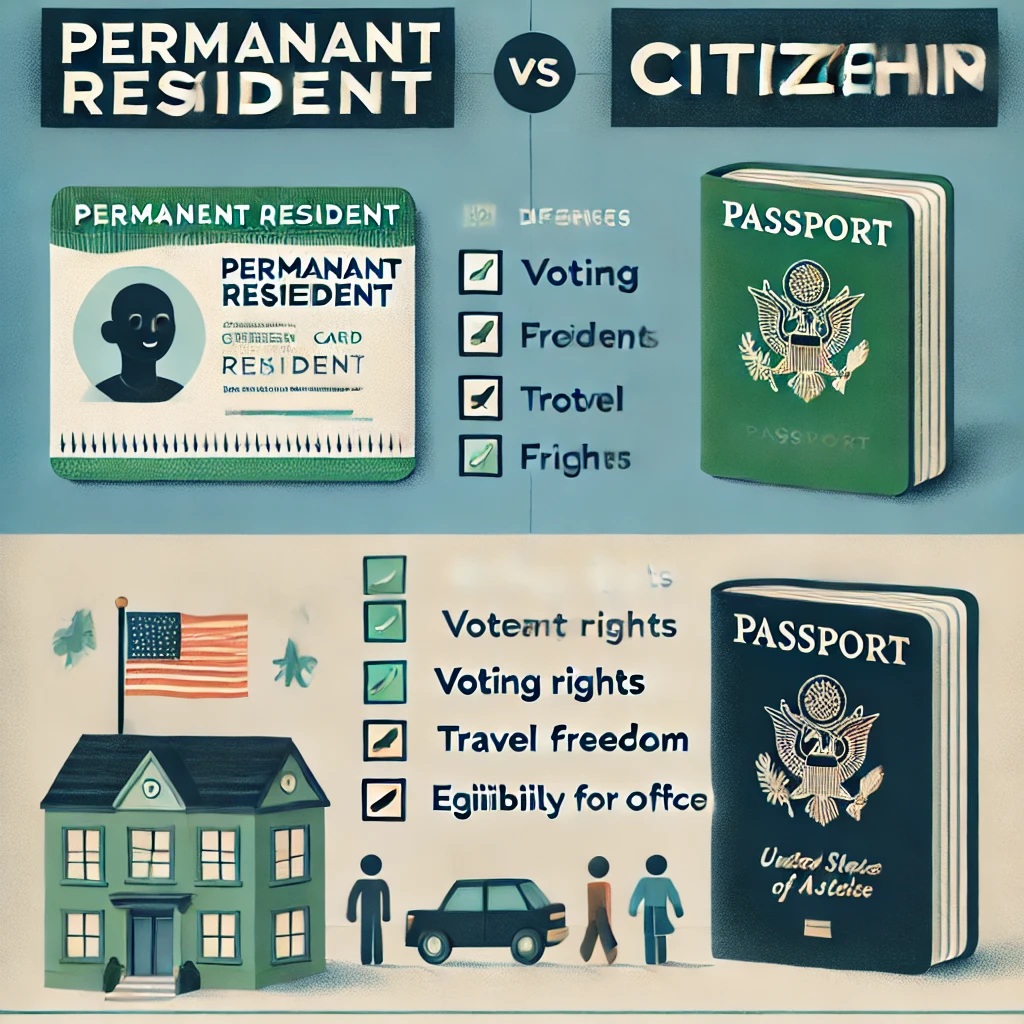
What’s the Difference Between Permanent Residency and Citizenship?
The terms permanent residency and citizenship are often used when discussing immigration status, but they represent two very different legal standings in the United States. While both offer rights and benefits, they come with distinct responsibilities, privileges, and limitations. Here’s a breakdown of the key differences between permanent residency and citizenship to help you better understand each status.
1. Definition
Permanent Residency (Green Card Holder):
Permanent residency allows individuals to live and work in the United States indefinitely.
- Document: Green Card (officially called a Permanent Resident Card).
- Status: You remain a citizen of your home country but have the legal right to reside in the US.
Citizenship (US Citizen):
Citizenship is the highest immigration status in the United States, granting full rights and responsibilities as a member of the country.
- Document: US Passport and Certificate of Naturalization (if you became a citizen through naturalization).
- Status: You are a full-fledged member of the United States and no longer rely on immigration documents for your legal status.
2. How It’s Obtained
Permanent Residency:
- Family Sponsorship: A US citizen or permanent resident sponsors you as a family member.
- Employment-Based Green Card: Secured through an employer who sponsors you for a role requiring your skills.
- Refugee or Asylee Status: Granted to those seeking protection due to persecution in their home country.
- Green Card Lottery: Through the Diversity Visa Lottery for individuals from underrepresented countries.
Citizenship:
- Birth: You are automatically a US citizen if born in the United States or to US citizen parents abroad.
- Naturalization: Eligible permanent residents can apply for citizenship after meeting certain requirements:
- 5 years as a permanent resident (or 3 years if married to a US citizen).
- Continuous residence and physical presence in the US.
- Pass the English and Civics tests.
- Demonstrate good moral character.
3. Legal Rights and Privileges
Permanent Residents:
- Can:
- Live, work, and study in the US indefinitely.
- Own property.
- Apply for Social Security and Medicare benefits once eligible.
- Sponsor close family members (spouse and unmarried children) for green cards.
- Cannot:
- Vote in federal elections.
- Run for public office.
- Hold certain government jobs requiring US citizenship (e.g., FBI agent, military officer).
- Apply for a US passport.
Citizens:
- Can:
- Vote in federal, state, and local elections.
- Apply for federal jobs and hold elected office.
- Sponsor family members (spouse, children, parents, siblings) for green cards without numerical caps in some categories.
- Travel freely with a US passport.
- Access full protection under US law and Constitution.
- Cannot:
- Be deported.
4. Responsibilities
Permanent Residents:
- Taxes: Must pay US taxes on worldwide income.
- Immigration Compliance: Maintain permanent residency by:
- Not staying outside the US for more than 6 months without prior arrangements.
- Renewing the green card every 10 years (or earlier if it expires).
- Selective Service Registration: Male residents aged 18–25 must register with Selective Service for potential military drafts.
- Good Conduct: Certain crimes can lead to deportation or loss of residency.
Citizens:
- Taxes: Must pay US taxes on worldwide income (even when living abroad).
- Jury Duty: Required to serve on a jury when summoned.
- Selective Service Registration: Male citizens aged 18–25 must register with Selective Service.
5. Travel Restrictions
Permanent Residents:
- Reentry to the US:
- Can travel abroad but must avoid absences longer than 6 months, as this could lead to a loss of status.
- May need a reentry permit for longer trips (up to 2 years).
- Green Card Requirement: Must carry a valid green card when entering the US.
Citizens:
- Reentry to the US:
- No restrictions on travel length.
- Use a US passport for international travel.
Key Difference: Citizens have far more flexibility when traveling abroad, while permanent residents must carefully monitor their time outside the US.
6. Risk of Deportation
Permanent Residents:
- Deportation Risk: Green card holders can be deported for certain crimes, such as drug offenses, fraud, or other felonies.
- Maintenance of Status: Must meet residency requirements and avoid abandonment of status (e.g., living outside the US for extended periods without permission).
Citizens:
- No Deportation: Once you become a US citizen, you cannot be deported (unless citizenship was fraudulently obtained).
Key Difference: Citizenship provides more security and permanence compared to permanent residency.
7. Cost
Permanent Residency:
- Costs for green cards vary depending on the category:
- Family-sponsored green card: $1,200–$1,760 (including filing and biometrics fees).
- Employment-based green card: Costs are often higher due to employer-sponsored paperwork and legal fees.
Citizenship:
- Application for naturalization (Form N-400): $725 (as of 2025).
- Citizenship is often seen as the final step after permanent residency.
Tip: While the upfront cost of citizenship is lower, the green card process often involves higher expenses initially.
8. Duration of Status
Permanent Residents:
- Indefinite Residency: Green card holders can live in the US indefinitely, provided they meet requirements.
- Renewals: Green cards must be renewed every 10 years.
Citizens:
- Permanent Status: Citizenship is for life and does not need to be renewed.
Key Difference: Citizenship is permanent, while permanent residency requires occasional renewals and adherence to residency rules.
Final Thoughts
The main difference between permanent residency and citizenship lies in the level of security, rights, and responsibilities they provide. While green card holders enjoy many benefits, citizenship offers the highest level of stability, protection, and opportunities in the US. If you’re a permanent resident considering naturalization, weigh the advantages of citizenship, such as voting rights, freedom from deportation, and the ability to sponsor more family members for immigration.
For more tips on improving your photography and editing skills, check out helpful guides to take your selfies to the next level.
Добавить комментарий