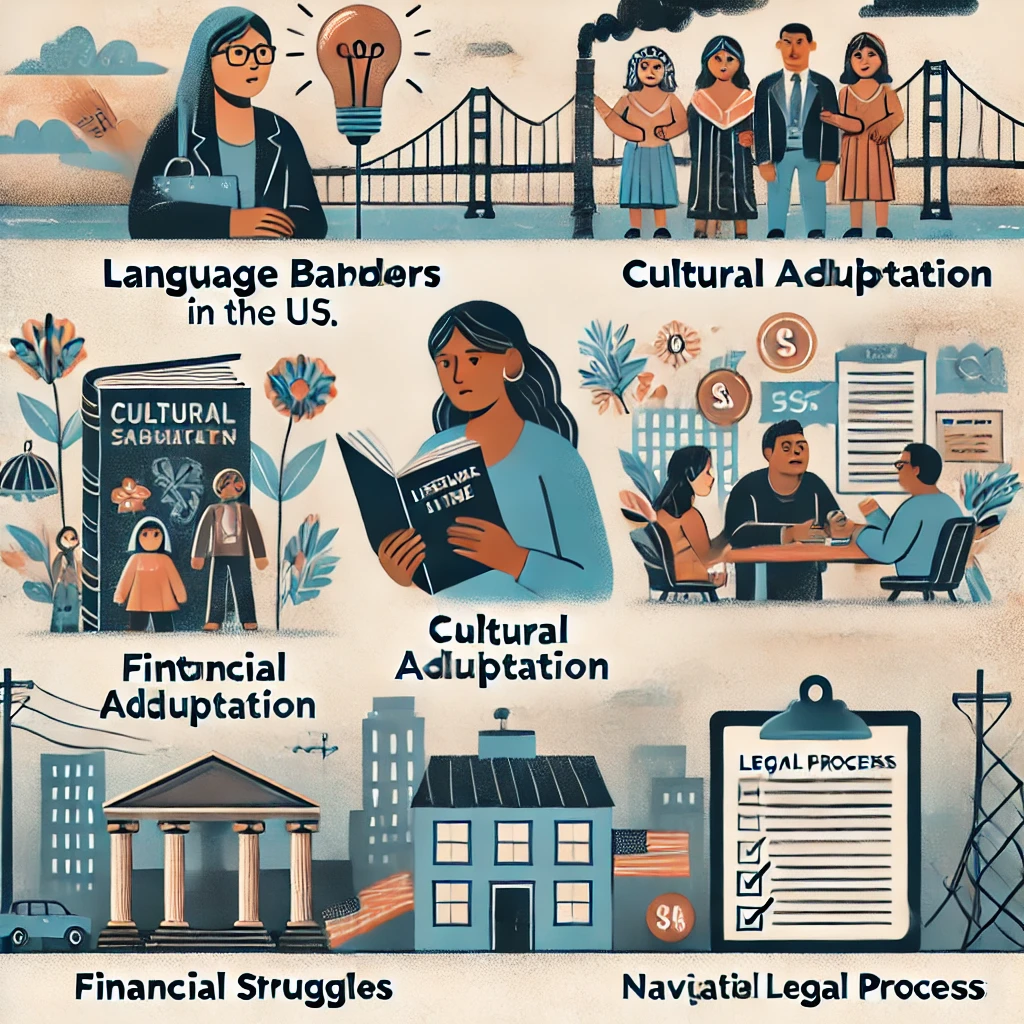
What Are Common Challenges for Immigrants in the US?
Immigrating to the United States is often seen as a path to new opportunities, but the journey comes with significant challenges. Immigrants face a range of obstacles as they navigate a new culture, language, legal system, and financial realities. Understanding these challenges can help both immigrants and their communities work toward solutions that promote integration and success. Here are the most common challenges faced by immigrants in the US.
1. Language Barriers
One of the most immediate and significant challenges for immigrants is the language barrier.
- English Proficiency: Many immigrants arrive in the US without fluency in English, making it difficult to:
- Communicate with employers, schools, and healthcare providers.
- Navigate everyday tasks like grocery shopping or using public transportation.
- Impact on Job Opportunities: Limited English proficiency can restrict access to higher-paying jobs or professional roles.
- Emotional Toll: Difficulty communicating can lead to feelings of isolation and frustration.
Tip: Immigrants can take advantage of free or low-cost English as a Second Language (ESL) programs offered by libraries, community centers, and non-profits.
2. Employment Challenges
Finding stable and well-paying employment is a common hurdle for immigrants.
- Credential Recognition: Immigrants with professional degrees or certifications from their home countries often struggle to have their qualifications recognized in the US.
- Example: A doctor or engineer may need to go through extensive re-certification processes to work in their field.
- Language and Cultural Barriers: Language skills and unfamiliarity with workplace norms can limit job opportunities.
- Undocumented Status: Immigrants without legal status often face exploitation, low wages, and lack of workplace protections.
Tip: Immigrants can explore vocational training programs or community organizations that help with resume building, job placement, and skill development.
3. Cultural Adjustment
Adapting to a new culture can be overwhelming for many immigrants.
- Culture Shock: The differences in customs, traditions, and societal expectations can lead to confusion or feelings of alienation.
- Example: Social norms around gender roles, communication styles, and parenting can differ greatly from an immigrant’s home culture.
- Balancing Identities: Immigrants often struggle to maintain their cultural identity while integrating into American society.
- Generational Gaps: Children of immigrants may adapt more quickly, leading to a cultural divide within families.
Tip: Joining cultural or community organizations can help immigrants stay connected to their heritage while learning about American culture.
4. Legal and Documentation Issues
Navigating the US immigration system is notoriously complex, and many immigrants face challenges related to their legal status.
- Lengthy Processing Times: Immigrants often wait years for green cards, work permits, or citizenship due to backlogs in the immigration system.
- Undocumented Status: Without legal status, immigrants may face constant fear of deportation, limited access to healthcare, and difficulty finding stable employment.
- Complex Paperwork: Immigration forms and processes are complicated, often requiring professional assistance that can be expensive.
Tip: Seek legal help from reputable organizations like the American Immigration Lawyers Association (AILA) or local non-profits offering free or low-cost legal aid.
5. Financial Hardships
Many immigrants face financial challenges as they start over in a new country.
- Low-Paying Jobs: Immigrants often begin with low-paying jobs that don’t align with their qualifications or experience.
- High Cost of Living: Expenses like housing, healthcare, and childcare can be overwhelming, especially in urban areas.
- Limited Credit History: Immigrants may struggle to access loans or credit due to lack of credit history in the US.
- Remittances: Many immigrants send money back to family in their home countries, further straining their finances.
Tip: Community organizations and financial literacy programs can help immigrants create budgets, build credit, and access affordable services.
6. Discrimination and Prejudice
Discrimination remains a significant issue for many immigrants in the US.
- Racial and Ethnic Bias: Immigrants from certain countries or ethnic backgrounds may face racism and xenophobia.
- Stereotyping: Immigrants are sometimes unfairly labeled as «taking jobs» or «not assimilating.»
- Workplace Discrimination: Some immigrants face unequal treatment or harassment in their jobs due to their accent, nationality, or legal status.
Tip: Report instances of discrimination to organizations like the Equal Employment Opportunity Commission (EEOC) or advocacy groups.
7. Access to Healthcare
Healthcare is often inaccessible or unaffordable for immigrants.
- Legal Barriers: Undocumented immigrants and even some legal residents are excluded from federal healthcare programs like Medicaid or the Affordable Care Act (ACA) marketplace.
- High Costs: Without insurance, medical expenses can be financially crippling.
- Language and Cultural Barriers: Limited English proficiency or unfamiliarity with the US healthcare system can make accessing care difficult.
Tip: Look for free or low-cost clinics in your area, such as Federally Qualified Health Centers (FQHCs) or community health clinics.
8. Educational Barriers
For immigrant children and adults, education can be both a challenge and an opportunity.
- Language Learning: Immigrant children may struggle to keep up in school due to limited English proficiency.
- System Differences: Parents may be unfamiliar with the US education system, making it harder to support their children’s learning.
- Higher Education Challenges: Immigrant students, particularly undocumented ones, face difficulties accessing financial aid or in-state tuition.
Tip: Many schools offer English language learning (ELL) programs and parent engagement workshops to help immigrant families adjust.
9. Social Isolation and Mental Health
Immigrants often face emotional and psychological challenges as they adjust to life in a new country.
- Loneliness: Being far from family and friends can lead to isolation.
- Stress and Anxiety: Fear of deportation, financial insecurity, or cultural adjustment can take a toll on mental health.
- Stigma Around Mental Health: Cultural stigma may prevent some immigrants from seeking help.
Tip: Seek support through local immigrant support groups or organizations that provide culturally sensitive mental health services.
10. Housing Challenges
Finding affordable and stable housing is a major hurdle for many immigrants.
- High Rent Costs: Urban areas, where many immigrants settle, often have expensive rental markets.
- Discrimination: Immigrants may face bias from landlords or difficulty meeting application requirements due to lack of credit history or documentation.
- Overcrowding: Many immigrants live in shared or overcrowded housing to save money.
Tip: Look for non-profits or housing assistance programs that help immigrants secure affordable housing.
11. Family Separation and Reunification Issues
Immigrants often face the emotional strain of being separated from family.
- Long Wait Times for Family Reunification: Visa processing for family members can take years.
- Emotional Toll: Separation from loved ones can lead to feelings of guilt, sadness, and disconnection.
- Difficulty Adapting Together: Once reunited, families may struggle to adjust to new dynamics in a different cultural context.
Tip: Stay connected with family through technology and explore legal options to expedite reunification if possible.
Final Thoughts
Immigrants in the US face a range of challenges, from language barriers and legal complexities to financial struggles and cultural adjustment. Despite these obstacles, many find ways to overcome them through community support, education, and resilience. By understanding and addressing these challenges, we can create a more inclusive environment that helps immigrants thrive in their new home.
For more tips on improving your photography and editing skills, check out helpful guides to take your selfies to the next level.
Добавить комментарий