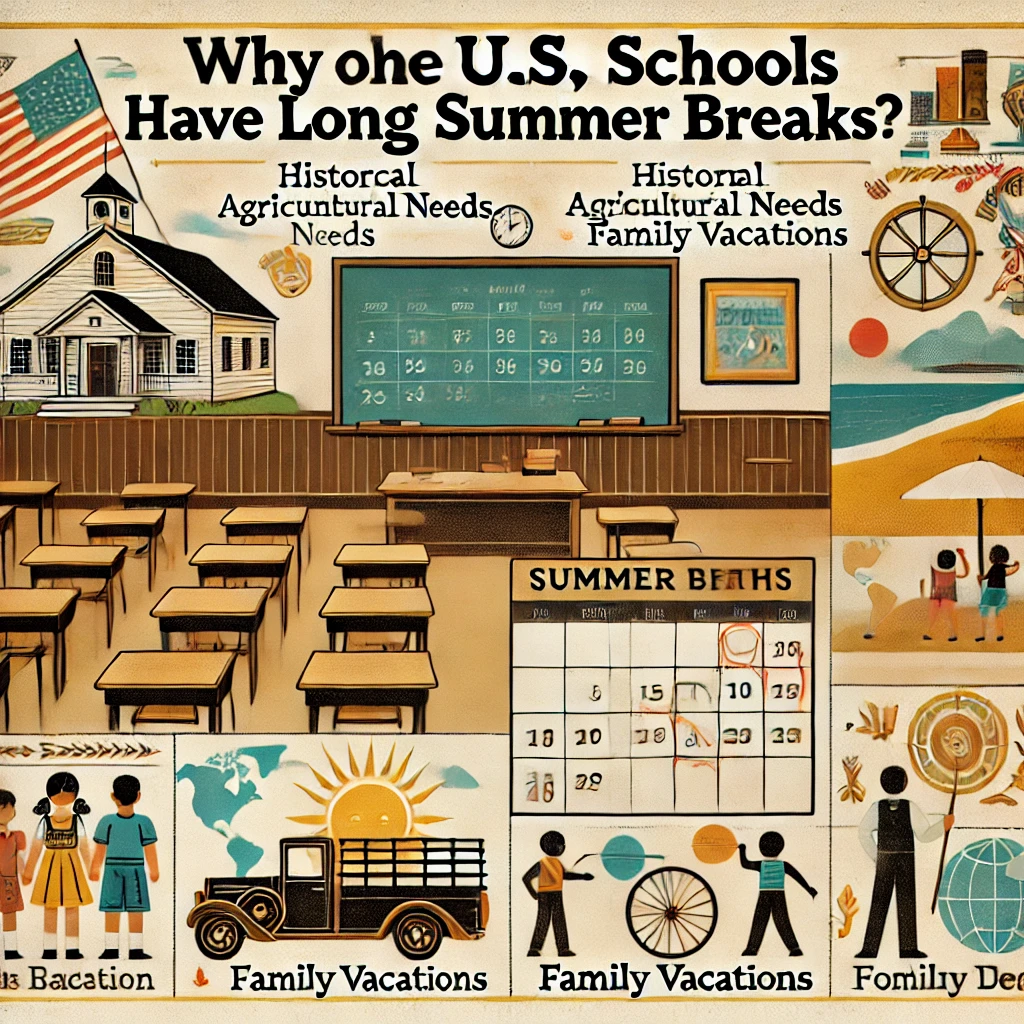
Why Do US Schools Have Long Summer Breaks?
Summer breaks in the United States, typically lasting about 10–12 weeks, are a cherished tradition for students, teachers, and families. However, the origins of these long breaks, as well as their continued prevalence, might leave you wondering why such an extended vacation exists in the first place. The reasons are rooted in history, practicality, and cultural factors. Let’s explore why US schools have long summer breaks.
1. The Myth of the Farming Calendar
Many people believe that long summer breaks originated from an agrarian society, where children needed time off to help with farming tasks. However, this is a myth.
- Agricultural Reality: During the 19th century, farming families often needed children’s help in the spring for planting and fall for harvesting, not in the summer.
- Year-Round Rural Schooling: In fact, rural schools in farming communities often operated on a split calendar, with breaks in spring and fall rather than summer.
2. Origins in Urban Schools
The long summer break we know today actually has its roots in urban areas during the late 19th and early 20th centuries.
- Heat in Urban Schools: Before air conditioning, city schools often closed during the hottest summer months to protect students and teachers from stifling classroom conditions.
- Wealthy Families’ Vacations: Wealthy urban families often left the cities in the summer to escape the heat, leading to decreased school attendance during that period. Schools adopted summer breaks to accommodate this pattern.
3. Standardization of the School Calendar
By the late 19th century, public education in the US began to expand and standardize, leading to the adoption of a uniform school calendar.
- Balancing Urban and Rural Needs: To create consistency, education leaders blended urban summer breaks with rural needs for flexible schedules, resulting in a 9-month school year with a long summer vacation.
- Summer Break Tradition: This calendar became entrenched as the standard, even as society modernized and farming became less central to the economy.
4. Economic and Cultural Reasons
Summer breaks have become a deeply ingrained part of American culture, supported by economic and societal factors:
- Tourism and Recreation: The long summer break supports the tourism industry, as families often plan vacations during this time.
- Summer Camps: Summer camps emerged as a way to keep children occupied and active during the extended break.
- Tradition: Over the years, summer breaks became a cultural norm, with schools, families, and businesses structuring their schedules around the summer months.
5. Breaks for Teachers and Students
The summer break provides much-needed downtime for both students and teachers.
- Avoiding Burnout: The long school year can be mentally and physically draining. Summer allows students and teachers to recharge.
- Opportunity for Professional Development: Teachers often use summer breaks for training, continuing education, or planning for the upcoming year.
- Student Opportunities: Summer offers students time for activities like summer jobs, internships, or travel, which can help them grow outside the classroom.
6. Criticism of Long Summer Breaks
While summer breaks are popular, they have also been criticized for their drawbacks, especially regarding student learning.
- Learning Loss (The “Summer Slide”): Studies have shown that students often lose some of the academic progress they made during the school year, particularly in subjects like math and reading.
- Inequality: Summer learning loss disproportionately affects low-income students who may lack access to enrichment activities like camps, travel, or tutoring.
- Scheduling Challenges: Long breaks can be difficult for working parents, who may struggle to find affordable childcare during the summer months.
7. Alternatives to the Traditional Calendar
In recent years, some schools have explored alternatives to the traditional summer break to address its drawbacks.
- Year-Round Schooling: Under this model, students attend school throughout the year with shorter breaks spread evenly (e.g., a three-week break every quarter).
- Benefits: Reduces summer learning loss and provides more consistent instruction.
- Challenges: May disrupt family traditions and create scheduling conflicts with activities like summer camps.
- Shorter Summer Breaks: Some districts have opted for shorter summer vacations and longer school years to balance rest and learning.
8. International Comparisons
Summer breaks in the US are longer than in many other countries.
- Shorter Breaks Abroad: Countries like Germany, Japan, and South Korea have shorter summer breaks (typically 4–6 weeks) but longer school years.
- Academic Calendar Differences: In many countries, school years are structured to include shorter but more frequent breaks throughout the year.
- Cultural Emphasis on Education: In countries with shorter breaks, there is often a stronger societal emphasis on continuous academic engagement.
9. The Role of Summer Activities
Summer breaks in the US are often filled with structured activities that provide learning opportunities outside the classroom:
- Summer Camps: Camps focus on activities like sports, arts, STEM, or outdoor adventures.
- Internships and Summer Jobs: High school and college students often use summer to gain work experience or save money.
- Family Time: Long summer breaks allow families to spend more time together, travel, or participate in community events.
Final Thoughts
The tradition of long summer breaks in the US stems from a mix of historical, cultural, and practical factors. While it may no longer be tied to its original purpose, the summer break has become a deeply embedded part of American life. However, as debates over educational equity and learning loss continue, alternative school calendars may become more common in the future.
For more insights into education trends and tips for parents, check out helpful guides to navigate school systems effectively.
Добавить комментарий