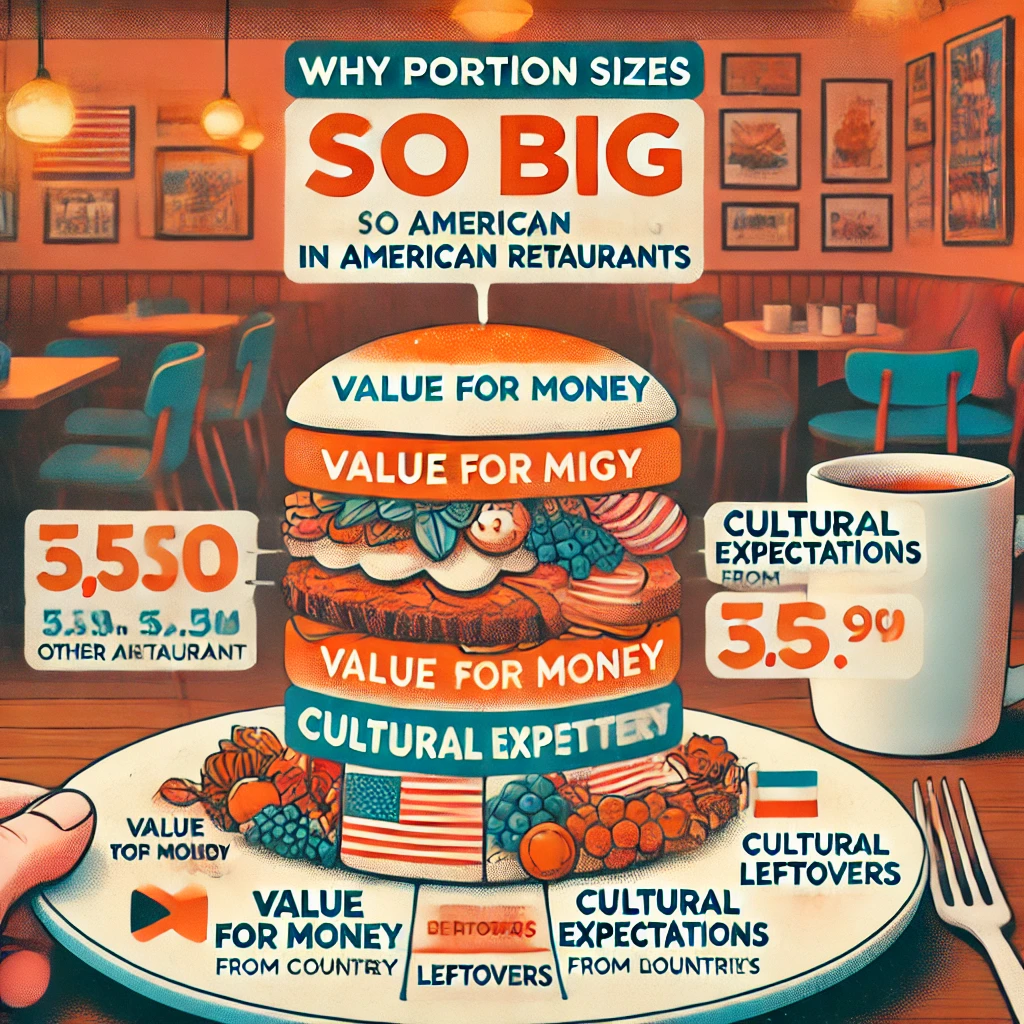
Why Are Portion Sizes So Big in American Restaurants?
If you’ve ever dined out in the United States, you may have noticed that portion sizes are significantly larger compared to those in many other countries. From oversized burgers to heaping plates of pasta, American restaurants often serve meals that can be double—or even triple—the recommended serving size. So why are portion sizes so big in American restaurants? Here’s an exploration of the cultural, economic, and historical factors behind this phenomenon.
1. Cultural Value of «More is Better»
American culture has long associated bigger portions with better value.
- The Bigger, the Better Mentality: In the US, larger portions are often seen as a sign of generosity and abundance.
- Customer Expectations: Many diners equate larger servings with getting more «bang for their buck,» expecting to leave a restaurant feeling full or even with leftovers.
- Food as Entertainment: Dining out is often treated as a special occasion, and big portions add to the indulgence factor.
Why It Matters: This cultural emphasis on size has led restaurants to prioritize large portions to meet consumer expectations.
2. Economic Incentives for Restaurants
Serving larger portions can be a cost-effective strategy for restaurants.
- Low Cost of Ingredients: In many cases, the cost of increasing portion sizes is minimal compared to the perceived value it adds. For example, adding an extra scoop of pasta or fries costs restaurants very little but creates the impression of a more substantial meal.
- High Margins: Larger portions encourage higher prices, which boost profits. Customers are often willing to pay more for what they perceive as a «good deal.»
- Competition: Restaurants compete to attract customers by offering bigger portions, making it a race to serve the most food for the least money.
Why It Matters: Restaurants use portion sizes as a marketing tool to attract and retain customers while maximizing profits.
3. The Rise of Fast Food and Supersizing
Fast food chains played a significant role in normalizing oversized portions in America.
- Supersize Culture: In the 1980s and 1990s, fast food chains like McDonald’s introduced «supersize» options to encourage customers to buy larger meals for a small additional cost.
- Standardization: Fast food portion sizes increased over time, and sit-down restaurants followed suit to remain competitive.
- Normalization of Large Sizes: Over the years, larger portions became the standard, and customers began expecting more food for their money.
Why It Matters: The fast food industry shaped consumer habits, making oversized portions the norm across the restaurant industry.
4. Influence of Industrial Agriculture
America’s industrialized food system supports the production of cheap, high-calorie foods.
- Subsidized Ingredients: Government subsidies for crops like corn, soy, and wheat make processed and calorie-dense foods (e.g., bread, fries, and sugary drinks) inexpensive to produce.
- Caloric Value Over Nutrition: Restaurants can serve large portions of calorie-rich foods without significantly increasing costs, even if these foods lack nutritional value.
- Plentiful Supply: The abundance of food in the US contributes to the mindset that bigger portions are standard.
Why It Matters: The availability of cheap ingredients has made it economically feasible for restaurants to serve oversized portions.
5. Historical and Psychological Factors
Portion sizes have steadily increased over the past several decades due to historical and psychological trends.
- Post-War Abundance: After World War II, the US experienced a period of economic prosperity and agricultural overproduction, which led to larger portions becoming more common.
- Visual Cues: Studies show that people tend to eat more when presented with larger portions, as they rely on the plate size as a cue for how much to consume.
- «Clean Plate Club» Mentality: Many Americans were raised with the idea that they should finish everything on their plate, contributing to overconsumption when portions are large.
Why It Matters: Historical prosperity and psychological factors have reinforced the norm of oversized portions in American dining.
6. Social Dining Norms
Dining out in the US often revolves around sharing, celebrating, or indulging.
- Sharing Plates: Large portions are conducive to sharing meals with friends or family, which aligns with the social aspect of eating out.
- Leftovers Culture: Many Americans expect to take home leftovers, which justifies larger portions. Restaurants often view this as a selling point, as it provides perceived value for the customer.
Why It Matters: Big portions cater to both social dining practices and the cultural preference for leftovers.
7. Consumer Perception of Value
Portion size is directly tied to how customers perceive value.
- Perceived Fairness: Diners expect large portions to match the price they’re paying, even if the meal could be smaller and still satisfying.
- Fear of Leaving Hungry: Many people associate larger portions with avoiding hunger, even if smaller portions would suffice.
- Comparison Shopping: Restaurants serving smaller portions are often seen as overpriced compared to those offering «hearty» meals.
Why It Matters: Restaurants respond to consumer demand for value by increasing portion sizes, even if it leads to overeating.
8. Lack of Regulation on Portion Sizes
Unlike some countries, the US does not regulate portion sizes in restaurants.
- No Standard Serving Sizes: Restaurants have complete freedom to determine portion sizes, leading to oversized servings.
- Contrast with Other Countries: In countries like Japan or France, smaller portion sizes are the cultural norm, and meals are designed to satisfy without excess.
Why It Matters: The lack of regulation or societal norms around portion control has allowed portion sizes in the US to grow unchecked.
9. Caloric Overload and Health Implications
Oversized portions contribute to overconsumption and health issues in the US.
- Excess Calories: Large portions encourage people to eat more than they need, contributing to obesity and related health problems like diabetes and heart disease.
- Distorted Perception: Constant exposure to oversized portions has altered perceptions of what constitutes a «normal» meal, making smaller servings seem inadequate.
- Economic Cost of Healthcare: The health consequences of overeating place a strain on the healthcare system and individuals’ well-being.
Why It Matters: The trend toward large portions has had a lasting impact on public health in the US.
10. Efforts to Combat Oversized Portions
Some organizations and restaurants are beginning to push back against the trend of oversized portions.
- Healthier Menu Options: Many restaurants now offer smaller portion sizes, calorie counts, and healthier alternatives.
- Awareness Campaigns: Public health initiatives encourage portion control and mindful eating to combat obesity.
- Consumer Shifts: As more Americans become health-conscious, there’s a growing demand for appropriately sized portions.
Why It Matters: While large portions are still the norm, there’s a growing movement to prioritize health and balance over quantity.
Final Thoughts
Portion sizes in American restaurants are the result of cultural preferences, economic incentives, and historical trends. While large servings may provide perceived value, they also contribute to overeating and health challenges. As awareness grows about the impact of oversized portions, consumers and restaurants alike may begin to embrace smaller, healthier servings. Until then, mindful eating and sharing meals can help individuals enjoy dining out without overindulging.
For more tips on improving your photography and editing skills, check out helpful guides to take your selfies to the next level.
Добавить комментарий