Why Are Groceries So Expensive in the US?
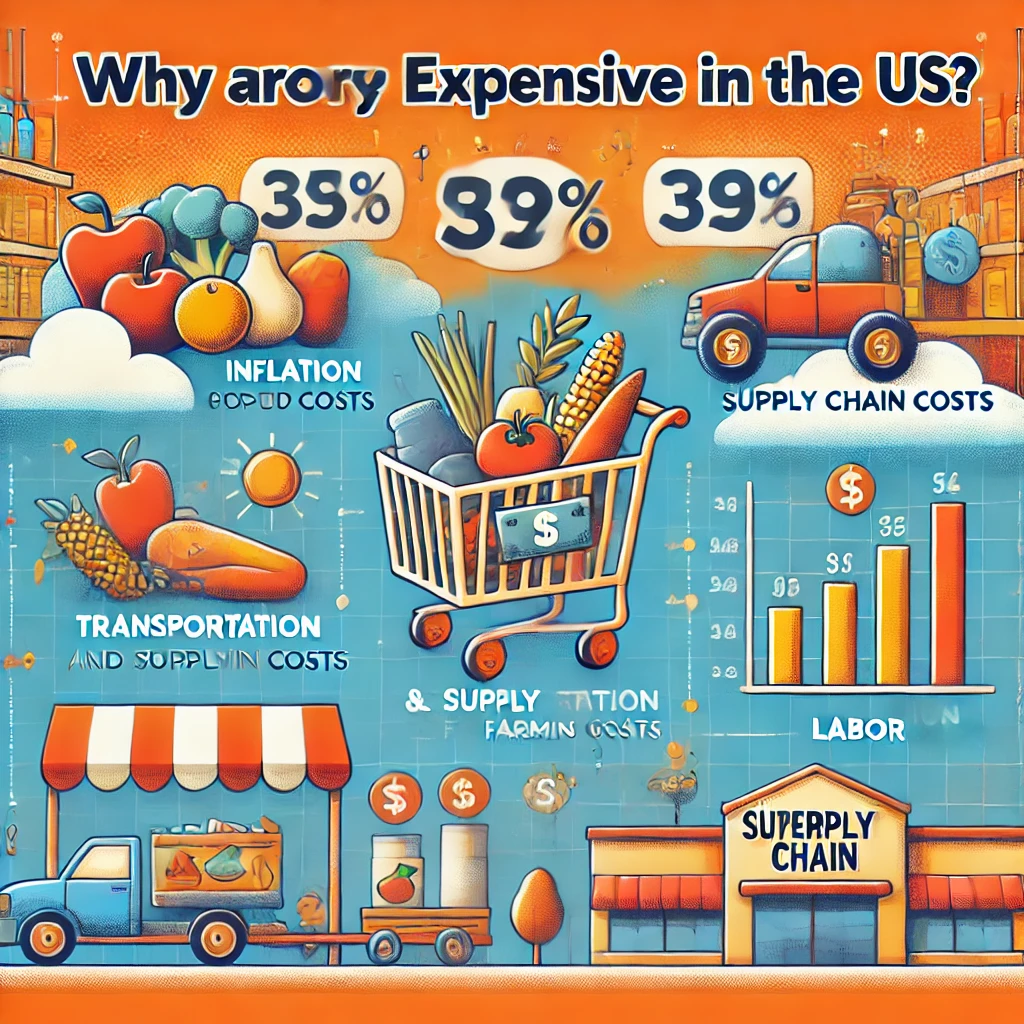
Groceries in the United States have become increasingly expensive in recent years, leaving many Americans wondering why they’re paying more for essentials like eggs, milk, and fresh produce. Several factors contribute to the rising costs, ranging from inflation and supply chain disruptions to changing consumer preferences. Let’s break down the key reasons why groceries are so expensive in the US.
1. Inflation and Rising Costs of Living
Inflation has been a major driver of higher grocery prices in the US.
- What Is Inflation? Inflation is the gradual increase in the cost of goods and services over time, which reduces the purchasing power of money.
- Impact on Groceries:
- Rising production costs, including labor, transportation, and raw materials, are passed on to consumers.
- The inflation rate for food has outpaced general inflation in recent years, especially during economic downturns or global crises.
- Examples: In 2022, staples like eggs and butter saw price hikes of 30% or more due to inflationary pressures.
Why It Matters: Inflation makes it more expensive for consumers to afford everyday essentials, including groceries.
2. Supply Chain Disruptions
Disruptions in the supply chain have significantly affected the cost of groceries.
- Key Issues:
- COVID-19 Pandemic: The pandemic caused labor shortages in farming, food processing, and transportation, creating bottlenecks in getting food to stores.
- Shipping Delays: A lack of truck drivers and congestion at ports slowed down the delivery of goods.
- Extreme Weather: Events like droughts, floods, and hurricanes have disrupted food production and logistics.
- Impact on Costs: Supply chain issues lead to higher transportation and storage costs, which are ultimately reflected in grocery prices.
Why It Matters: When supply chains are strained, food becomes scarcer and more expensive.
3. Increased Transportation Costs
The cost of transporting goods is a major factor in grocery pricing.
- Fuel Prices: Rising fuel costs directly affect the price of trucking and shipping food. For example, when gas prices spiked in 2022, transportation expenses surged, leading to higher costs for fresh produce and other perishable goods.
- Long Distances: Many grocery items in the US are transported across long distances, especially fruits, vegetables, and seafood sourced from other states or countries.
Why It Matters: Higher transportation costs make it more expensive to get food from farms to grocery store shelves.
4. Labor Shortages and Rising Wages
Labor is a critical component of food production, and labor shortages have pushed up costs.
- Farming and Food Processing: Many farms and food processing facilities face challenges in finding enough workers.
- Wage Increases: To attract and retain workers, companies have increased wages, particularly for jobs in farming, trucking, and food retail.
- Impact on Consumers: Higher labor costs are passed on to consumers in the form of pricier groceries.
Why It Matters: Labor shortages and wage hikes directly affect the cost of producing and delivering food.
5. Extreme Weather and Climate Change
Weather-related events and long-term climate change are affecting food production in the US.
- Droughts: States like California, which produce much of the country’s fruits, vegetables, and nuts, have experienced severe droughts, reducing crop yields and increasing irrigation costs.
- Floods and Storms: Flooding in agricultural areas can destroy crops and delay planting, driving up prices for grains and other staples.
- Climate Change: Rising temperatures and unpredictable weather patterns are making farming more challenging and less predictable.
Why It Matters: When crops are damaged or yields are lower, the reduced supply leads to higher prices for consumers.
6. High Demand for Certain Products
Consumer preferences and changing eating habits also influence grocery prices.
- Organic and Specialty Foods: There’s growing demand for organic, gluten-free, and plant-based products, which are often more expensive to produce and market.
- Imported Goods: Products sourced from abroad, such as tropical fruits or specialty cheeses, come with higher transportation and import costs.
- Pandemic Stockpiling: During the COVID-19 pandemic, panic buying and stockpiling caused shortages and price hikes for items like canned goods, meat, and baking supplies.
Why It Matters: Increased demand for premium or specialty items contributes to rising overall grocery costs.
7. Fertilizer and Feed Costs
The price of farming inputs, such as fertilizer and animal feed, plays a major role in the cost of groceries.
- Fertilizer Prices: The war in Ukraine and global supply chain issues have caused spikes in fertilizer costs, as Russia is a major exporter of fertilizer.
- Feed for Livestock: Higher grain prices make it more expensive to raise livestock, which increases the cost of meat, dairy, and eggs.
Why It Matters: When farmers face higher costs for production, those costs are passed on to consumers.
8. Corporate Consolidation in the Food Industry
The US food industry is dominated by a few large corporations, which limits competition and affects pricing.
- Fewer Competitors: Consolidation in farming, food processing, and grocery retail gives large companies more control over pricing.
- Price Setting: With limited competition, companies can set higher prices without losing customers.
- Example: Large meatpacking companies control much of the US meat market, and price increases for beef and poultry often reflect corporate decisions rather than just production costs.
Why It Matters: Limited competition in the food industry can lead to artificially inflated grocery prices.
9. Seasonal and Regional Variations
Grocery prices often fluctuate depending on the time of year and where you live.
- Seasonal Availability: Out-of-season produce (e.g., strawberries in winter) is more expensive because it must be imported or grown in controlled environments.
- Regional Costs:
- Urban areas often have higher grocery prices due to transportation and storage costs.
- Rural areas may face «food deserts,» where limited access to stores increases prices for basic goods.
Why It Matters: Seasonal and regional factors create price variability that consumers must navigate.
10. Pandemic-Related Effects
The COVID-19 pandemic had a lasting impact on grocery prices.
- Disrupted Supply Chains: Lockdowns and labor shortages led to delays in food production and distribution.
- Increased Costs for Safety: Grocery stores and food producers spent more on sanitation, protective equipment, and adapting to pandemic-related regulations.
- Consumer Behavior: The shift to eating at home increased demand for groceries, further driving up prices.
Why It Matters: The ripple effects of the pandemic continue to affect food prices today.
Final Thoughts
The rising cost of groceries in the US is driven by a complex mix of factors, including inflation, supply chain issues, labor shortages, and climate challenges. While many of these factors are beyond consumers’ control, strategies like buying in bulk, shopping at discount stores, and meal planning can help mitigate the impact. As the economy stabilizes and supply chains recover, there’s hope that grocery prices may eventually level out.
For more tips on improving your photography and editing skills, check out helpful guides to take your selfies to the next level.
Добавить комментарий