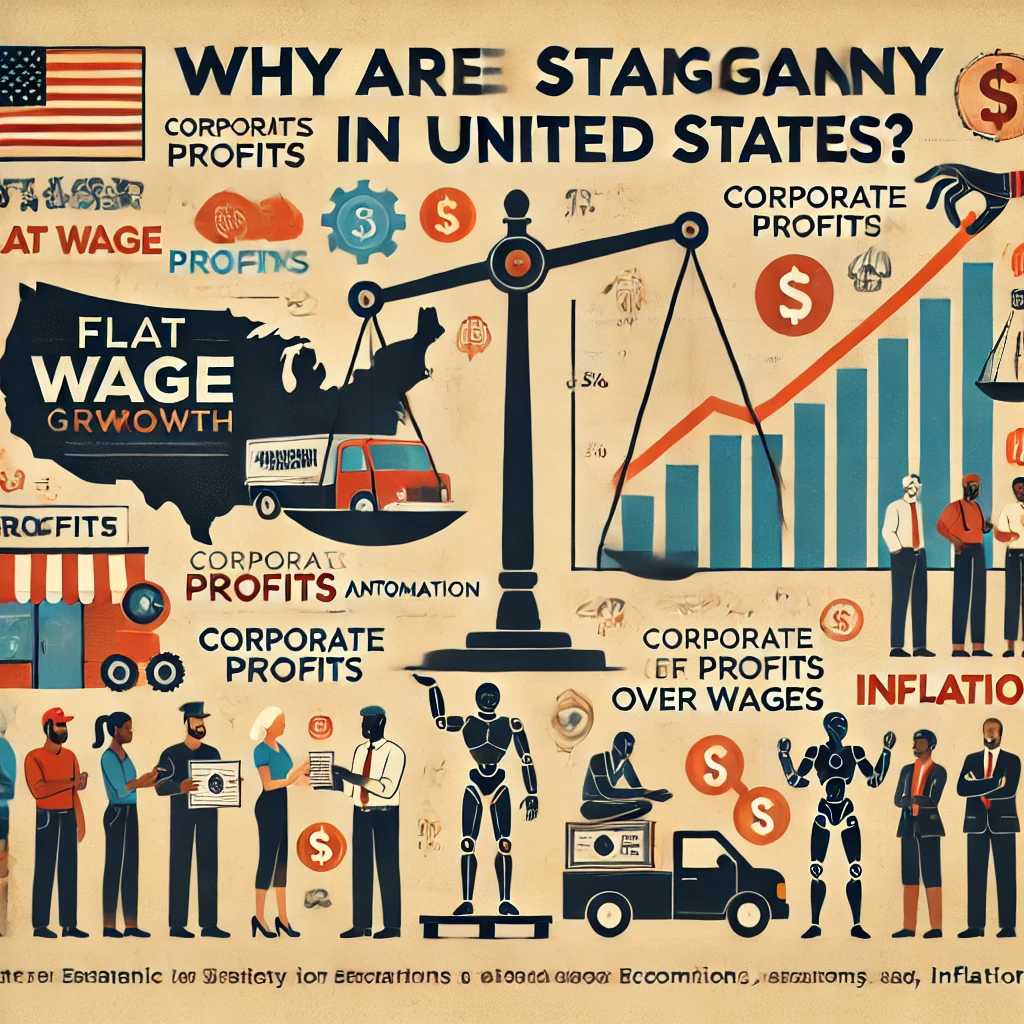
Why Are US Wages Stagnant?
Despite economic growth and advancements in technology, wages for many American workers have remained relatively stagnant over the past few decades. While productivity has increased, the average worker’s earnings have not kept pace, leading to frustrations about financial security and income inequality. But what’s behind this phenomenon? Below, we’ll explore the key reasons why US wages are stagnant and what this means for the economy and workers.
1. Disconnect Between Productivity and Wages
One of the most significant reasons for wage stagnation is the growing gap between productivity and compensation.
- Productivity Growth: From the late 1970s onward, productivity (the amount of output per worker) has risen sharply due to advancements in technology, automation, and efficiency.
- Wage Growth: While productivity has grown by over 60% since 1979, wages for the typical worker have only increased by about 17% during the same period (adjusted for inflation).
- Who Benefits: The gains from increased productivity have largely gone to executives, shareholders, and the top 1%, leaving less for the average worker.
2. Decline of Labor Unions
The weakening of labor unions has played a critical role in wage stagnation.
- Union Membership Decline: In the 1950s, about 35% of workers were unionized; today, that number is around 10%.
- Bargaining Power: Unions historically helped workers negotiate better wages, benefits, and working conditions. Without strong unions, workers have less collective power to demand fair pay.
- Right-to-Work Laws: Many states have passed laws that weaken unions, further diminishing their influence.
3. Globalization and Outsourcing
Globalization has fundamentally changed the job market, creating downward pressure on wages.
- Job Offshoring: Many manufacturing and lower-skilled jobs have been outsourced to countries with cheaper labor, reducing demand for these jobs in the US.
- Global Competition: American workers now compete with a global labor pool, which can drive wages down in industries where jobs can be performed elsewhere.
- Impact on Manufacturing: Entire industries, like textiles and electronics manufacturing, have moved overseas, leading to job losses and wage suppression in the US.
4. Technological Advancements and Automation
While technology increases productivity, it can also suppress wages, particularly for lower-skilled workers.
- Automation: Machines and AI are replacing jobs in sectors like manufacturing, retail, and logistics, reducing the need for human labor.
- Skill Polarization: High-paying jobs requiring specialized skills are growing, but middle-skill jobs (e.g., factory work, clerical roles) are disappearing, leaving many workers stuck in low-wage service jobs.
- Job Displacement: Workers displaced by technology often end up in lower-paying jobs that don’t match their skill level.
5. Rise of the Gig Economy and Contract Work
The shift toward gig work and contract-based employment has contributed to wage stagnation.
- Gig Work Growth: Platforms like Uber, DoorDash, and Fiverr have created new opportunities, but gig workers often lack benefits and stable income.
- Lack of Benefits: Independent contractors typically don’t receive health insurance, retirement contributions, or paid leave, reducing their overall compensation.
- Precarious Employment: Many gig jobs pay below minimum wage when accounting for expenses like gas, car maintenance, or equipment costs.
6. Minimum Wage Stagnation
The federal minimum wage has not kept up with inflation, contributing to stagnant wages for lower-income workers.
- Federal Minimum Wage: The federal minimum wage has been stuck at $7.25 per hour since 2009. Adjusted for inflation, its purchasing power has eroded significantly.
- State Variations: While some states and cities have raised their minimum wages, millions of workers in states using the federal minimum wage have seen no real increase in over a decade.
- Impact on Living Standards: Many low-wage workers struggle to afford basic needs like housing, healthcare, and food.
7. Corporate Profits Over Wages
Corporate practices have shifted in recent decades, prioritizing profits and shareholder returns over employee compensation.
- Stock Buybacks: Many companies use profits to buy back shares and increase stock prices rather than investing in employee wages or benefits.
- Executive Pay: CEO compensation has skyrocketed, growing by over 940% since 1978, while worker wages have barely budged.
- Pressure from Shareholders: Publicly traded companies often prioritize quarterly earnings and investor returns, which can limit wage growth.
8. Shift Toward Service Sector Jobs
The US economy has shifted from manufacturing to service-based industries, many of which offer lower wages.
- Low-Wage Jobs: Industries like retail, hospitality, and food service dominate the service sector and tend to offer lower pay with limited benefits.
- Part-Time Work: Many service jobs are part-time or seasonal, further reducing earning potential.
- Fewer Union Jobs: Unlike manufacturing jobs, most service jobs are not unionized, leading to weaker wage growth.
9. Economic Inequality and Wage Disparities
Income inequality has grown significantly in the US, with wealth increasingly concentrated among the top earners.
- Income Distribution: The top 1% of earners have captured a disproportionate share of income growth, leaving less for the middle and working classes.
- Wage Gaps: Gender and racial wage gaps persist, with women and minorities earning less on average than white men in comparable roles.
10. Healthcare and Benefit Costs
Rising healthcare and benefit costs also play a role in wage stagnation.
- Benefits Over Pay: Employers often allocate resources to rising healthcare costs instead of wage increases.
- Eroding Take-Home Pay: Even when wages increase, higher healthcare premiums and out-of-pocket costs eat into workers’ earnings.
- Fewer Benefits for Contractors: Workers in gig and contract roles often lack employer-provided benefits, further reducing overall compensation.
11. Government Policies
Certain government policies (or lack thereof) have contributed to stagnant wages:
- Weakened Labor Protections: Deregulation and a lack of enforcement of labor laws have made it harder for workers to fight for better pay.
- Tax Policies: Tax cuts for corporations and high earners have not trickled down to workers as promised.
- Trade Policies: Free trade agreements have accelerated the outsourcing of jobs, putting downward pressure on wages.
12. Inflation and Cost of Living
While wages have stagnated, the cost of living has continued to rise, making it harder for workers to get ahead.
- Housing Costs: Rent and home prices have skyrocketed, especially in urban areas.
- Healthcare Costs: Medical expenses have grown faster than inflation, consuming a larger share of household budgets.
- Education Costs: Rising tuition fees and student loan debt burden many workers, limiting their ability to save or invest.
Final Thoughts
US wage stagnation is the result of multiple factors, including declining union power, globalization, automation, and corporate practices that prioritize profits over worker pay. While the economy continues to grow, many workers are not seeing the benefits reflected in their paychecks. Addressing wage stagnation will require systemic changes, such as stronger labor protections, investments in education and training, and policies that ensure fair pay for all workers.
For more insights on financial trends and labor market dynamics, check out helpful guides to stay informed and empowered.
Добавить комментарий