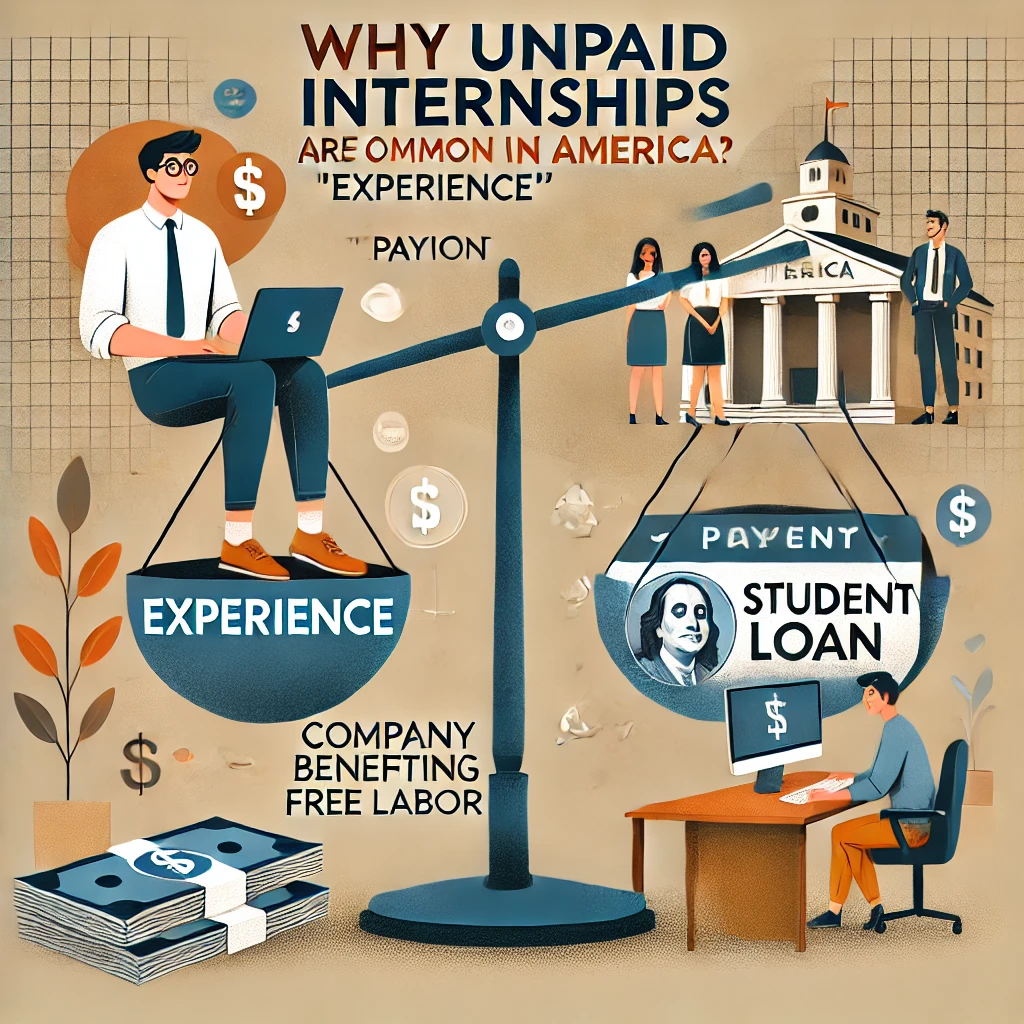
Why Are Unpaid Internships So Common in America?
Unpaid internships are a controversial yet widespread practice in the United States, especially in competitive industries like media, fashion, politics, and entertainment. While these positions often provide valuable experience and networking opportunities, they raise questions about fairness, accessibility, and labor rights. So, why are unpaid internships so common in America? Let’s explore the reasons behind this phenomenon.
1. Historical Roots of Unpaid Internships
Unpaid internships originated as a way to provide students and recent graduates with practical experience in their chosen fields.
- Apprenticeship Model: Historically, internships were modeled after apprenticeships, where individuals worked for free or low wages in exchange for training and mentorship.
- Growth of White-Collar Jobs: As white-collar professions expanded in the mid-20th century, internships became a way for students to gain experience in office environments before entering the workforce.
Why It Matters: The unpaid aspect of internships persisted as they were seen as educational opportunities rather than formal jobs.
2. Educational Value Argument
Employers often justify unpaid internships by framing them as educational experiences rather than traditional work.
- Hands-On Training: Internships provide opportunities to learn skills, gain industry knowledge, and apply classroom concepts in real-world settings.
- Access to Mentorship: Interns often work closely with experienced professionals, which can be valuable for career development.
- Credit for College: Many unpaid internships offer academic credit as compensation, which is beneficial for students who need internships to fulfill graduation requirements.
Why It Matters: The idea that internships are primarily educational allows employers to avoid paying interns under federal labor laws.
3. Loopholes in Labor Laws
In the US, unpaid internships are allowed under specific conditions outlined by the Department of Labor.
- Fair Labor Standards Act (FLSA): Employers must meet a six-factor test to classify an internship as unpaid, including:
- The internship must benefit the intern, not the employer.
- The intern cannot displace regular employees.
- The employer cannot derive immediate advantages from the intern’s work.
- Challenges in Enforcement: Many unpaid internships blur the line between educational opportunities and free labor, and enforcement of labor laws is inconsistent.
Why It Matters: Loopholes in labor laws enable employers to classify internships as unpaid, even when interns perform tasks similar to paid employees.
4. Cost Savings for Employers
Unpaid internships allow employers to save money, making them an attractive option for companies with limited budgets.
- No Payroll Costs: Employers don’t have to pay wages, taxes, or benefits for unpaid interns.
- Reduced Risk: Hiring interns on a trial basis is less risky than committing to a full-time employee.
- High Turnover Acceptance: With no financial investment, employers can afford high intern turnover rates.
Why It Matters: The cost-saving incentive often outweighs ethical concerns for employers, especially in industries with high competition for entry-level positions.
5. Supply and Demand Imbalance
The high demand for internships in competitive industries drives the prevalence of unpaid positions.
- Scarcity of Paid Roles: In fields like journalism, film, and politics, paid internships are limited, leaving many candidates willing to work for free just to gain experience.
- Eager Candidates: College students and recent graduates often view unpaid internships as a necessary stepping stone to launch their careers.
- Employer Leverage: Knowing that many students are desperate for experience, employers can get away with offering unpaid positions.
Why It Matters: The oversupply of candidates willing to work for free perpetuates the cycle of unpaid internships.
6. Networking and Career Advancement Opportunities
Unpaid internships are often seen as an investment in future career opportunities.
- Building Connections: Internships provide access to professionals and networks that can lead to job offers or recommendations.
- Resume Boost: Employers value internship experience on resumes, even if the role was unpaid.
- Gateway to Paid Roles: Some unpaid internships serve as a trial period, with high-performing interns eventually transitioning into paid positions.
Why It Matters: The promise of future career benefits makes many students and graduates willing to accept unpaid internships.
7. College Credit as Compensation
Many unpaid internships offer academic credit instead of monetary compensation, aligning them with educational institutions.
- Credit Requirements: Some college programs require internships as part of their curriculum, incentivizing students to take unpaid roles.
- Shift of Costs to Students: Students often pay tuition for the credit hours associated with internships, effectively paying to work.
- Institutional Partnerships: Universities and employers often collaborate to create internship programs, further normalizing unpaid positions.
Why It Matters: Offering college credit helps employers sidestep labor laws while providing students with an incentive to participate.
8. Economic Inequality and Accessibility Issues
Unpaid internships disproportionately benefit those who can afford to work for free, creating barriers for low-income students.
- Financial Burden: Many students cannot afford unpaid internships, especially in expensive cities like New York or Los Angeles.
- Limited Diversity: The practice often excludes talented individuals from marginalized or economically disadvantaged backgrounds, leading to less diverse workplaces.
- Hidden Costs: Interns often face additional expenses like commuting, housing, and professional attire without financial support.
Why It Matters: Unpaid internships reinforce systemic inequities, favoring privileged candidates who can afford to work for free.
9. Industry Norms and Culture
In certain fields, unpaid internships have become so normalized that they’re seen as a rite of passage.
- Media and Entertainment: Many creative industries operate on the assumption that unpaid internships are necessary to «pay your dues.»
- Political Campaigns and Nonprofits: These sectors often rely on unpaid labor due to tight budgets and a culture of volunteerism.
- Peer Pressure: Students may feel compelled to accept unpaid internships because «everyone else is doing it.»
Why It Matters: Cultural expectations perpetuate unpaid internships, even when they may not be fair or necessary.
10. Pushback and Changing Trends
Despite their prevalence, unpaid internships are facing increasing criticism and legal challenges.
- Advocacy for Fair Pay: Organizations like Intern Justice and Pay Our Interns advocate for fair compensation and raise awareness about the exploitation of unpaid labor.
- Legal Action: High-profile lawsuits (e.g., interns suing companies like Fox Searchlight Pictures) have pushed some employers to reconsider unpaid roles.
- Shift Toward Paid Internships: Some companies and industries are moving toward offering paid internships to attract top talent and improve diversity.
Why It Matters: The growing demand for fair compensation is gradually challenging the dominance of unpaid internships.
Final Thoughts
Unpaid internships remain common in America due to a combination of historical precedent, cost-saving incentives, and industry norms. While they can provide valuable experience and networking opportunities, they also raise important questions about accessibility and fairness. As advocacy for fair pay gains momentum, it’s possible that the prevalence of unpaid internships may decline in favor of more equitable practices.
For more tips on improving your photography and editing skills, check out helpful guides to take your selfies to the next level.
Добавить комментарий