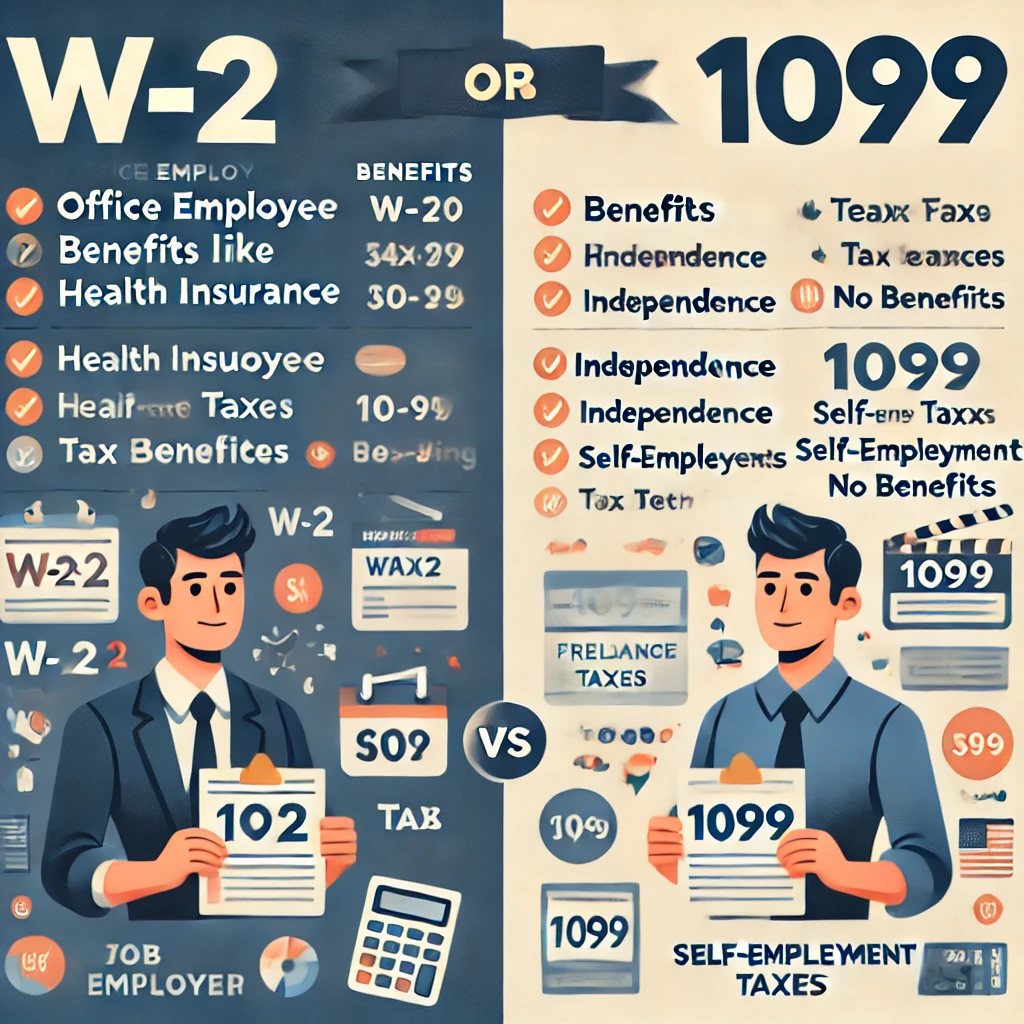
What’s the Difference Between W-2 and 1099 Jobs?
When looking for work or reviewing your employment contract, you might come across terms like «W-2 employee» and «1099 contractor.» These terms refer to how your employment is classified for tax purposes in the United States. Both W-2 and 1099 jobs have their own unique benefits and responsibilities, and understanding the difference is essential for managing your finances and knowing your rights. Here’s a breakdown of the key distinctions between W-2 and 1099 jobs.
1. Employment Classification
The main difference between W-2 and 1099 jobs lies in how the worker is classified:
- W-2 Jobs: You are considered an employee of a company. The employer withholds taxes, pays part of your Social Security and Medicare, and often provides benefits like health insurance and paid time off.
- 1099 Jobs: You are classified as an independent contractor. You are essentially self-employed and responsible for handling your own taxes and benefits.
2. Tax Documents
The type of tax form you receive from your employer or client at the end of the year reflects your job classification:
- W-2 Employees: Receive a W-2 Form, which reports wages, taxes withheld, and other relevant details for filing your taxes.
- 1099 Contractors: Receive a 1099-NEC Form (Non-Employee Compensation) if you earned $600 or more from a client. This form reports income but does not show tax withholdings.
3. Paychecks and Taxes
How you are paid and how taxes are handled differ significantly:
a. W-2 Employees
- Taxes Withheld: Employers automatically withhold federal income tax, Social Security, Medicare, and sometimes state and local taxes from your paycheck.
- Employer Contributions: Your employer pays half of your Social Security and Medicare taxes (7.65%).
- Net Pay: The amount you take home is your paycheck after all deductions.
b. 1099 Contractors
- No Tax Withholding: Clients pay you the full amount agreed upon, and you are responsible for setting aside money for taxes.
- Self-Employment Taxes: You must pay the full 15.3% for Social Security and Medicare since you are both the «employer» and «employee.»
- Estimated Taxes: Contractors typically pay quarterly estimated taxes to the IRS to avoid penalties for underpayment.
4. Benefits
W-2 employees often receive benefits that independent contractors do not:
a. W-2 Employees
- Common Benefits:
- Health insurance.
- Retirement plans like 401(k).
- Paid time off (PTO) or vacation days.
- Sick leave and maternity/paternity leave.
- Workers’ compensation and unemployment insurance.
- Job Stability: Employers are more invested in retaining employees and providing a stable work environment.
b. 1099 Contractors
- No Benefits: Independent contractors typically do not receive benefits like health insurance, retirement contributions, or paid leave.
- Freedom to Choose: You can choose your own insurance and retirement savings plans, but you’ll bear the full cost.
5. Work Hours and Control
Another key difference lies in how much control you have over your work schedule and tasks:
a. W-2 Employees
- Set Schedule: Employees often work fixed hours set by the employer.
- Direction and Supervision: Employers dictate how, when, and where tasks should be performed.
- Job Security: Employees typically have ongoing work until they leave or are terminated.
b. 1099 Contractors
- Flexible Schedule: Contractors usually set their own hours and manage their workload independently.
- Control Over Work: You have more freedom in deciding how to complete tasks as long as the agreed-upon results are delivered.
- Project-Based: Work is often temporary or project-based, with no guarantee of future assignments.
6. Workplace Rights
W-2 employees have more legal protections compared to independent contractors:
a. W-2 Employees
- Legal Protections: Employees are covered by labor laws, including minimum wage, overtime pay, and anti-discrimination protections.
- Unemployment Benefits: If you lose your job, you may qualify for unemployment benefits.
- Workers’ Compensation: Employees are covered for workplace injuries.
b. 1099 Contractors
- Fewer Protections: Contractors are not covered by labor laws, meaning no minimum wage, overtime pay, or unemployment benefits.
- Contractual Protections: Your rights are determined by the terms of your contract with the client.
7. Job Flexibility
Independent contractors have greater flexibility, but it comes with trade-offs:
a. W-2 Employees
- Less Flexibility: Employees generally have less control over their work hours, location, and the type of work they do.
- Employer-Provided Tools: Employers provide the equipment, tools, and resources you need for the job.
b. 1099 Contractors
- More Flexibility: You can choose your clients, set your own rates, and decide your work hours.
- Own Equipment: Contractors are responsible for providing their own tools and resources.
8. Earning Potential
Both W-2 and 1099 jobs offer earning opportunities, but the way you’re paid can vary:
- W-2 Employees: Salaries are often stable but may be lower due to the employer covering taxes and providing benefits.
- 1099 Contractors: Contractors can set higher rates, but they must account for self-employment taxes, benefits, and overhead costs.
9. Examples of Each Type
To better understand the difference, here are some examples:
- W-2 Jobs: Retail employees, office workers, teachers, nurses, and company drivers.
- 1099 Jobs: Freelancers, consultants, gig workers (like Uber drivers), independent photographers, and self-employed tradespeople.
Which One Is Better for You?
The choice between W-2 and 1099 jobs depends on your personal preferences, financial situation, and career goals:
W-2 Jobs Are Ideal If You:
- Value job stability and consistent income.
- Want benefits like health insurance, retirement plans, and PTO.
- Prefer having taxes withheld automatically.
- Don’t want to manage your own business or worry about tax filings.
1099 Jobs Are Ideal If You:
- Want flexibility in choosing clients and setting your schedule.
- Are comfortable managing your own taxes and benefits.
- Prefer short-term, project-based work.
- Have a specific skill or service you can offer independently.
Final Thoughts
The difference between W-2 and 1099 jobs boils down to employment classification, tax responsibilities, benefits, and work flexibility. While W-2 jobs provide more stability and legal protections, 1099 jobs offer greater independence and earning potential. Understanding these distinctions can help you make informed decisions about your career path and financial planning.
For more tips on managing your career and understanding employment options, check out helpful guides to make smarter professional choices.
Добавить комментарий