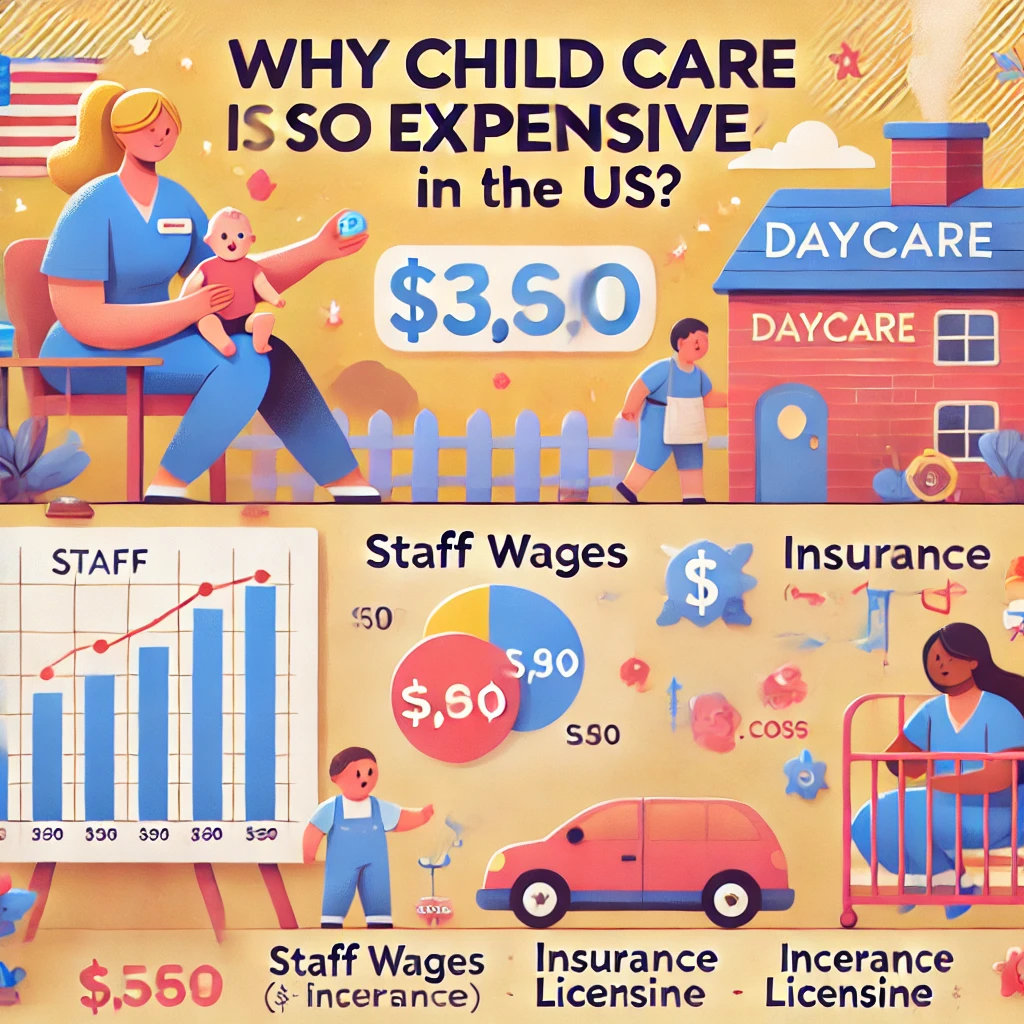
Why Is Child Care So Expensive in the US?
Child care is one of the largest expenses for families in the United States, often rivaling the cost of housing or college tuition. Many parents struggle to afford quality care, leaving them to wonder why child care costs are so high. The reasons are rooted in a combination of economic, regulatory, and systemic factors. Let’s dive into why child care is so expensive in the US.
1. High Labor Costs for Quality Care
Child care is a labor-intensive industry, and wages make up the largest portion of costs.
- Low Child-to-Caregiver Ratios: Regulations require a low ratio of children to caregivers (e.g., 3 infants per caregiver in many states), meaning providers need to hire more staff.
- Qualified Caregivers: Many states require child care workers to have certifications, training, or degrees, which increases the cost of hiring.
- Low Wages, High Turnover: Despite the high cost of child care, many workers earn low wages, leading to high staff turnover. Providers must continually recruit and train new staff, adding to operational expenses.
Why It Matters: Quality care requires skilled, attentive caregivers, which means hiring enough qualified staff to meet safety and educational standards.
2. Strict Regulations and Licensing Requirements
Child care is heavily regulated to ensure children’s safety and well-being, but compliance with these regulations can be expensive.
- Health and Safety Standards: Child care providers must adhere to strict rules regarding sanitation, food preparation, emergency preparedness, and facility maintenance.
- Facility Requirements: Centers often need specialized equipment, childproofing, and age-appropriate materials, all of which increase costs.
- Licensing Fees: Providers must pay for licenses, background checks, and inspections, which are ongoing expenses.
Why It Matters: While regulations are essential for ensuring children’s safety, the cost of compliance significantly impacts the price of care.
3. Lack of Government Support
Compared to other developed countries, the US provides minimal government subsidies or support for child care.
- Limited Public Funding: While programs like Head Start and the Child Care Development Block Grant (CCDBG) exist, funding is insufficient to meet the needs of most families.
- No Universal Child Care: Unlike countries with subsidized or free child care systems (e.g., Sweden or France), most US families must pay the full cost out of pocket.
- Tax Credits Are Insufficient: Programs like the Child and Dependent Care Tax Credit provide some relief, but the savings often fall far short of actual child care costs.
Why It Matters: The lack of federal funding shifts the financial burden onto families and providers, driving up costs for everyone.
4. High Overhead Costs for Providers
Running a child care facility comes with significant overhead expenses.
- Rent and Utilities: Child care centers often operate in expensive urban or suburban areas, where rent and utility costs are high.
- Insurance Costs: Providers must carry liability insurance to protect against accidents and lawsuits, which can be costly.
- Supplies and Equipment: Age-appropriate toys, books, art supplies, and furniture must be regularly purchased and maintained.
Why It Matters: These operational costs are passed on to parents in the form of higher fees.
5. Economies of Scale Are Limited
Unlike larger industries, child care centers can’t easily scale up operations to reduce costs.
- Smaller Class Sizes: Regulations often limit the number of children per classroom, which caps the number of families a center can serve.
- Personalized Care: Child care requires direct, hands-on attention, making it impossible to automate or streamline services.
Why It Matters: The labor-intensive and small-scale nature of child care means costs remain high even as demand increases.
6. Rising Demand for Child Care
The demand for child care has grown significantly over the years, further driving up costs.
- Dual-Income Families: As more households rely on two incomes, the need for child care has increased.
- Limited Supply: In many areas, there are not enough licensed child care providers to meet demand, creating «child care deserts.»
- Specialized Care: Families increasingly seek care that offers educational components, healthier meals, and enrichment activities, which cost more to provide.
Why It Matters: Higher demand and limited supply result in higher prices for families.
7. Parents Are Paying the Full Cost
Unlike public education, which is funded through taxes, child care is treated as a private expense in the US.
- Cost Burden on Families: Parents must bear nearly 100% of the cost, with little financial assistance.
- Impact on Low-Income Families: For many low-income households, child care costs can consume 30% or more of their income, forcing difficult financial trade-offs.
Why It Matters: In other countries, the government absorbs much of the cost, making care more affordable for families.
8. Child Care Deserts and Geographic Disparities
Access to affordable child care varies widely depending on where you live.
- Urban Areas: Higher rent and operational costs make child care especially expensive in cities.
- Rural Areas: Families in rural regions may face a lack of providers altogether, driving up costs for the limited available options.
- State Variations: Child care costs also depend on state regulations and subsidies, meaning families in one state may pay far more than those in another.
Why It Matters: Geographic disparities exacerbate inequality in access to affordable child care.
9. The Push for Early Childhood Education
There is increasing recognition of the importance of early childhood education, which has raised standards—and costs—for child care providers.
- Educational Programs: Many centers now offer structured curricula, trained educators, and enrichment activities to prepare children for school.
- Higher Expectations: Parents expect more than basic babysitting, leading to added expenses for educational tools and qualified staff.
Why It Matters: While early education benefits children, it also raises the overall cost of care.
10. Inflation and Rising Costs
Like other industries, child care providers are not immune to inflation and rising costs.
- Wages: Efforts to improve pay for child care workers increase operational expenses.
- Supplies and Utilities: Rising costs for food, utilities, and materials directly impact child care fees.
- Post-Pandemic Challenges: The COVID-19 pandemic disrupted the child care industry, leading to staffing shortages and higher costs for cleaning and safety measures.
Why It Matters: Economic pressures make it difficult for providers to keep costs low without sacrificing quality.
Final Thoughts
The high cost of child care in the US is the result of a complex mix of factors, including labor-intensive work, regulatory requirements, lack of government support, and rising demand. For many families, these costs create significant financial strain, highlighting the need for policy changes to make child care more accessible and affordable. Addressing this issue will require investment in subsidies, expanded programs, and innovative solutions to support both families and providers.
For more tips on improving your photography and editing skills, check out helpful guides to take your selfies to the next level.
Добавить комментарий