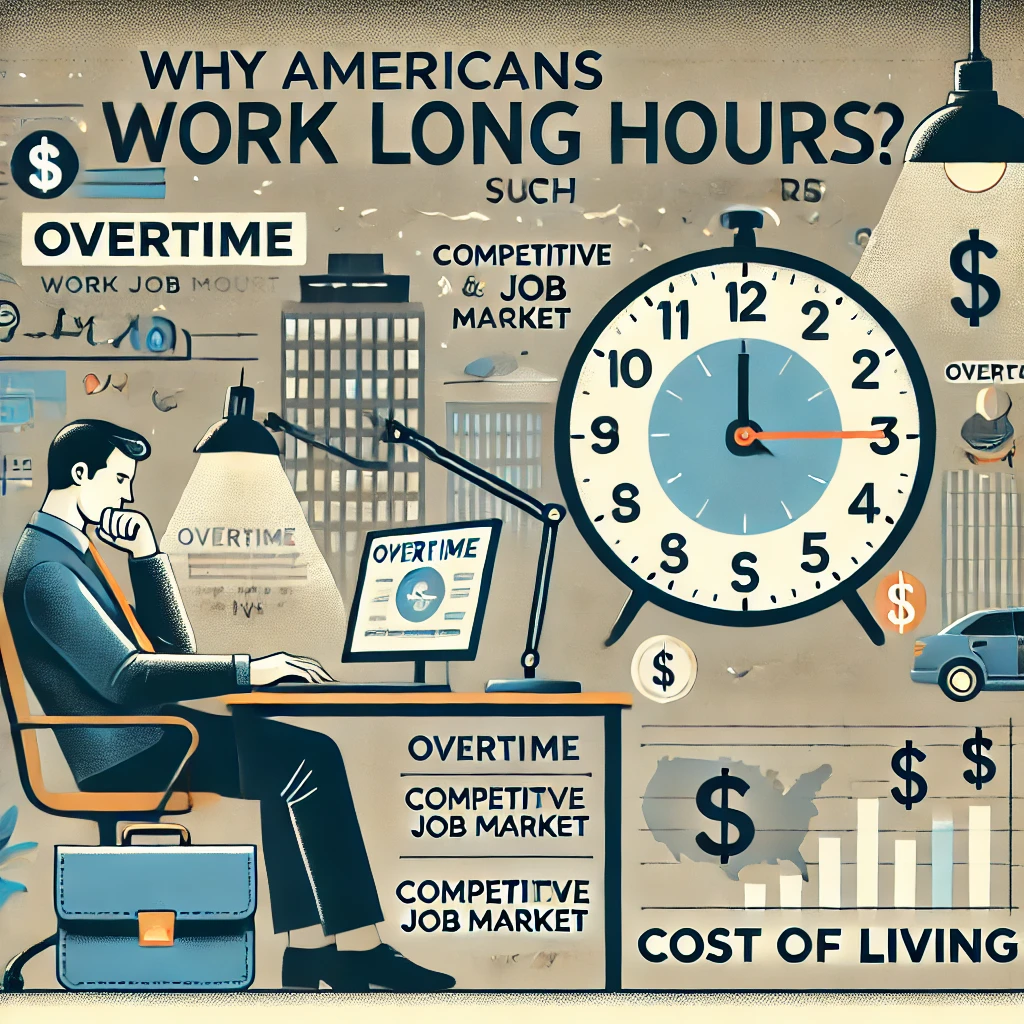
Why Do Americans Work Such Long Hours?
Compared to many other developed nations, Americans are known for working long hours and taking fewer vacations. While this work culture has its roots in history, economics, and societal values, the reasons behind it are complex. Below, we explore why Americans work such long hours and how this culture developed over time.
1. Cultural Values Around Work
The American work ethic is deeply rooted in cultural values like productivity, individualism, and self-reliance.
- Puritan Work Ethic: The idea of hard work as a virtue stems from early settlers who believed that diligence and discipline were moral obligations.
- «American Dream» Mentality: Success in America is often associated with hard work, perseverance, and upward mobility. Many believe that working longer hours demonstrates dedication and ambition.
- Individualism: Americans tend to emphasize personal achievement, which often translates into putting in extra effort and hours at work.
Result: Working long hours is often seen as a badge of honor or a marker of success in American culture.
2. Lack of Paid Time Off
Unlike many other countries, the US does not legally require employers to provide paid vacation days or sick leave.
- No National Mandate: The US is one of the few developed countries without a federal law guaranteeing paid vacation. In contrast, European countries often mandate at least 20-30 days of paid leave per year.
- Employer Discretion: Paid time off (PTO) is left to the discretion of employers, with many offering only 10-15 days annually.
- Unused Vacation: Even when PTO is offered, many Americans don’t use it, fearing they’ll fall behind at work or appear less committed.
Impact: With fewer breaks and less guaranteed time off, Americans end up working more days and hours than workers in other countries.
3. Economic Inequality and Job Insecurity
Economic pressures and fear of losing a job contribute to longer working hours.
- Rising Cost of Living: Many Americans work overtime or take on second jobs to afford housing, healthcare, education, and other necessities.
- Stagnant Wages: Real wages have not kept up with inflation for many workers, forcing them to work more hours to maintain their standard of living.
- Gig Economy and Freelancing: The rise of gig work has led to a culture of «hustling,» where workers feel the need to constantly work to earn enough income.
- Job Insecurity: In competitive industries, employees may work longer hours to prove their value and avoid layoffs.
Result: Economic challenges push many Americans to prioritize work over leisure.
4. Employer Expectations
Workplace culture in the US often rewards long hours and discourages taking time off.
- «Always On» Mentality: Technology like smartphones and email has made it easier for employees to be available 24/7, blurring the lines between work and personal life.
- Overtime Expectations: Some jobs have an unspoken expectation that employees should work overtime or stay late to show commitment.
- Performance Metrics: In many industries, productivity is measured by hours worked rather than outcomes achieved, incentivizing long hours.
Impact: Employees often feel pressure to work long hours, even when it’s not explicitly required.
5. Comparison to Other Countries
The US differs significantly from other developed nations in its approach to work-life balance.
- Europe: Many European countries have shorter workweeks, generous vacation policies, and strong labor protections. For example, France has a 35-hour workweek, and Germany mandates a minimum of 20 vacation days annually.
- Cultural Attitudes: In countries like Sweden and Denmark, work-life balance is prioritized, and working long hours is often seen as inefficient.
- Workplace Laws: Strong labor unions and government policies in other countries protect workers from excessive hours, something less prevalent in the US.
Key Difference: In the US, there is less structural support for reducing work hours, leading to a more demanding work culture.
6. Entrepreneurial Spirit
The US has a strong entrepreneurial culture that encourages people to work harder to achieve their goals.
- Small Business Drive: Many Americans start their own businesses or work in startups, where long hours are often necessary for success.
- Innovation and Competition: The US rewards innovation and competitiveness, which motivates people to dedicate more time to their work.
Outcome: The entrepreneurial mindset often equates longer hours with greater opportunities for success.
7. Healthcare Tied to Employment
Unlike many other countries with universal healthcare, the US healthcare system is heavily tied to employment.
- Employer-Provided Health Insurance: Most Americans receive health insurance through their employers, making steady work essential for access to healthcare.
- Fear of Losing Coverage: The risk of losing health benefits can deter people from taking breaks or reducing their working hours.
Impact: Workers often feel compelled to stay employed and put in extra effort to maintain their benefits.
8. Lack of Strong Labor Protections
Weaker labor protections in the US contribute to longer working hours.
- No Maximum Hours Law: Unlike some countries that limit weekly work hours, the US does not have a federal cap on the number of hours an employee can work (except for certain industries).
- Overtime Laws: While overtime pay is required for many hourly workers, salaried employees are often exempt, leading to unpaid overtime.
- Union Decline: The decline of labor unions has reduced workers’ ability to negotiate for shorter hours or better work-life balance.
Result: Without strong labor protections, many employees feel pressure to work longer hours.
9. Social Identity and Peer Pressure
In the US, work is often closely tied to personal identity and social status.
- Social Conversations: Phrases like «What do you do?» are common in American culture, reflecting the emphasis placed on work as a key part of identity.
- Peer Pressure: Seeing colleagues or friends work long hours can create a sense of competition or guilt, leading to longer workdays.
Impact: Work becomes more than just a job—it’s a way to prove one’s value and status.
10. Desire for Upward Mobility
Many Americans see hard work and long hours as the key to achieving upward mobility.
- Career Advancement: Employees often work extra hours to gain promotions, raises, or recognition.
- Immigrant Work Ethic: Many immigrants adopt long work hours to build a better life for themselves and their families.
- Cultural Ideal: The belief in meritocracy reinforces the idea that success is directly proportional to effort.
Outcome: Americans often push themselves to work harder in pursuit of better opportunities.
Final Thoughts
Americans work long hours due to a mix of cultural values, economic pressures, and systemic factors. While hard work is often celebrated, it comes at the cost of work-life balance, leading to stress and burnout for many. Addressing these issues requires cultural shifts, stronger labor protections, and greater emphasis on policies that prioritize well-being over productivity.
For more tips on improving your photography and editing skills, check out helpful guides to take your selfies to the next level.
Добавить комментарий