Why Is American Food So Processed?
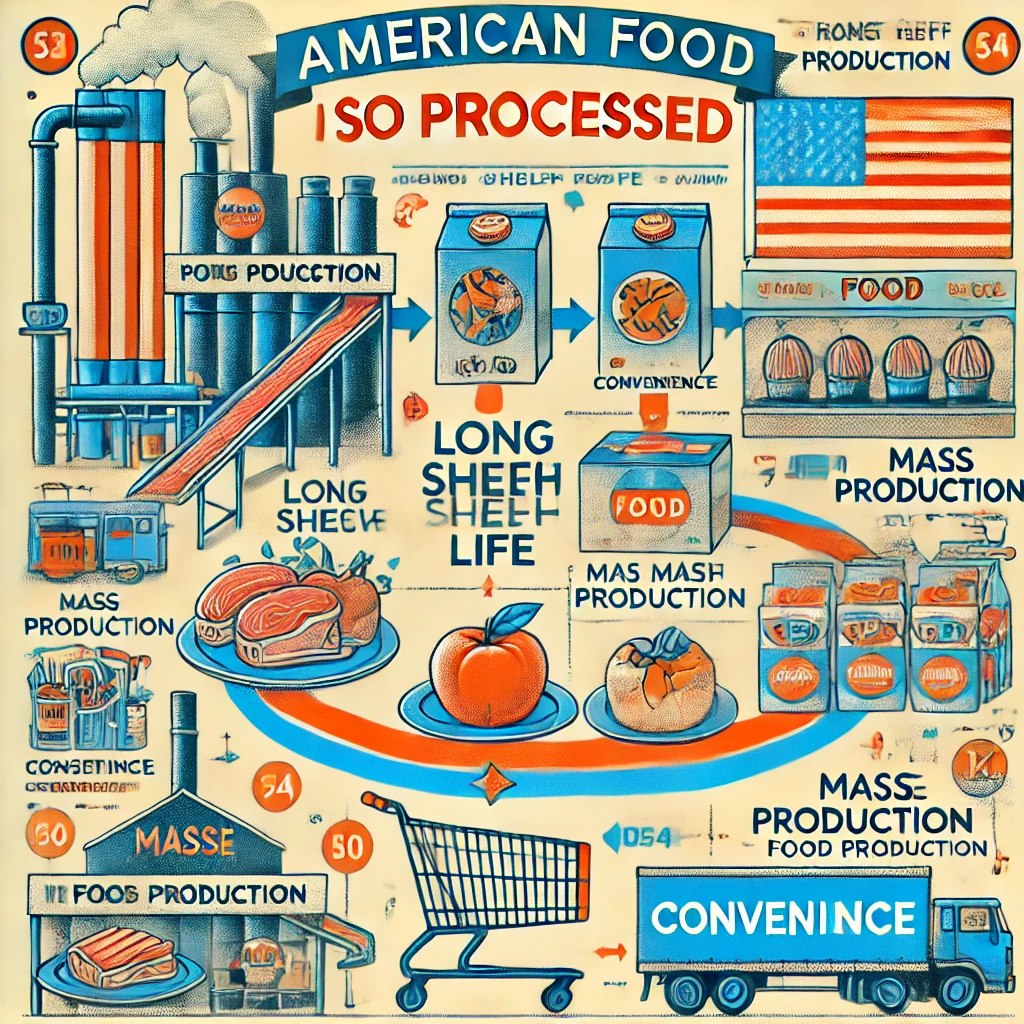
The prevalence of processed food in the United States has become a defining characteristic of the American diet. From boxed mac and cheese to frozen dinners and sugary cereals, processed foods dominate grocery store aisles and have become a staple for many households. But why is American food so processed? The reasons are rooted in a combination of history, convenience, cost, and industrial food production. Let’s explore the key factors driving the rise of processed food in the US.
1. Convenience and Time-Saving Culture
Americans often lead busy lives, juggling work, school, and other responsibilities, which leaves little time for cooking.
- Why It Matters: Processed foods are designed for convenience—quick to prepare and easy to store. For instance, frozen meals can be microwaved in minutes, and pre-packaged snacks are portable and require no preparation.
- Cultural Context: The fast-paced lifestyle in the US has created a demand for food that fits into a busy schedule, and processed foods meet this need perfectly.
2. Affordability of Processed Foods
Processed foods are often cheaper than fresh, whole foods, making them an appealing option for budget-conscious families.
- Why It’s Cheaper:
- Mass production of processed foods reduces costs for manufacturers.
- Ingredients like corn, soy, and wheat are heavily subsidized by the US government, leading to inexpensive raw materials for processed food products.
- Longer shelf lives reduce waste, lowering costs for both producers and consumers.
- Impact on Consumers: For low-income households, processed foods may seem like the only affordable option, especially in areas where fresh produce is expensive or inaccessible.
3. Long Shelf Life and Preservation
Processed foods are designed to last longer than fresh foods, reducing spoilage and making them more practical for retailers and consumers.
- How It Works:
- Additives like preservatives, stabilizers, and artificial flavors extend the shelf life of processed foods.
- Freezing, canning, and dehydrating foods make them last for months or even years.
- Why It’s Popular: This long shelf life is particularly appealing in a country where bulk shopping at stores like Costco is common.
4. Industrial Food Production
The US food system is built around large-scale, industrialized food production, which prioritizes efficiency and profit.
- How It Works:
- Food companies focus on creating products that can be mass-produced and distributed nationwide.
- Ingredients like high-fructose corn syrup, hydrogenated oils, and artificial additives are used to reduce costs and maintain consistency in taste and texture.
- Why It Matters: Industrial food production values scalability and efficiency over nutritional quality, leading to a heavy reliance on processed foods.
5. Marketing and Branding Influence
Processed foods are heavily marketed to consumers, making them an integral part of American culture.
- Advertising Impact: Food companies spend billions of dollars on advertising processed foods, especially to children and families. Bright packaging, catchy slogans, and convenience are heavily promoted.
- Cultural Perception: Iconic processed foods like burgers, hot dogs, chips, and sodas are often associated with American traditions, such as backyard barbecues, sports events, and holidays.
- Result: Constant exposure to marketing has normalized processed foods as a staple of the American diet.
6. Taste and Addictive Qualities
Processed foods are engineered to be highly palatable, making them difficult to resist.
- How It’s Done:
- Food scientists use the «bliss point,» the perfect balance of salt, sugar, and fat, to create foods that trigger pleasure centers in the brain.
- Additives like artificial flavors, enhancers, and sweeteners amplify the taste.
- Why It’s Problematic: These hyper-palatable foods can lead to overconsumption, contributing to health issues like obesity and diabetes.
7. Historical Context
The rise of processed foods in America can be traced back to historical events and shifts in food production.
- World Wars: During World War II, processed foods were developed to provide long-lasting, transportable meals for soldiers. After the war, these technologies were adapted for civilian use.
- Post-War Boom: In the 1950s and 1960s, the rise of suburban living and the proliferation of home appliances like refrigerators and microwaves fueled the demand for convenient, processed foods.
- Women in the Workforce: As more women entered the workforce, processed foods became a time-saving solution for busy families.
8. Food Deserts and Accessibility
In some parts of the US, particularly in low-income and rural areas, access to fresh food is limited.
- What Are Food Deserts? Areas where fresh produce and healthy food options are scarce and residents rely on convenience stores or fast-food chains for meals.
- Impact: Processed foods become the default option in these areas due to their availability and affordability.
9. Government Subsidies and Policy
US agricultural policies play a significant role in the dominance of processed foods.
- Subsidized Crops: Corn, soy, and wheat are heavily subsidized by the government, making them cheap and widely used in processed food products.
- Neglect of Fresh Foods: Fruits and vegetables receive far fewer subsidies, making them more expensive for consumers.
- Impact on Food Industry: These subsidies encourage food manufacturers to create processed foods using inexpensive ingredients like corn syrup and refined grains.
10. Cultural Preferences and Habits
Cultural factors also contribute to the popularity of processed foods in America.
- Fast Food Culture: The US has a strong fast-food culture, with chains like McDonald’s and Taco Bell offering convenient, processed meals.
- On-the-Go Eating: Americans often eat on the go, making pre-packaged and processed foods more practical.
- Portion Sizes: Processed foods are often sold in large portions, reinforcing the idea of «more is better.»
Final Thoughts
The dominance of processed foods in America is the result of a complex mix of convenience, cost, historical trends, and industrialized food systems. While these foods are undeniably accessible and practical, they often come at the expense of nutrition and health. By being mindful of food choices and seeking out fresh, whole foods whenever possible, individuals can work toward a healthier diet, even in a system dominated by processed options.
For more tips on improving your photography and editing skills, check out helpful guides to take your selfies to the next level.
Добавить комментарий