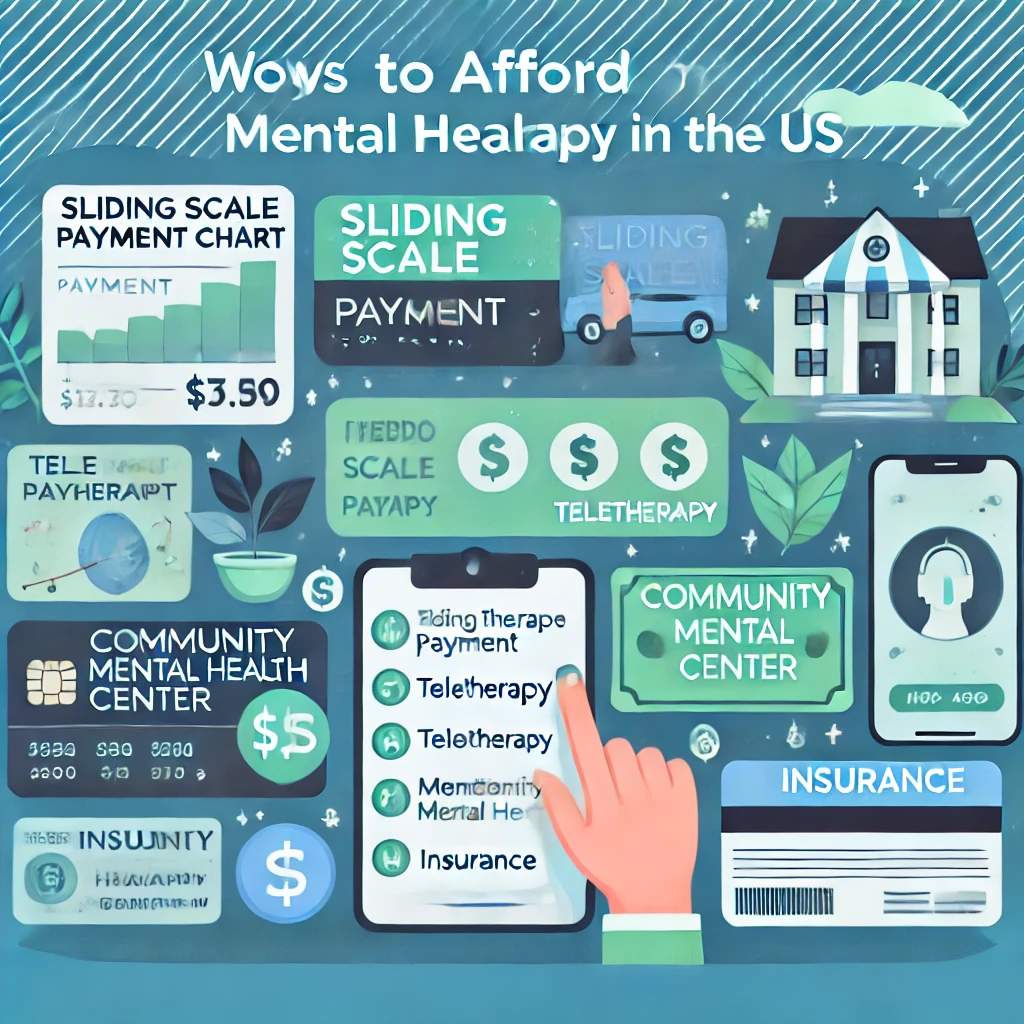
Mental Health Therapy
Accessing mental health therapy in the United States can be challenging due to high costs, but it’s not impossible. There are numerous strategies and resources that can help make therapy more affordable or even free. Whether you’re insured, underinsured, or uninsured, the following tips can help you get the mental health support you need without breaking the bank.
1. Check Your Insurance Coverage
If you have health insurance, start by reviewing your policy to see what mental health services are covered.
- Use In-Network Providers: Therapists who are in-network with your insurance often charge lower copays.
- Teletherapy Options: Many insurance plans now cover virtual therapy, which is often cheaper than in-person sessions.
- Check for Limitations: Some plans may limit the number of therapy sessions covered annually, so clarify this with your insurance provider.
Pro Tip: Use your insurance company’s online directory to find in-network therapists in your area.
2. Look for Sliding-Scale Therapists
Many therapists offer a sliding-scale payment system, which adjusts fees based on your income.
- How It Works: Fees are reduced to fit your financial situation, making therapy more accessible.
- How to Find Them: Search directories like Open Path Collective, which connects clients with therapists offering sessions for as little as $30-$60.
3. Utilize Community Mental Health Centers
Community mental health centers provide affordable or free therapy services to those in need.
- What They Offer: These centers often provide individual therapy, group therapy, and psychiatric care at reduced costs.
- Who They Serve: Typically, they cater to low-income individuals or those without insurance.
- How to Find Them: Use the SAMHSA Treatment Locator to locate a center near you.
4. Access Therapy at Universities
Universities with psychology or counseling programs often offer low-cost therapy sessions provided by graduate students.
- How It Works: Graduate students work under the supervision of licensed professionals, ensuring quality care at a fraction of the cost.
- Who to Contact: Look up local universities with mental health programs and inquire about their clinic services.
5. Search for Nonprofit Organizations
Many nonprofits provide affordable or free mental health services for specific populations, such as veterans, LGBTQ+ individuals, or survivors of trauma.
- Examples:
- NAMI (National Alliance on Mental Illness): Offers support groups and referrals for affordable therapy.
- Give an Hour: Connects veterans and their families with free mental health professionals.
- Trevor Project: Provides free resources for LGBTQ+ youth.
- How to Start: Research nonprofit organizations that cater to your specific needs or demographics.
6. Consider Online Therapy Platforms
Online therapy platforms are often more affordable than traditional in-person sessions.
- Popular Platforms:
- BetterHelp: Offers subscriptions starting at $60-$90 per week, with financial aid available.
- Talkspace: Accepts some insurance plans and provides flexible pricing options.
- Regain: Focuses on couples therapy at lower costs.
- Advantages: These platforms allow you to connect with licensed therapists from the comfort of your home.
7. Join Support Groups
While not a replacement for one-on-one therapy, support groups can provide emotional support and guidance.
- Where to Find Them:
- Local community centers or nonprofits.
- Organizations like Alcoholics Anonymous (AA) or Depression and Bipolar Support Alliance (DBSA).
- Online platforms like Reddit or Facebook Groups for mental health communities.
- Cost: Free or low-cost in most cases.
8. Use Employee Assistance Programs (EAPs)
If you’re employed, check whether your company offers an Employee Assistance Program.
- What They Provide: EAPs often include free, short-term counseling sessions (typically 3-6) for employees and their families.
- How to Access: Contact your HR department for details.
9. Negotiate with Your Therapist
If you’ve found a therapist you want to work with but their rates are out of your budget, don’t hesitate to ask about reduced fees.
- What to Say: Politely explain your financial situation and ask if they offer sliding-scale fees or payment plans.
- Why It Works: Many therapists are willing to work with clients to make therapy accessible.
10. Take Advantage of Free Helplines and Crisis Support
If you’re in immediate need of support but can’t afford therapy, helplines can provide free, confidential assistance.
- Examples of Free Helplines:
- 988 Suicide & Crisis Lifeline: Call or text 988 for 24/7 support.
- Crisis Text Line: Text HOME to 741741 to connect with a trained counselor.
- NAMI Helpline: Call 1-800-950-NAMI for guidance on resources.
11. Research Local Grants or Assistance Programs
Some local governments, nonprofits, and organizations offer financial assistance for mental health care.
- How to Find Them: Search for programs in your area that provide grants or vouchers for therapy.
Final Thoughts
Mental health therapy is a crucial investment in your well-being, but it doesn’t have to be prohibitively expensive. By exploring these options, you can find affordable therapy services that fit your financial situation. Whether it’s through sliding-scale fees, community centers, or online platforms, there are resources available to ensure you get the help you need.
For more tips on improving your photography and editing skills, check out helpful guides to take your selfies to the next level.
Добавить комментарий