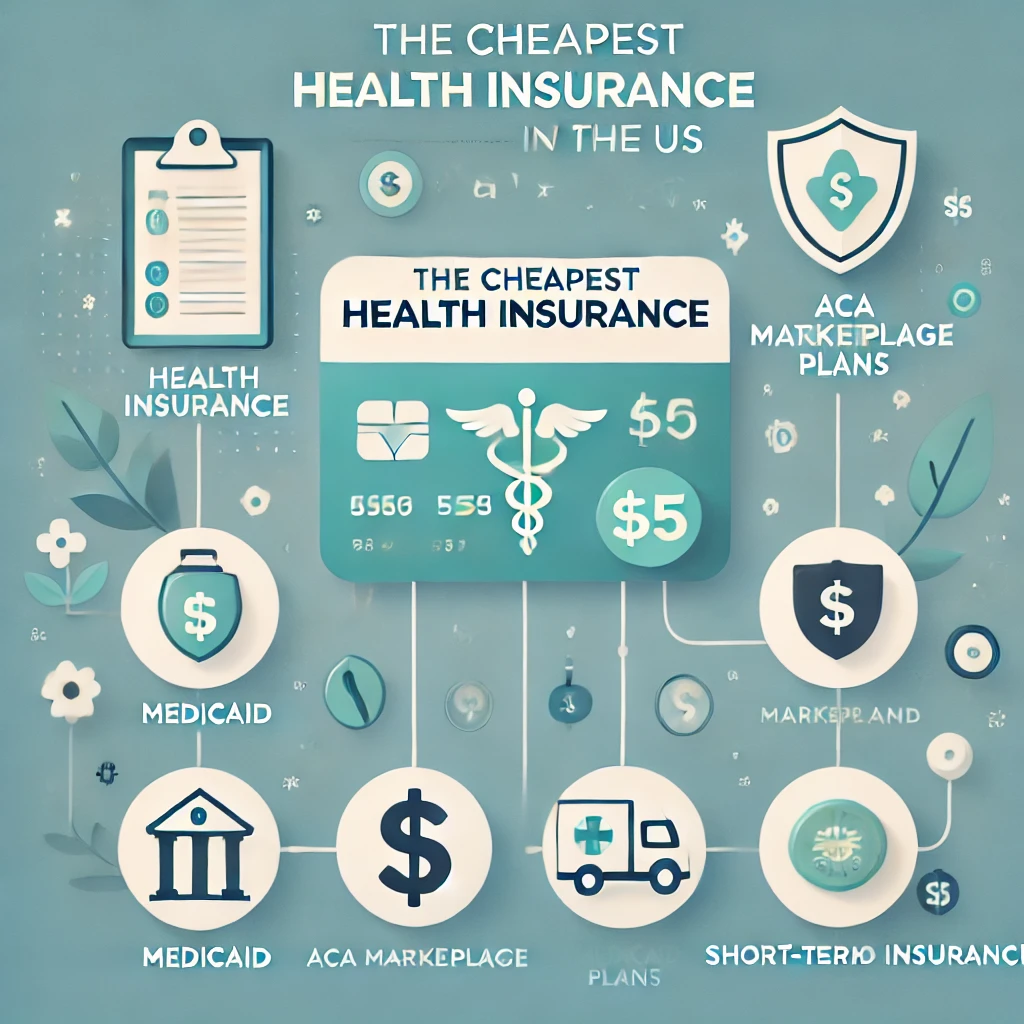
Cheapest Health Insurance
Finding affordable health insurance in the United States can feel overwhelming, especially with the rising cost of healthcare. However, there are several options available for individuals and families who are looking for the cheapest health insurance plans. The best choice for you will depend on your income, health needs, and location. Below, we’ll break down the most affordable health insurance options and what to consider when choosing a plan.
1. Medicaid: Free or Low-Cost Insurance
Medicaid is the most affordable option for low-income individuals and families. It provides free or very low-cost health coverage and is funded jointly by federal and state governments.
- Who Qualifies: Eligibility is based on income and varies by state. In most states, if your income is below 138% of the federal poverty level (FPL), you may qualify.
- Coverage: Medicaid covers doctor visits, hospital stays, prescriptions, preventive care, and more.
- Cost: Free or minimal copays for most services.
How to Apply: Visit your state’s Medicaid website or use the Health Insurance Marketplace to check eligibility.
2. Children’s Health Insurance Program (CHIP)
For families with children who don’t qualify for Medicaid but can’t afford private insurance, CHIP is an affordable option.
- Who Qualifies: CHIP is for children under 19 and pregnant women in low- to moderate-income families.
- Coverage: Includes routine check-ups, vaccinations, doctor visits, prescriptions, and dental care.
- Cost: Low premiums and no or low copays.
How to Apply: Visit InsureKidsNow.gov for details.
3. Marketplace Plans with Subsidies
Health insurance plans on the Affordable Care Act (ACA) Marketplace can be affordable if you qualify for subsidies.
- Who Qualifies for Subsidies: If your income is between 100% and 400% of the FPL, you may qualify for premium tax credits to reduce monthly costs.
- Types of Plans: Bronze and Silver plans tend to have the lowest premiums.
- Bronze Plans: Low monthly premiums but higher out-of-pocket costs.
- Silver Plans: Higher premiums but lower deductibles and better cost-sharing reductions if you qualify.
- Cost: After subsidies, premiums can be as low as $0 in some cases.
How to Apply: Visit HealthCare.gov to compare plans and check subsidy eligibility.
4. Catastrophic Health Insurance
Catastrophic plans are designed for young and healthy individuals who want coverage for emergencies without paying high premiums.
- Who Qualifies: Available for people under 30 or those with a hardship exemption.
- Coverage: Covers essential health benefits after you meet a high deductible. Preventive care is included without a deductible.
- Cost: Low monthly premiums but very high deductibles.
Considerations: This is a good option if you rarely need medical care but want protection in case of major accidents or illnesses.
5. Short-Term Health Insurance Plans
Short-term health insurance plans provide temporary coverage for individuals who are between jobs or waiting for other coverage to start.
- Who Qualifies: Anyone, but these plans are not ACA-compliant and may deny coverage for pre-existing conditions.
- Coverage: Limited benefits that typically cover emergencies but exclude preventive care or maternity care.
- Cost: Monthly premiums are low, but coverage is minimal, and you may face high out-of-pocket costs.
How to Apply: Contact private insurance companies or brokers that offer short-term plans.
6. Employer-Sponsored Health Insurance
If your employer offers health insurance, it’s often the most affordable and comprehensive option.
- Who Qualifies: Employees of companies that provide group health insurance.
- Coverage: Depends on the employer, but it typically includes medical, prescription, and sometimes dental and vision coverage.
- Cost: Employers usually cover a portion of the premium, making it cheaper than purchasing an individual plan.
Pro Tip: Check if your employer offers an HSA (Health Savings Account) or FSA (Flexible Spending Account) to help cover out-of-pocket costs tax-free.
7. Health Sharing Programs
Health sharing programs are not traditional insurance but can be an affordable alternative. Members pool their money to cover each other’s medical expenses.
- Who Qualifies: Typically available to individuals and families who meet specific lifestyle requirements (e.g., religious affiliations).
- Coverage: Basic medical expenses, but may exclude preventive care or pre-existing conditions.
- Cost: Monthly contributions are often lower than insurance premiums, but coverage is limited.
Examples: Medi-Share and Liberty HealthShare.
8. State-Specific Health Programs
Some states offer additional low-cost health insurance options. For example:
- MassHealth (Massachusetts) combines Medicaid and CHIP.
- Covered California provides subsidies beyond the federal level.
How to Apply: Check your state’s health insurance marketplace for programs specific to your area.
Final Thoughts
The cheapest health insurance option depends on your income, age, and health needs. Medicaid and CHIP are the most affordable for low-income families, while Marketplace plans with subsidies can make private insurance more accessible. For those who rarely use healthcare, catastrophic or short-term plans may be sufficient. No matter your situation, it’s important to compare plans and review coverage carefully to find the best fit for your budget and healthcare needs.
For more tips on improving your photography and editing skills, check out helpful guides to take your selfies to the next level.
Добавить комментарий