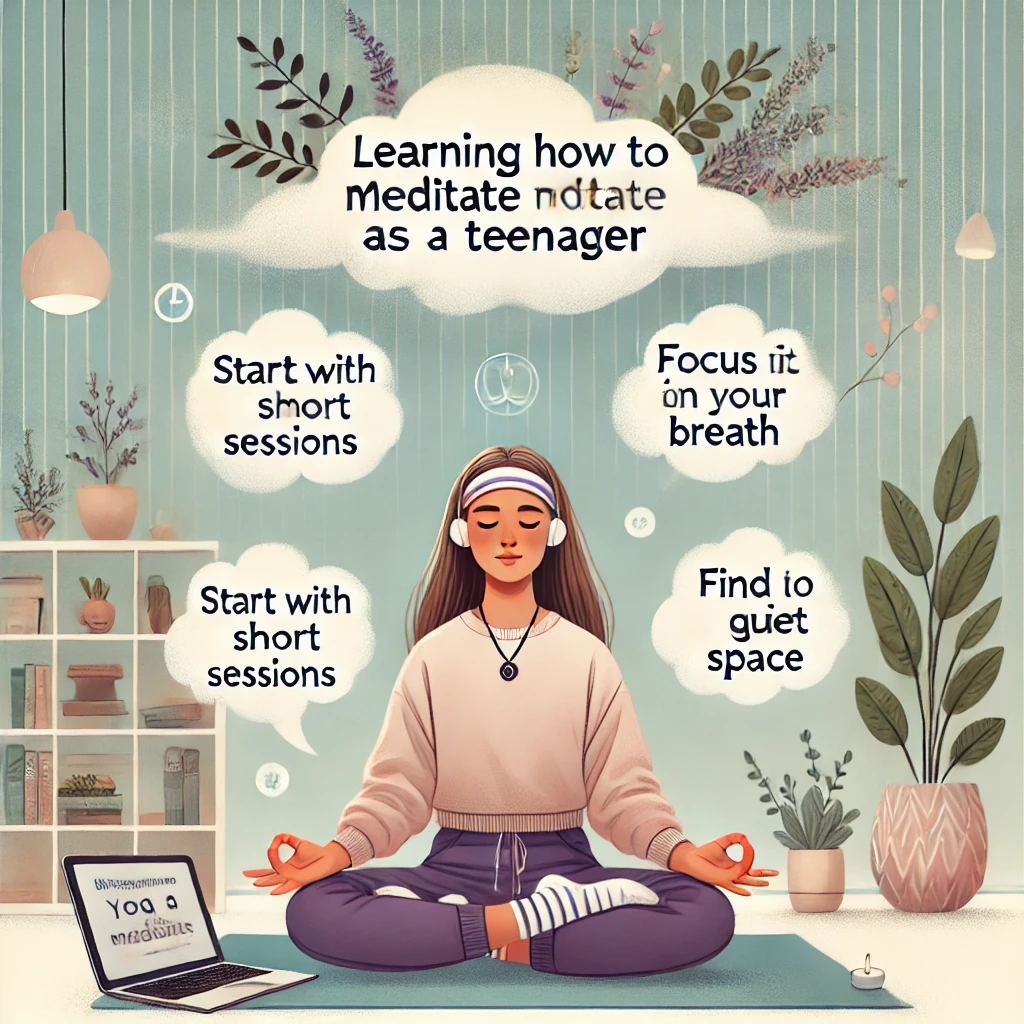
Learning How to Meditate
Meditation is a powerful tool for reducing stress, improving focus, and promoting emotional well-being. As a teenager, incorporating meditation into your routine can help you navigate academic pressures, social challenges, and personal growth. Here’s a step-by-step guide to learning how to meditate effectively.
1. Understand the Benefits of Meditation
Why It Helps:
Knowing why meditation is valuable can motivate you to practice consistently.
Benefits for Teens:
- Reduces stress and anxiety, especially during exams or tough times.
- Improves concentration and focus for schoolwork.
- Enhances emotional awareness and self-control.
- Promotes better sleep and relaxation.
Tip: Think of meditation as a way to recharge your mind, just like sleep recharges your body.
2. Create a Calm Environment
Why It Helps:
A quiet, comfortable space minimizes distractions and helps you focus.
How to Do It:
- Find a spot where you won’t be interrupted, such as your bedroom or a quiet corner.
- Sit on a chair, cushion, or the floor—choose a position that feels natural.
- Dim the lights or close the curtains to create a soothing atmosphere.
Tip: Use noise-canceling headphones or calming background music if your environment is noisy.
3. Start with Short Sessions
Why It Helps:
Starting small makes meditation feel manageable and builds the habit over time.
How to Do It:
- Begin with 3–5 minutes per session and gradually increase as you feel more comfortable.
- Use a timer or guided meditation app to keep track of your session length.
- Focus on consistency—daily practice is more important than long sessions.
Tip: Pair meditation with an existing routine, like before bedtime or after school.
4. Focus on Your Breath
Why It Helps:
Breath awareness anchors your mind and helps you stay present.
How to Do It:
- Sit comfortably and close your eyes if you feel relaxed doing so.
- Inhale deeply through your nose for 4 seconds, hold for 4 seconds, and exhale slowly for 4 seconds.
- Pay attention to the sensation of your breath entering and leaving your body.
Tip: If your mind wanders, gently bring your focus back to your breath without judgment.
5. Try Guided Meditations
Why It Helps:
Guided sessions provide structure and make it easier to stay focused.
Recommended Apps:
- Headspace: Beginner-friendly meditations tailored for teens.
- Calm: Offers guided sessions, sleep meditations, and relaxation techniques.
- Insight Timer: Free meditations covering a variety of themes and lengths.
Tip: Look for guided meditations specifically designed for stress, focus, or self-confidence.
6. Practice Mindfulness Meditation
Why It Helps:
Mindfulness helps you stay present and develop awareness of your thoughts and feelings.
How to Do It:
- Sit quietly and observe your surroundings, thoughts, or emotions without reacting.
- Notice sensations in your body, like tension or relaxation.
- Accept whatever arises without judgment—it’s all part of the process.
Tip: Use mindfulness during everyday activities, like eating or walking, to deepen your practice.
7. Experiment with Different Techniques
Why It Helps:
Exploring various meditation styles helps you find what works best for you.
Techniques to Try:
- Body Scan Meditation: Focus on each part of your body, relaxing it as you go.
- Loving-Kindness Meditation: Send positive thoughts to yourself and others.
- Visualization: Imagine a peaceful scene, like a beach or forest, to calm your mind.
- Mantra Meditation: Repeat a calming word or phrase, such as “peace” or “I am calm.”
Tip: Switch techniques based on your mood or goals for that session.
8. Stay Patient with Yourself
Why It Helps:
Meditation is a skill that improves with practice, so don’t worry if it feels difficult at first.
How to Do It:
- Acknowledge that it’s normal for your mind to wander—it happens to everyone.
- Focus on progress, not perfection; even a few moments of mindfulness are beneficial.
- Celebrate small victories, like feeling more relaxed or focused after a session.
Tip: Think of meditation as training your mind, similar to how exercise trains your body.
9. Use Meditation for Specific Situations
Why It Helps:
Targeted meditation can help with specific challenges like stress, focus, or sleep.
How to Do It:
- Before exams: Use a 5-minute focus meditation to clear your mind.
- Feeling stressed: Try a breathing exercise to calm your nerves.
- Struggling to sleep: Use a bedtime meditation to relax your body and mind.
Tip: Keep a few favorite techniques handy for quick relief during stressful moments.
10. Reflect on Your Progress
Why It Helps:
Regular reflection helps you see the benefits of meditation and stay motivated.
How to Do It:
- Keep a journal to note how you feel before and after each session.
- Track improvements in focus, mood, or stress levels over time.
- Adjust your practice based on what works best for you.
Tip: Look back at your journal entries to remind yourself of how far you’ve come.
Beginner-Friendly Meditation Routine
| Step | Duration |
|---|---|
| Find a quiet space | 1 minute |
| Focus on your breath | 3–5 minutes |
| Practice a simple technique | 2–3 minutes |
| Reflect or journal afterward | 1–2 minutes |
Final Thoughts
Learning how to meditate as a teenager is a valuable investment in your mental health and well-being. By starting small, staying consistent, and exploring different techniques, you can develop a meditation practice that fits your lifestyle and helps you navigate life’s challenges with ease.
For more tips and resources on mindfulness, explore helpful guides and start your meditation journey today!
Добавить комментарий