Financial Stress
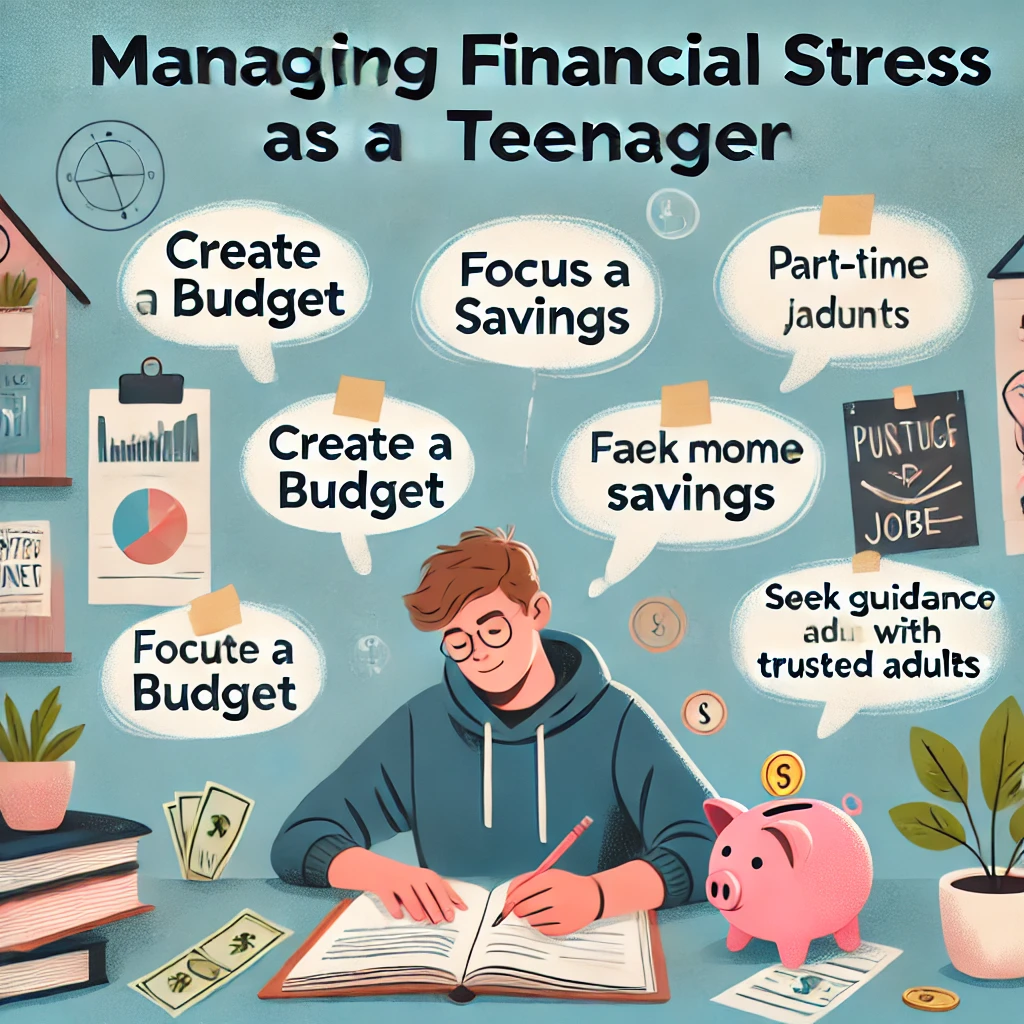
Financial stress can be overwhelming for teenagers, whether it’s about saving for the future, managing a part-time job, or dealing with personal expenses. Learning to manage money wisely from a young age can help you reduce stress and build financial confidence. Here are practical tips to help you manage financial stress as a teenager.
1. Understand Your Financial Situation
Why It Helps:
Knowing where your money comes from and where it goes gives you better control over your finances.
How to Do It:
- List all sources of income, such as allowances, part-time job earnings, or gifts.
- Track your spending habits to identify where your money is going.
- Divide expenses into categories: essentials (school supplies, transportation) and non-essentials (entertainment, snacks).
Tip: Use apps like Mint or a simple notebook to keep track of your income and expenses.
2. Create a Budget
Why It Helps:
A budget helps you allocate your money wisely and avoid overspending.
How to Do It:
- Use the 50/30/20 rule: 50% for essentials, 30% for fun, and 20% for savings.
- Set a weekly or monthly spending limit for non-essentials.
- Stick to your budget by prioritizing needs over wants.
Tip: Review your budget regularly to adjust for any changes in income or expenses.
3. Save for the Future
Why It Helps:
Building savings reduces stress about unexpected expenses and prepares you for future goals.
How to Do It:
- Open a savings account to keep your money secure and earn interest.
- Set aside a portion of any income or allowance—start small if necessary.
- Save for specific goals, such as college, a new gadget, or a trip.
Tip: Automate your savings if possible to make it easier to stick to your plan.
4. Look for Part-Time Job Opportunities
Why It Helps:
Earning your own money gives you financial independence and reduces reliance on others.
How to Do It:
- Apply for part-time jobs at local stores, cafes, or tutoring centers.
- Look for freelance gigs, such as babysitting, lawn care, or online tasks.
- Balance work and school by choosing a job with flexible hours.
Tip: Use job search platforms like Indeed or ask family and friends for referrals.
5. Learn to Say No to Peer Pressure
Why It Helps:
Avoiding unnecessary spending helps you stick to your budget and savings goals.
How to Do It:
- Politely decline invitations to expensive outings or events if they exceed your budget.
- Suggest affordable alternatives, like a movie night at home or a picnic in the park.
- Focus on friends who respect your financial boundaries.
Tip: Remember that true friends won’t judge you for being financially responsible.
6. Educate Yourself About Money
Why It Helps:
Understanding basic financial concepts helps you make informed decisions.
How to Do It:
- Read books or watch videos about personal finance (e.g., The Teen’s Guide to Personal Finance).
- Learn about saving, investing, and budgeting from free online resources.
- Ask parents, teachers, or mentors for financial advice.
Tip: Start small by mastering one concept, like saving or budgeting, before moving to more complex topics.
7. Avoid Impulse Spending
Why It Helps:
Impulse purchases can drain your funds and increase financial stress.
How to Do It:
- Wait 24 hours before making non-essential purchases to determine if you really need them.
- Keep a wishlist of items you want and prioritize based on your budget.
- Avoid carrying too much cash or linking your debit card to apps to reduce temptation.
Tip: Focus on long-term goals to resist short-term impulses.
8. Seek Financial Support or Resources
Why It Helps:
Asking for help can provide relief and valuable guidance during tough times.
How to Do It:
- Talk to your parents or guardians about financial concerns—they may offer solutions or advice.
- Reach out to school counselors for tips on managing financial stress.
- Explore local programs or scholarships that offer financial aid or discounts for teens.
Tip: Don’t be afraid to ask questions—financial literacy is a skill worth developing.
9. Practice Gratitude
Why It Helps:
Focusing on what you have rather than what you lack can reduce financial anxiety.
How to Do It:
- Keep a gratitude journal to write down things you’re thankful for.
- Reflect on the value of non-material things, like friendships, experiences, and achievements.
- Avoid comparing your financial situation to others—it’s not a competition.
Tip: Shift your mindset from “I can’t afford this” to “I’m choosing to save for something meaningful.”
10. Plan for Emergencies
Why It Helps:
Having an emergency fund reduces stress about unexpected expenses.
How to Do It:
- Save small amounts consistently, even if it’s just a few dollars a week.
- Use a separate jar or savings account to avoid dipping into your emergency fund.
- Replenish the fund immediately after using it.
Tip: Set a realistic emergency fund goal, like $100, and gradually increase it as you save.
Financial Stress Management Summary
| Tip | How It Helps |
|---|---|
| Understand your finances | Tracks income and spending for better control. |
| Create a budget | Allocates money to essentials, savings, and fun responsibly. |
| Save for the future | Reduces stress about unexpected expenses and long-term goals. |
| Get a part-time job | Builds financial independence. |
| Avoid peer pressure | Keeps spending in check and protects your budget. |
Final Thoughts
Managing financial stress as a teenager is about developing good habits and staying mindful of your spending. By budgeting, saving, and seeking support when needed, you can build a strong foundation for financial independence and confidence.
For more tips and resources on personal finance, check out helpful guides and start taking control of your finances today!
Добавить комментарий