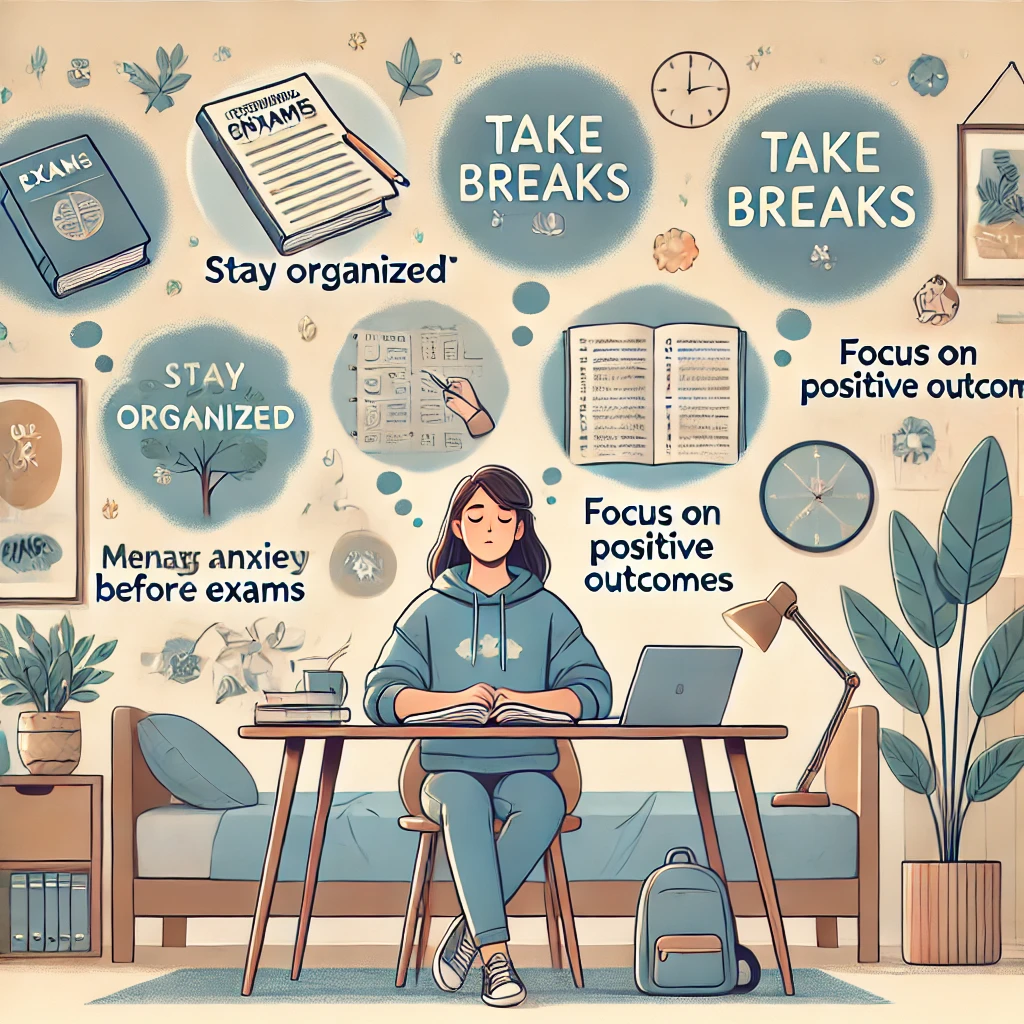
Managing Anxiety
Exams can be a significant source of stress, but managing anxiety effectively can help you perform your best. Here are practical tips to stay calm, focused, and confident before your exams.
1. Start Preparing Early
Why It Helps:
Cramming at the last minute increases stress, while early preparation builds confidence.
How to Do It:
- Create a study schedule that breaks the material into manageable chunks.
- Focus on understanding key concepts rather than memorizing everything.
- Use active study methods like flashcards, practice tests, and teaching concepts to others.
Tip: Begin studying at least two weeks before your exam to allow time for review.
2. Practice Relaxation Techniques
Why It Helps:
Relaxation techniques reduce physical and mental tension caused by anxiety.
How to Do It:
- Practice deep breathing: Inhale for 4 seconds, hold for 4 seconds, and exhale for 6 seconds.
- Try progressive muscle relaxation by tensing and relaxing each muscle group.
- Use mindfulness or meditation apps like Calm or Headspace to stay present.
Tip: Spend 5–10 minutes daily practicing these techniques to build a habit.
3. Stay Organized
Why It Helps:
An organized approach reduces overwhelm and helps you focus on studying.
How to Do It:
- Keep your notes, textbooks, and supplies in one place.
- Make a checklist of topics to cover and check them off as you study.
- Use tools like planners or apps to track your study schedule and exam dates.
Tip: Review your checklist daily to ensure you’re on track without feeling rushed.
4. Focus on What You Can Control
Why It Helps:
Letting go of factors you can’t control reduces unnecessary worry.
How to Do It:
- Focus on studying, practicing, and preparing thoroughly.
- Avoid comparing yourself to others, as everyone’s learning pace is different.
- Remind yourself that worrying won’t change the outcome—it’s your effort that matters.
Tip: Write down things within your control to refocus your energy on actionable steps.
5. Get Adequate Sleep
Why It Helps:
A well-rested brain retains information better and handles stress more effectively.
How to Do It:
- Stick to a consistent sleep schedule, even during exam week.
- Avoid caffeine or screens an hour before bed to improve sleep quality.
- Use relaxation techniques if you have trouble falling asleep.
Tip: Aim for at least 7–8 hours of sleep each night, especially before exams.
6. Take Care of Your Physical Health
Why It Helps:
A healthy body supports a focused and calm mind.
How to Do It:
- Eat balanced meals, including brain-boosting foods like nuts, fruits, and whole grains.
- Stay hydrated by drinking plenty of water throughout the day.
- Exercise regularly, even if it’s just a short walk or yoga session, to release stress.
Tip: Avoid heavy or sugary meals right before studying to prevent sluggishness.
7. Use Positive Self-Talk
Why It Helps:
Encouraging thoughts help replace negative beliefs that fuel anxiety.
How to Do It:
- Replace “I can’t do this” with “I’ve prepared, and I’ll do my best.”
- Write down affirmations like, “I am capable of handling this challenge.”
- Avoid perfectionism—focus on effort rather than flawless results.
Tip: Repeat affirmations daily, especially when you start feeling anxious.
8. Take Practice Exams
Why It Helps:
Simulating exam conditions reduces fear of the unknown and builds familiarity.
How to Do It:
- Use past papers, online resources, or mock tests to practice.
- Time yourself to mimic real exam conditions.
- Review mistakes afterward to identify areas for improvement.
Tip: Treat practice exams as learning opportunities, not measures of your worth.
9. Stay Connected with Supportive People
Why It Helps:
Talking to others can provide reassurance and reduce feelings of isolation.
How to Do It:
- Discuss your concerns with friends, family, or a teacher.
- Form a study group to share tips and encourage each other.
- Reach out to a counselor or mentor if anxiety feels overwhelming.
Tip: Surround yourself with positive influences who believe in your abilities.
10. Plan Your Exam Day
Why It Helps:
Knowing what to expect minimizes last-minute stress and ensures a smooth start.
How to Do It:
- Pack everything you need the night before, like pens, pencils, and ID.
- Plan your route to the exam location, accounting for traffic or delays.
- Arrive early to settle in and avoid feeling rushed.
Tip: Practice a calming routine before the exam, like deep breathing or listening to soothing music.
11. Accept That Some Anxiety Is Normal
Why It Helps:
A little anxiety can sharpen focus and motivate you to perform well.
How to Do It:
- Reframe anxiety as a sign that you care about doing your best.
- Focus on channeling that energy into productive actions, like reviewing or practicing.
- Remind yourself that no one feels 100% calm before exams—it’s part of the process.
Tip: Acknowledge your anxiety without letting it control you.
Final Thoughts
Managing anxiety before exams requires preparation, mindfulness, and self-compassion. By staying organized, practicing relaxation techniques, and focusing on your strengths, you can approach exams with confidence. Remember, it’s not about being perfect—it’s about doing your best.
For more tips and resources to conquer exam stress, explore helpful guides and ace your next test with ease!
Добавить комментарий