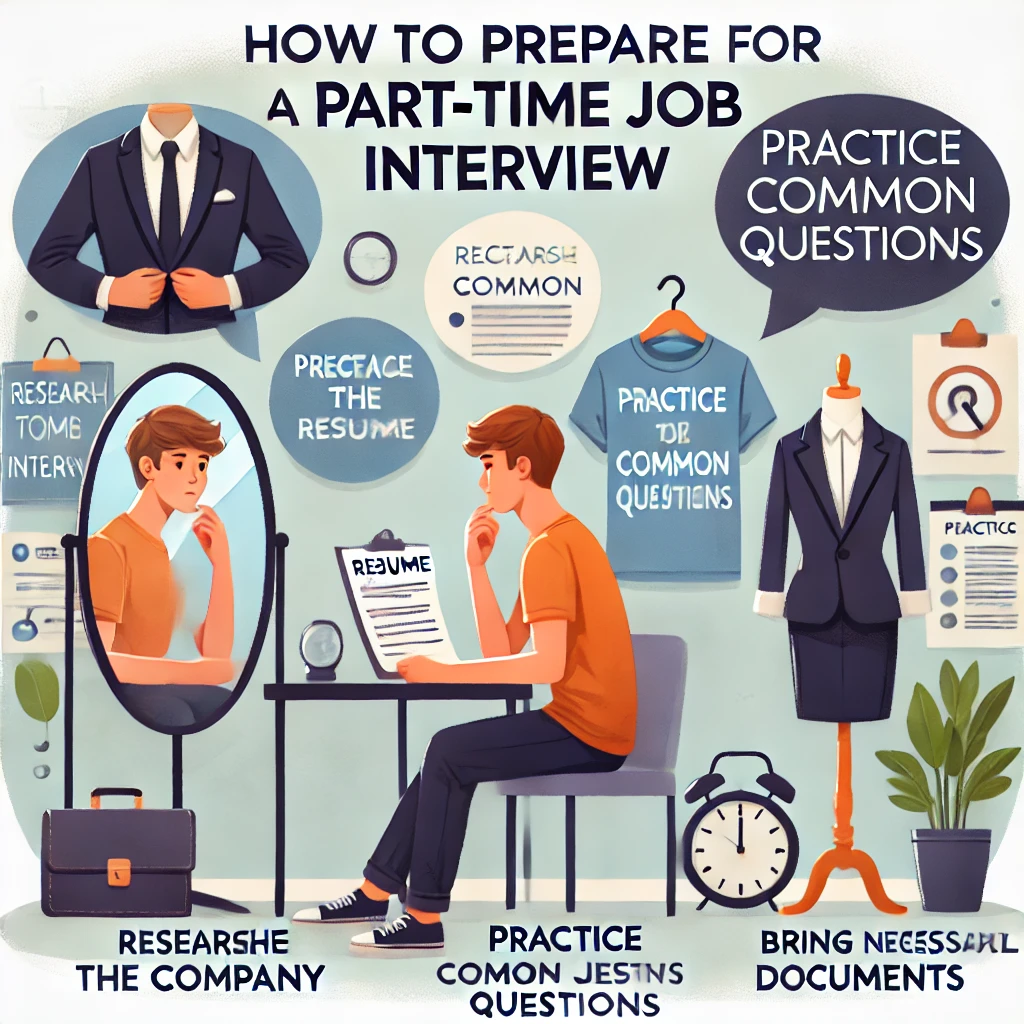
Part-Time Job Interview
Landing a part-time job can be an exciting step toward earning extra money and gaining valuable experience. To ace your interview, preparation is key. Here’s a step-by-step guide to help you present yourself as confident, professional, and ready for the role.
1. Research the Company
Why It Helps:
Understanding the company shows you’re interested and proactive.
How to Do It:
- Visit the company’s website or social media pages to learn about its mission, values, and services.
- Look up customer reviews to get insight into their reputation.
- Familiarize yourself with the specific job description and its responsibilities.
Tip: Mention specific details about the company during the interview to demonstrate your knowledge.
2. Prepare Your Answers
Why It Helps:
Practicing common questions helps you feel more confident and articulate.
Common Questions to Practice:
- “Why do you want to work here?”
- “What are your strengths and weaknesses?”
- “How would you handle a difficult customer or situation?”
- “What is your availability?”
Tip: Use the STAR method (Situation, Task, Action, Result) to answer behavioral questions.
3. Highlight Relevant Skills and Experience
Why It Helps:
Showing how your skills align with the job makes you a strong candidate.
How to Do It:
- List transferable skills like teamwork, communication, problem-solving, and time management.
- Mention extracurricular activities, volunteer work, or previous jobs that relate to the position.
- Prepare examples to illustrate your abilities, such as managing a group project or helping organize an event.
Tip: Even if it’s your first job, focus on skills you’ve developed in school or other activities.
4. Dress Appropriately
Why It Helps:
First impressions matter, and dressing well shows professionalism.
How to Do It:
- Choose clean, neat, and job-appropriate clothing.
- For retail or casual roles, business casual attire like a button-down shirt and slacks works well.
- Avoid overly casual items like ripped jeans, graphic tees, or sneakers.
Tip: Research the company’s dress code to match their style.
5. Bring Necessary Documents
Why It Helps:
Being prepared with the right paperwork shows organization and readiness.
What to Bring:
- A copy of your resume (even if you’ve already submitted one).
- A list of references (teachers, mentors, or previous employers).
- A notepad and pen for taking notes.
Tip: Keep these documents in a folder to look professional and stay organized.
6. Practice Good Body Language
Why It Helps:
Nonverbal cues, like posture and eye contact, convey confidence and enthusiasm.
How to Do It:
- Sit up straight and maintain eye contact during the interview.
- Offer a firm handshake (if appropriate).
- Smile naturally and avoid crossing your arms, which can seem defensive.
Tip: Practice with a friend or in front of a mirror to refine your body language.
7. Prepare Questions for the Employer
Why It Helps:
Asking thoughtful questions shows genuine interest in the role and company.
Examples of Good Questions:
- “What does a typical day in this role look like?”
- “What qualities make someone successful in this position?”
- “Are there opportunities for growth or additional training?”
Tip: Avoid asking about pay or benefits right away—save those for after an offer is made.
8. Arrive Early
Why It Helps:
Punctuality demonstrates responsibility and respect for the interviewer’s time.
How to Do It:
- Plan to arrive 10–15 minutes early to account for unexpected delays.
- Double-check the location and directions beforehand.
- Have the interviewer’s contact information in case of emergencies.
Tip: Use this time to collect your thoughts and review your notes.
9. Stay Calm and Positive
Why It Helps:
A calm and optimistic demeanor leaves a lasting impression.
How to Do It:
- Take deep breaths if you feel nervous before or during the interview.
- Focus on the opportunity to learn and grow, rather than stressing about perfection.
- Be honest and genuine in your responses—don’t try to oversell yourself.
Tip: If you don’t know the answer to a question, it’s okay to admit it and express a willingness to learn.
10. Follow Up After the Interview
Why It Helps:
A thank-you message reinforces your interest and professionalism.
How to Do It:
- Send a brief email or note within 24 hours thanking the interviewer for their time.
- Mention something specific from the conversation to make your message personal.
- Reiterate your enthusiasm for the role and confidence in your ability to contribute.
Tip: Keep the message polite and concise—one or two paragraphs is enough.
Final Thoughts
Preparing for a part-time job interview takes effort, but it’s a valuable opportunity to showcase your skills and personality. With research, practice, and confidence, you’ll make a great impression and increase your chances of landing the job.
For more tips and resources to succeed in your career journey, explore helpful guides and start preparing today!
Добавить комментарий