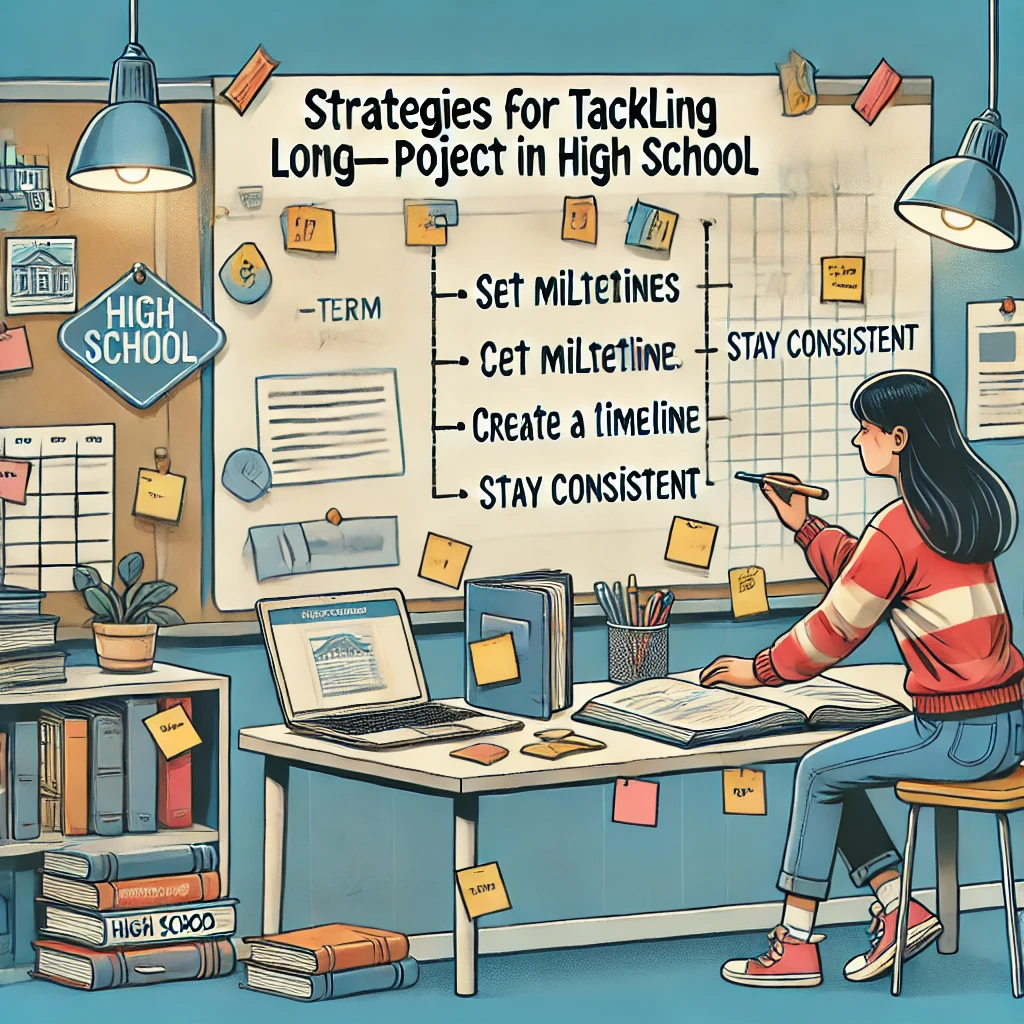
Projects in High School
Long-term projects can feel overwhelming, but they’re an excellent opportunity to develop time management, research, and organizational skills. Breaking the project into manageable steps and staying proactive can help you complete it successfully and on time. Here’s how to tackle long-term projects with confidence.
1. Understand the Project Requirements
Why It Helps:
Knowing exactly what’s expected helps you plan and avoid missing important details.
How to Do It:
- Read the instructions carefully and highlight key points like due dates, required components, and formatting guidelines.
- Ask your teacher for clarification on anything you don’t understand.
- Note any specific criteria for grading, such as creativity, thoroughness, or organization.
Tip: Keep a copy of the project instructions handy for reference throughout the process.
2. Break the Project into Smaller Tasks
Why It Helps:
Dividing the work into smaller steps makes it less intimidating and more manageable.
How to Do It:
- List all the tasks you need to complete, such as research, writing, creating visuals, or assembling a presentation.
- Assign deadlines to each task to stay on track.
- Focus on one step at a time to avoid feeling overwhelmed.
Tip: Use a checklist to monitor your progress and celebrate completing each task.
3. Create a Timeline
Why It Helps:
A timeline ensures you allocate enough time for each part of the project.
How to Do It:
- Work backward from the due date to set milestones for each task.
- Include buffer time for unexpected delays or revisions.
- Use digital tools like Google Calendar or Trello to visualize your timeline.
Tip: Review your timeline regularly and adjust as needed to stay on schedule.
4. Start Early
Why It Helps:
Starting early reduces last-minute stress and gives you time to do your best work.
How to Do It:
- Begin by gathering materials or brainstorming ideas as soon as the project is assigned.
- Schedule regular work sessions instead of waiting until the last minute.
- Tackle the most challenging parts first while your energy and motivation are high.
Tip: Even 15–30 minutes of work each day can add up to significant progress over time.
5. Conduct Thorough Research
Why It Helps:
Strong research provides a solid foundation for your project and enhances its quality.
How to Do It:
- Use reputable sources like books, academic journals, and trusted websites.
- Take organized notes, summarizing key points and recording citations.
- Verify the credibility of your sources to ensure accuracy.
Tip: Use tools like Zotero or EasyBib to manage citations and avoid plagiarism.
6. Stay Organized
Why It Helps:
Keeping your materials and ideas in order makes the project easier to manage.
How to Do It:
- Use folders or binders to store handouts, research, and drafts.
- Create digital folders on your computer for saving documents and resources.
- Label everything clearly so you can find it quickly when needed.
Tip: Organize your workspace to minimize distractions and stay focused.
7. Focus on Quality Over Perfection
Why It Helps:
Striving for quality allows you to complete tasks efficiently without unnecessary stress.
How to Do It:
- Aim to meet the project requirements without overcomplicating things.
- Allow time for revisions but avoid endlessly reworking sections.
- Remember that done is better than perfect, especially under time constraints.
Tip: Ask a teacher or peer for feedback to ensure your work meets expectations.
8. Collaborate Effectively on Group Projects
Why It Helps:
Clear communication and teamwork are key to completing group projects successfully.
How to Do It:
- Divide responsibilities among group members based on strengths and interests.
- Set regular check-ins to discuss progress and address challenges.
- Use tools like Google Docs or Zoom for collaboration if working remotely.
Tip: Resolve conflicts quickly by focusing on the project’s goals rather than personal differences.
9. Overcome Procrastination
Why It Helps:
Staying proactive prevents the stress of rushing to finish at the last minute.
How to Do It:
- Set specific goals for each work session to keep yourself accountable.
- Break long tasks into smaller, more approachable chunks.
- Reward yourself for completing milestones to stay motivated.
Tip: Use apps like Forest or Focus@Will to maintain concentration during study sessions.
10. Review and Revise
Why It Helps:
Revising your work ensures it meets high standards and addresses any gaps.
How to Do It:
- Schedule time for reviewing your project before the final deadline.
- Check for errors in grammar, formatting, or content accuracy.
- Ask a friend, family member, or teacher to review your work for feedback.
Tip: Use tools like Grammarly for proofreading and enhancing your writing.
11. Practice Your Presentation Skills (If Required)
Why It Helps:
Being prepared boosts your confidence and makes a strong impression.
How to Do It:
- Rehearse your presentation several times, focusing on clarity and timing.
- Use visual aids like slides, charts, or props to enhance your delivery.
- Anticipate questions from your audience and prepare answers in advance.
Tip: Record yourself practicing to identify areas for improvement.
Sample Timeline for a 4-Week Project
| Week | Task | Deadline |
|---|---|---|
| 1 | Understand requirements and brainstorm ideas | Day 2 |
| Conduct initial research | Day 5 | |
| 2 | Create an outline or plan | Day 9 |
| Draft the first section | Day 12 | |
| 3 | Complete the remaining sections | Day 16 |
| Review and refine | Day 19 | |
| 4 | Prepare visuals or presentation | Day 22 |
| Final revisions | Day 25 | |
| Submit project | Day 28 |
Final Thoughts
Tackling long-term projects in high school requires planning, consistency, and a proactive mindset. By breaking the work into manageable steps, staying organized, and maintaining focus, you can handle any project with confidence.
For more strategies on time management and academic success, explore helpful resources to enhance your skills!
Добавить комментарий