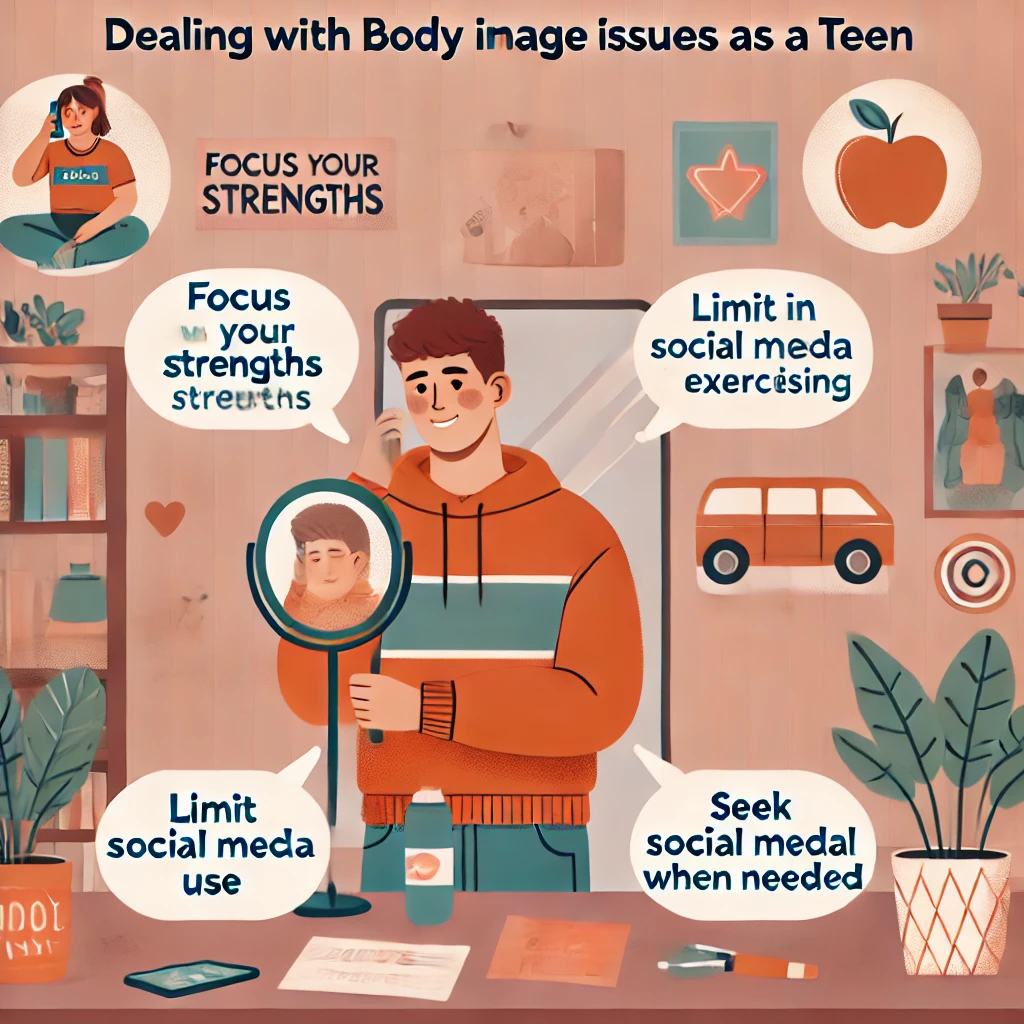
Issues as a Teen
Body image can be a challenging topic for teenagers, as physical changes, social pressures, and media influences often lead to self-doubt or negative feelings about appearance. Developing a positive body image takes time and effort but can greatly improve self-esteem and overall well-being. Here’s how to navigate and address body image issues as a teen.
1. Understand What Body Image Is
Why It Helps:
Recognizing the factors that influence body image allows you to take control of how you view yourself.
How to Do It:
- Understand that body image is about how you perceive and feel about your body, not necessarily how it looks.
- Reflect on where your perceptions come from—social media, peers, or family comments.
- Acknowledge that everyone’s body is unique and constantly changing, especially during teenage years.
Tip: Write down how you feel about your body and identify what influences these thoughts.
2. Limit Social Media Use
Why It Helps:
Social media often promotes unrealistic beauty standards that can negatively impact self-esteem.
How to Do It:
- Follow accounts that promote body positivity and diversity.
- Unfollow or mute accounts that make you feel inadequate or self-conscious.
- Take regular breaks from social media to focus on real-life interactions and experiences.
Tip: Remind yourself that many images online are edited or filtered and don’t represent reality.
3. Practice Gratitude for Your Body
Why It Helps:
Focusing on what your body can do rather than how it looks encourages a healthier perspective.
How to Do It:
- Make a list of things your body allows you to do, like dancing, drawing, or playing sports.
- Thank your body for carrying you through life, even when it feels imperfect.
- Shift your focus from appearance to functionality and strengths.
Tip: Start each day by affirming one thing you love about your body.
4. Surround Yourself with Supportive People
Why It Helps:
Positive influences can help you feel accepted and valued.
How to Do It:
- Spend time with friends and family who uplift and encourage you.
- Avoid people who make negative comments about your appearance or others’.
- Join communities or clubs that promote inclusivity and self-confidence.
Tip: Talk to someone you trust about your feelings to gain perspective and support.
5. Focus on Healthy Habits
Why It Helps:
Caring for your body through balanced habits enhances your well-being and confidence.
How to Do It:
- Eat a variety of nutritious foods to fuel your body without obsessing over calorie counts.
- Engage in physical activities you enjoy, like swimming, dancing, or hiking.
- Get enough sleep and manage stress through mindfulness or relaxation techniques.
Tip: Avoid extreme diets or workout routines that prioritize appearance over health.
6. Challenge Negative Thoughts
Why It Helps:
Reframing self-critical thoughts reduces their impact and builds self-esteem.
How to Do It:
- Notice when you’re being overly critical of your body.
- Ask yourself if you would say the same thing to a friend or loved one.
- Replace negative statements with positive affirmations, like, “I am more than my appearance.”
Tip: Keep a journal to track and challenge recurring negative thoughts.
7. Celebrate Your Uniqueness
Why It Helps:
Appreciating what makes you different fosters self-acceptance.
How to Do It:
- Focus on qualities that make you special, such as your kindness, humor, or creativity.
- Embrace features that set you apart, like freckles, curly hair, or your smile.
- Remind yourself that perfection is a myth, and individuality is beautiful.
Tip: Write down three things you love about yourself each week to reinforce positivity.
8. Avoid Comparisons
Why It Helps:
Comparing yourself to others can lead to unrealistic expectations and dissatisfaction.
How to Do It:
- Remind yourself that everyone has insecurities, even those who seem confident.
- Focus on your progress and personal growth rather than comparing with peers.
- Limit exposure to situations or people that trigger comparisons.
Tip: Celebrate others’ beauty and success without diminishing your own.
9. Seek Professional Support If Needed
Why It Helps:
Therapists or counselors can provide tools to manage body image issues effectively.
How to Do It:
- Talk to a school counselor about your feelings and concerns.
- Ask for help finding a therapist who specializes in self-esteem or body image issues.
- Join support groups to connect with others facing similar challenges.
Tip: Seeking help is a sign of strength, not weakness.
10. Explore Body-Positive Resources
Why It Helps:
Books, podcasts, and websites can inspire and encourage a healthier outlook.
Recommendations:
- Books: Body Kindness by Rebecca Scritchfield or The Body Image Workbook for Teens by Julia V. Taylor.
- Podcasts: The Body Positive Podcast or Confidence Chronicles.
- Websites: The Body Positive or National Eating Disorders Association (NEDA).
Tip: Use these resources to educate yourself and build a positive mindset.
Final Thoughts
Dealing with body image issues as a teen is a journey, but with patience and self-compassion, you can develop a healthier relationship with yourself. Remember, your worth is not defined by your appearance, and focusing on your strengths and individuality will help you thrive.
For additional guidance and tools to support self-esteem, check out helpful resources designed to empower you on this journey!
Добавить комментарий