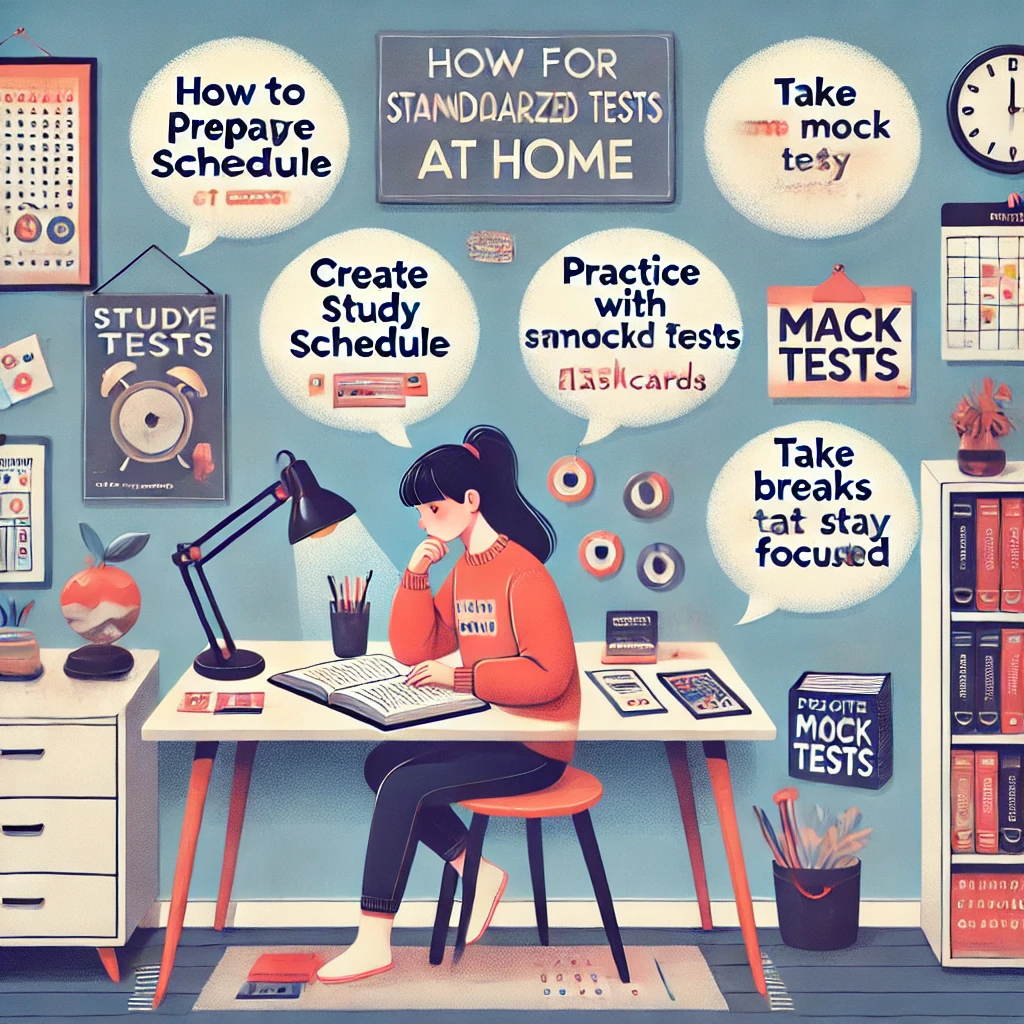
Standardized Tests
Preparing for standardized tests like the SAT, ACT, or AP exams can be challenging, but with the right strategies, you can maximize your performance from the comfort of home. Here’s a step-by-step guide to help you study effectively and confidently.
1. Understand the Test Format and Content
Why It Helps:
Knowing what to expect reduces anxiety and allows you to focus on what matters most.
How to Do It:
- Visit the official test website to review the structure, question types, and scoring.
- Download practice materials or sample questions to familiarize yourself with the format.
- Identify the subjects or sections you need to focus on, such as math, reading, or writing.
Tip: Write down key details, like the time limits for each section, and keep them visible during your prep.
2. Create a Study Schedule
Why It Helps:
A schedule keeps you organized and ensures consistent progress.
How to Do It:
- Divide your study time across subjects and topics based on your strengths and weaknesses.
- Set aside specific times each day or week for studying.
- Include regular breaks to prevent burnout.
Tip: Use a planner or digital calendar to track your progress and stay accountable.
3. Use High-Quality Study Resources
Why It Helps:
Reliable materials provide accurate practice and targeted strategies.
Recommended Resources:
- Official Test Prep Guides: Use books and practice tests from the exam provider.
- Online Platforms: Websites like Khan Academy (for SAT), ACT Academy, or College Board’s AP Classroom offer free resources.
- Apps: Tools like Quizlet or UWorld can help with vocabulary and practice questions.
Tip: Mix practice tests with content reviews to reinforce your learning.
4. Take Practice Tests Regularly
Why It Helps:
Simulating the actual test improves familiarity and builds stamina.
How to Do It:
- Set up a quiet space and stick to the test’s time limits.
- Take full-length practice tests to get used to the pacing and format.
- Analyze your results to identify areas for improvement.
Tip: Schedule practice tests at the same time as the actual exam to mimic test-day conditions.
5. Focus on Weak Areas
Why It Helps:
Targeted practice is more effective than reviewing what you already know.
How to Do It:
- Review incorrect answers from practice tests to understand your mistakes.
- Spend extra time on challenging subjects or question types.
- Use online videos or tutorials to reinforce difficult concepts.
Tip: Keep a list of common errors to avoid repeating them on the actual test.
6. Develop Test-Taking Strategies
Why It Helps:
Strategies can save time and improve accuracy during the exam.
Key Strategies:
- Eliminate Wrong Answers: Narrow down choices to increase your odds of guessing correctly.
- Pace Yourself: Don’t spend too much time on a single question—move on and come back if time permits.
- Read Instructions Carefully: Ensure you understand what each question is asking.
Tip: Practice these strategies during your mock tests to make them second nature.
7. Build Vocabulary and Core Skills
Why It Helps:
Expanding your vocabulary and honing fundamental skills is essential for tests like the SAT and ACT.
How to Do It:
- Use flashcards or apps like Quizlet to learn new words.
- Read a variety of materials, such as news articles or literature, to improve comprehension.
- Practice math fundamentals, such as algebra, geometry, and data analysis.
Tip: Dedicate 10–15 minutes a day to building vocabulary or practicing basic skills.
8. Stay Consistent with Review Sessions
Why It Helps:
Regular reviews reinforce knowledge and prevent last-minute cramming.
How to Do It:
- Set a goal to review notes or flashcards daily.
- Summarize key concepts after each study session to solidify your understanding.
- Rotate through different subjects to keep your study sessions balanced.
Tip: Use spaced repetition techniques to retain information more effectively.
9. Take Care of Your Physical and Mental Health
Why It Helps:
A healthy mind and body enhance focus and performance.
How to Do It:
- Get 7–9 hours of sleep each night to stay energized and alert.
- Exercise regularly to reduce stress and improve concentration.
- Eat balanced meals and stay hydrated, especially leading up to the test day.
Tip: Incorporate relaxation techniques, like meditation or deep breathing, to manage stress.
10. Simulate Test Day Conditions
Why It Helps:
Practicing in a test-like environment builds confidence and reduces anxiety.
How to Do It:
- Set up your practice area to mimic a real test setting.
- Follow the exact timing and break schedule of the test.
- Avoid distractions like phones or background noise.
Tip: Use the same materials (e.g., pencils, calculators) you plan to bring on test day.
11. Stay Positive and Motivated
Why It Helps:
A positive mindset boosts confidence and helps you stay focused.
How to Do It:
- Celebrate small achievements, like mastering a topic or improving your score.
- Surround yourself with supportive friends, family, or study groups.
- Visualize success to keep your goals in perspective.
Tip: Remind yourself that progress matters more than perfection.
Final Thoughts
Preparing for standardized tests at home requires discipline, organization, and the right resources. By creating a consistent study routine, practicing test-taking strategies, and taking care of your well-being, you can approach test day with confidence and readiness.
For more tips and tools to support your preparation journey, explore helpful resources to achieve your best results!
Добавить комментарий