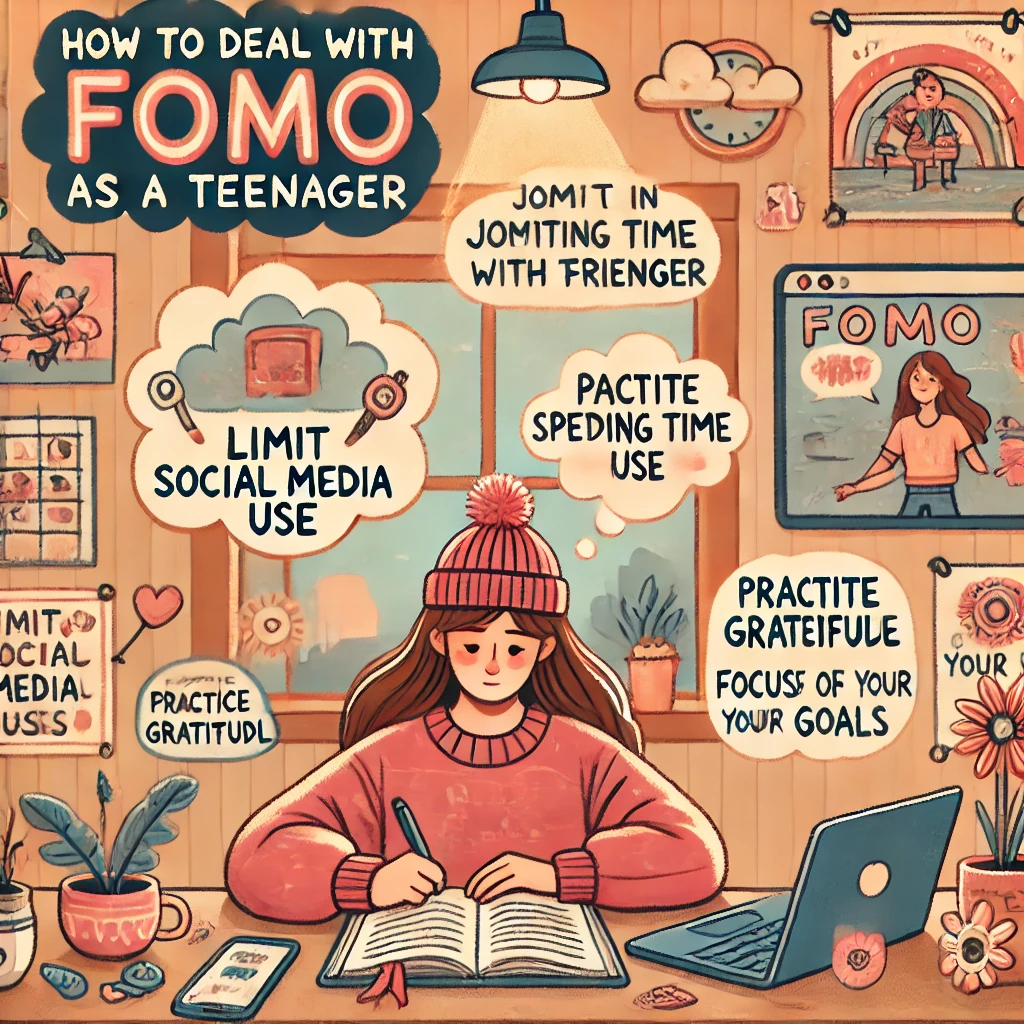
Deal with FOMO
The Fear of Missing Out (FOMO) is a common experience for teenagers, especially in the age of social media, where it’s easy to see what others are doing. FOMO can make you feel anxious, excluded, or even question your own choices. Here are strategies to help you manage FOMO and build a healthier mindset.
1. Understand What FOMO Is
Why It Helps:
Recognizing FOMO for what it is—an emotional response—makes it easier to address.
How to Do It:
- Acknowledge your feelings without judgment.
- Understand that FOMO is normal and experienced by everyone at times.
- Remind yourself that social media often shows only the highlights, not the full picture.
Tip: Talk to someone you trust about how FOMO is affecting you—they might share their own experiences.
2. Limit Social Media Use
Why It Helps:
Social media can amplify FOMO by showing curated, idealized versions of others’ lives.
How to Do It:
- Set time limits on apps using tools like Screen Time or Digital Wellbeing.
- Take regular breaks from social media, especially during high-pressure times like exams.
- Unfollow or mute accounts that make you feel inadequate or excluded.
Tip: Replace screen time with hobbies or activities that make you feel happy and fulfilled.
3. Focus on Your Own Goals and Interests
Why It Helps:
Engaging in meaningful activities reduces the urge to compare yourself to others.
How to Do It:
- Pursue hobbies or skills that you’re passionate about, like sports, music, or art.
- Set personal goals and track your progress, celebrating small wins along the way.
- Take pride in your unique journey instead of trying to match someone else’s.
Tip: Create a vision board or journal to stay focused on what matters to you.
4. Practice Gratitude
Why It Helps:
Focusing on what you have, rather than what you’re missing, can shift your perspective.
How to Do It:
- Write down three things you’re grateful for each day.
- Reflect on positive experiences you’ve had recently, no matter how small.
- Share your gratitude with friends or family to strengthen your connections.
Tip: Gratitude journaling can help you feel more content and grounded.
5. Strengthen Your Real-Life Connections
Why It Helps:
Building meaningful relationships reduces feelings of loneliness and exclusion.
How to Do It:
- Spend quality time with close friends and family in person.
- Plan activities that you enjoy together, like movie nights or outdoor adventures.
- Be present during interactions—put away your phone and focus on the moment.
Tip: Deepening relationships with a few people can be more fulfilling than having many surface-level connections.
6. Avoid Comparing Yourself to Others
Why It Helps:
Comparison is a major driver of FOMO and can make you feel like you’re falling behind.
How to Do It:
- Remind yourself that everyone has different timelines and experiences.
- Focus on your achievements and strengths instead of measuring yourself against others.
- Practice affirmations like, “I am enough just as I am.”
Tip: Limit exposure to content that makes you feel inadequate, such as influencers with unrealistic lifestyles.
7. Embrace JOMO (Joy of Missing Out)
Why It Helps:
Learning to enjoy solitude and downtime can help you appreciate the present moment.
How to Do It:
- Find joy in simple activities, like reading, cooking, or walking in nature.
- Recognize the benefits of missing out, such as having time to relax or focus on yourself.
- Practice mindfulness to stay present and appreciate the now.
Tip: Remind yourself that missing one event doesn’t define your social life or worth.
8. Talk About Your Feelings
Why It Helps:
Sharing your thoughts with someone can help you process them and gain perspective.
How to Do It:
- Open up to a trusted friend, family member, or counselor about your FOMO.
- Ask others if they’ve experienced similar feelings—they likely have.
- Seek advice on how they manage FOMO or anxiety related to social situations.
Tip: Talking about your feelings can reduce their intensity and help you feel understood.
9. Plan Your Own Fun Activities
Why It Helps:
Taking initiative to create enjoyable experiences gives you something to look forward to.
How to Do It:
- Organize a small gathering, like a game night, picnic, or study session with friends.
- Plan outings to places you love, such as parks, cafes, or the beach.
- Involve others in brainstorming fun, inclusive activities.
Tip: Being proactive about your social life can help you feel more in control.
10. Remind Yourself That You Can’t Be Everywhere
Why It Helps:
Acknowledging that no one can do it all helps ease the pressure to participate in everything.
How to Do It:
- Accept that missing out on some events is part of life—it doesn’t mean you’re missing out on happiness.
- Focus on quality over quantity when it comes to experiences and relationships.
- Remind yourself that it’s okay to say no to events that don’t align with your priorities.
Tip: Practice self-compassion when you feel FOMO creeping in.
Final Thoughts
FOMO can feel overwhelming at times, but it doesn’t have to take over your life. By focusing on your own journey, cultivating gratitude, and building meaningful connections, you can shift your mindset and reduce its impact. Remember, everyone has moments of feeling left out—it’s how you handle those feelings that makes the difference.
For more tips on managing emotions and building confidence, explore helpful resources to support your growth!
Добавить комментарий