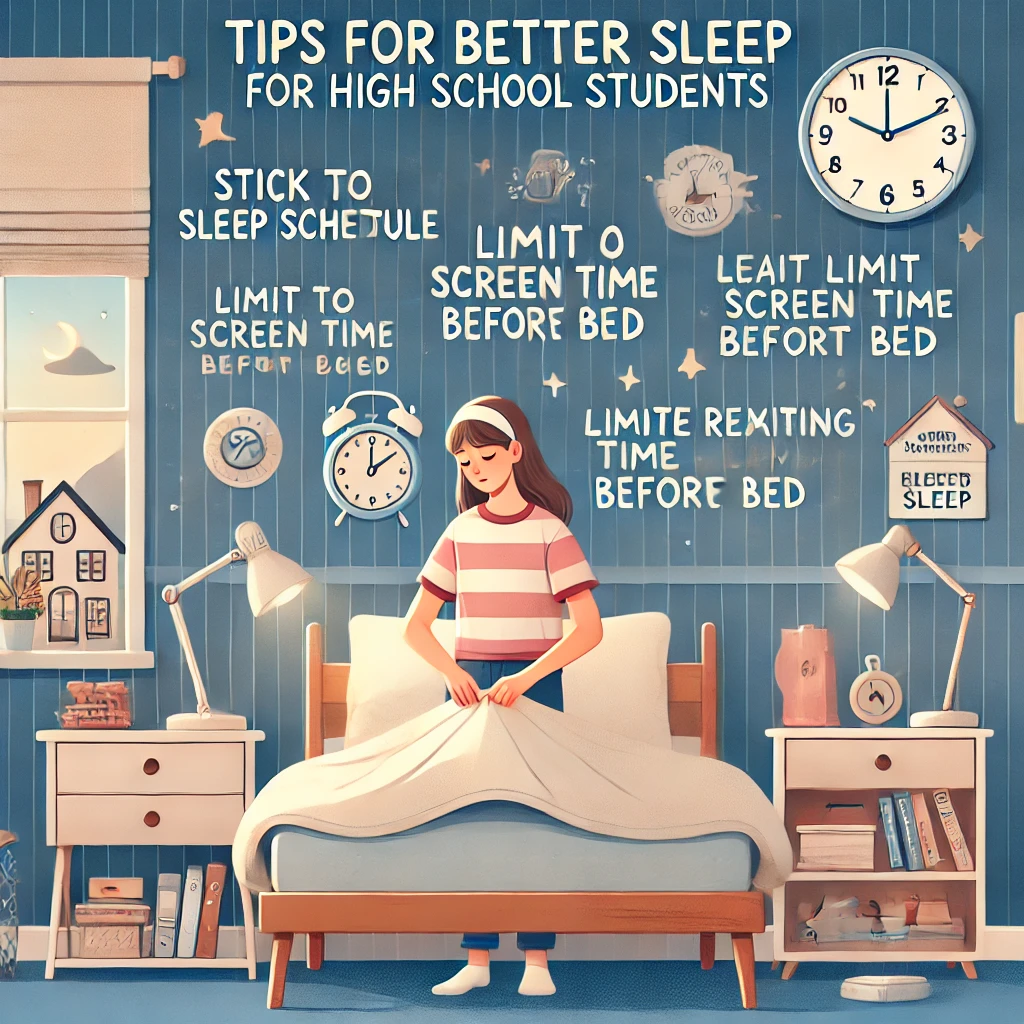
Tips for Better Sleep
Getting enough quality sleep is crucial for high school students to stay focused, perform well in academics, and maintain good health. However, balancing homework, extracurriculars, and social life can make it challenging to establish a healthy sleep routine. Here are practical tips to help high school students improve their sleep habits.
1. Stick to a Consistent Sleep Schedule
Why It Helps:
Going to bed and waking up at the same time every day helps regulate your internal clock.
How to Do It:
- Set a regular bedtime and wake-up time, even on weekends.
- Gradually adjust your schedule if needed—15-minute increments work best.
- Avoid oversleeping or taking long naps during the day.
Tip: Aim for 8–10 hours of sleep per night, as recommended for teenagers.
2. Create a Relaxing Bedtime Routine
Why It Helps:
A calming routine signals your body that it’s time to wind down.
How to Do It:
- Spend 30–60 minutes before bed doing relaxing activities like reading or meditating.
- Avoid stimulating activities, like playing video games or watching intense TV shows.
- Take a warm shower or listen to soothing music to help you relax.
Tip: Keep your routine consistent to condition your mind and body for sleep.
3. Limit Screen Time Before Bed
Why It Helps:
Blue light from screens interferes with the production of melatonin, a hormone that promotes sleep.
How to Do It:
- Stop using phones, tablets, and computers at least an hour before bedtime.
- Use blue-light-blocking glasses or enable night mode on your devices if necessary.
- Charge your phone outside your bedroom to avoid late-night scrolling.
Tip: Replace screen time with an offline activity like journaling or reading a book.
4. Optimize Your Sleep Environment
Why It Helps:
A comfortable and quiet environment promotes deeper, more restful sleep.
How to Do It:
- Keep your bedroom cool, dark, and quiet.
- Use blackout curtains or an eye mask to block out light.
- Invest in a supportive mattress and comfortable bedding.
Tip: Use a white noise machine or fan to drown out background noise if needed.
5. Watch Your Diet and Hydration
Why It Helps:
What you eat and drink affects your ability to fall and stay asleep.
How to Do It:
- Avoid caffeine and sugary foods in the afternoon and evening.
- Eat a light snack if you’re hungry, but avoid heavy or spicy meals before bed.
- Stay hydrated throughout the day but limit liquids in the evening to avoid waking up at night.
Tip: Try snacks like bananas, almonds, or yogurt, which can help promote sleep.
6. Manage Stress and Anxiety
Why It Helps:
Relaxing your mind helps you fall asleep faster and sleep more soundly.
How to Do It:
- Practice deep breathing exercises or meditation to calm your mind before bed.
- Write down worries or to-do lists in a journal to keep them off your mind at night.
- Use apps like Calm or Headspace for guided relaxation exercises.
Tip: If stress is persistent, consider talking to a trusted adult or counselor for support.
7. Be Active During the Day
Why It Helps:
Regular physical activity helps regulate your sleep-wake cycle.
How to Do It:
- Engage in at least 30 minutes of moderate exercise daily, such as walking or sports.
- Avoid vigorous exercise close to bedtime, as it can be too stimulating.
- Spend time outdoors during the day to boost your exposure to natural light.
Tip: Morning workouts are ideal for improving energy levels and sleep quality.
8. Limit Naps
Why It Helps:
Long or late naps can make it harder to fall asleep at night.
How to Do It:
- Keep naps under 30 minutes.
- Nap earlier in the afternoon rather than later in the day.
- Use naps strategically to recharge without disrupting nighttime sleep.
Tip: If you feel drowsy during the day, try a quick walk or stretch instead of napping.
9. Avoid Using Your Bed for Non-Sleep Activities
Why It Helps:
Associating your bed with sleep strengthens the connection between your mind and body for rest.
How to Do It:
- Use your bed only for sleeping and relaxing—not for homework or watching TV.
- If you can’t fall asleep after 20 minutes, get up and do a quiet activity until you feel drowsy.
Tip: Create a separate study or lounging area to keep your bed a dedicated sleep zone.
10. Be Patient and Persistent
Why It Helps:
Building better sleep habits takes time and consistency.
How to Do It:
- Give your new routine a few weeks to show noticeable results.
- Track your sleep patterns using a journal or app to identify areas for improvement.
- Adjust your habits as needed to find what works best for you.
Tip: Celebrate small improvements in your sleep routine to stay motivated.
Final Thoughts
Improving sleep as a high school student requires commitment and small changes to your daily routine. By prioritizing rest and creating healthy habits, you’ll feel more energized, focused, and ready to tackle your busy schedule.
For more tips and resources on improving sleep and overall well-being, check out helpful guides to support your journey!
Добавить комментарий