Self-Esteem
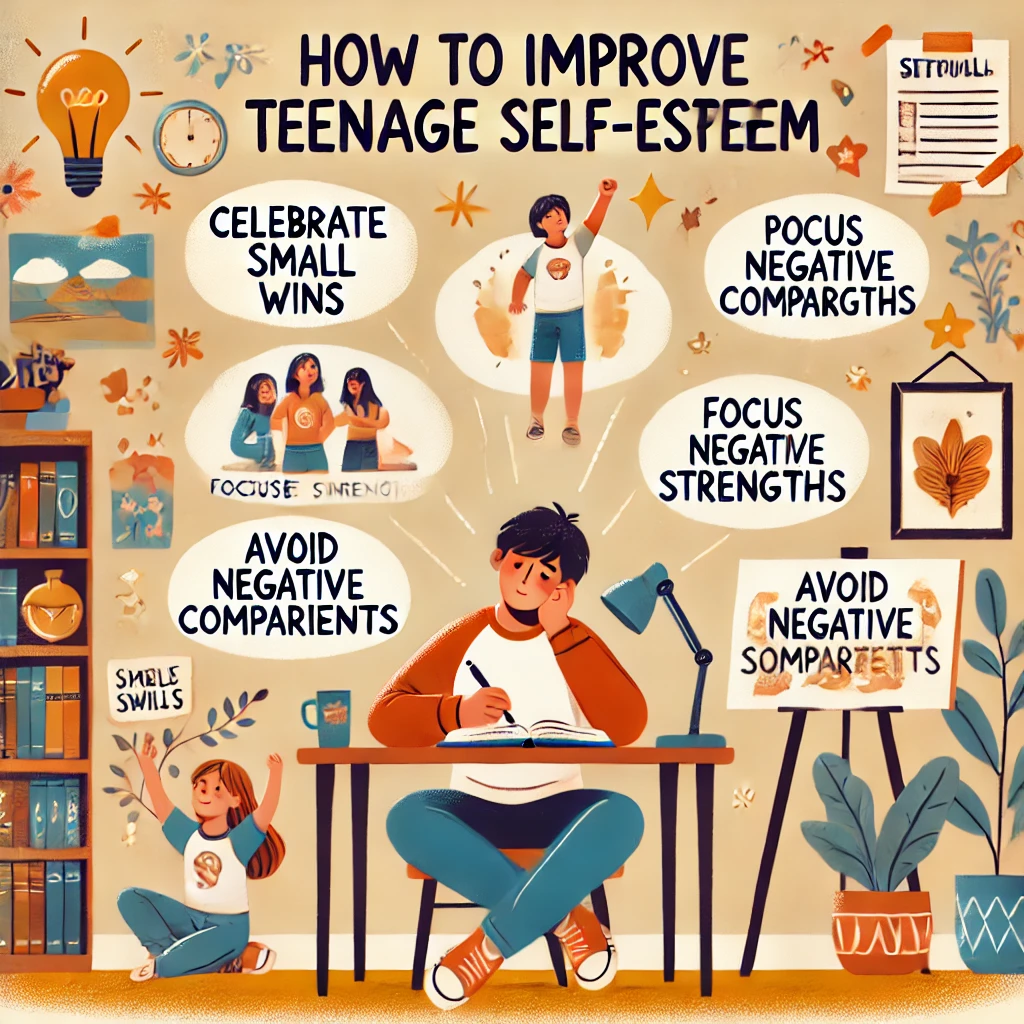
Teenage years are a time of rapid growth, self-discovery, and change. It’s common for teens to struggle with self-esteem during this period, but building confidence is essential for personal and social development. Here are practical strategies to help improve self-esteem and embrace self-worth.
1. Focus on Your Strengths
Why It Helps:
Recognizing what you’re good at boosts confidence and helps you feel valued.
How to Do It:
- List your skills, talents, and positive traits, no matter how small they seem.
- Celebrate achievements, whether they’re academic, athletic, or creative.
- Remind yourself of past successes when facing challenges.
Tip: Write down three things you’re proud of every day to reinforce positivity.
2. Avoid Negative Self-Talk
Why It Helps:
Replacing self-criticism with self-compassion creates a healthier mindset.
How to Do It:
- Challenge negative thoughts by asking, “Would I say this to a friend?”
- Replace “I’m not good enough” with “I’m learning and improving.”
- Practice affirmations like, “I deserve kindness and respect.”
Tip: Keep a journal to track and counteract negative thoughts.
3. Set Realistic Goals
Why It Helps:
Achieving small, attainable goals builds confidence and motivation.
How to Do It:
- Break long-term goals into manageable steps.
- Focus on personal progress rather than perfection.
- Celebrate milestones along the way, no matter how small.
Tip: Use tools like planners or apps to track your goals and successes.
4. Surround Yourself with Positive Influences
Why It Helps:
Supportive relationships reinforce self-worth and provide encouragement.
How to Do It:
- Spend time with friends and family who uplift you.
- Limit time with people who are overly critical or unsupportive.
- Join groups or clubs that align with your interests to meet like-minded peers.
Tip: Building strong social connections can help you feel valued and accepted.
5. Embrace Your Uniqueness
Why It Helps:
Appreciating what makes you unique fosters self-acceptance.
How to Do It:
- Recognize that everyone has different strengths and weaknesses.
- Focus on what makes you happy, not what others expect of you.
- Celebrate your individuality by pursuing hobbies or styles that reflect who you are.
Tip: Avoid comparing yourself to others—focus on your own journey.
6. Take Care of Your Physical Health
Why It Helps:
Feeling good physically can boost confidence and improve your mood.
How to Do It:
- Get at least 7–9 hours of sleep every night.
- Eat balanced meals and stay hydrated throughout the day.
- Engage in physical activities you enjoy, like dancing, biking, or sports.
Tip: Regular exercise releases endorphins that improve mood and reduce stress.
7. Learn to Handle Criticism Constructively
Why It Helps:
Understanding that criticism is part of growth helps you stay resilient.
How to Do It:
- Separate constructive feedback from negative criticism.
- Use helpful advice to improve rather than dwelling on mistakes.
- Remind yourself that everyone makes errors—it’s how you learn from them that matters.
Tip: Practice saying, “Thank you for the feedback, I’ll work on that.”
8. Practice Gratitude
Why It Helps:
Focusing on the positive aspects of life can shift your perspective and reduce self-doubt.
How to Do It:
- Write down three things you’re grateful for every day.
- Reflect on positive experiences, no matter how small.
- Share your gratitude with others to strengthen relationships.
Tip: Keep a gratitude journal to reinforce positivity and self-awareness.
9. Challenge Yourself to Try New Things
Why It Helps:
Stepping out of your comfort zone builds confidence and resilience.
How to Do It:
- Try a new hobby, sport, or club.
- Take small risks, like speaking up in class or joining a group activity.
- Focus on the experience rather than the outcome.
Tip: Success comes from growth, not perfection—every step counts.
10. Limit Social Media Use
Why It Helps:
Reducing social media exposure can help avoid unrealistic comparisons and negativity.
How to Do It:
- Follow accounts that inspire and motivate you, not those that make you feel inadequate.
- Set time limits on apps to prevent overuse.
- Remember that what people post is often a highlight reel, not the full story.
Tip: Take occasional social media breaks to focus on real-life connections and activities.
11. Give Back to Others
Why It Helps:
Helping others fosters a sense of purpose and boosts self-esteem.
How to Do It:
- Volunteer at a local shelter, food bank, or community center.
- Offer to tutor a younger student or help a friend with their work.
- Perform small acts of kindness, like writing a thank-you note or helping a neighbor.
Tip: Knowing you’ve made a difference can help you feel more confident and fulfilled.
12. Seek Professional Support if Needed
Why It Helps:
Therapists or counselors can provide tools to build self-esteem and navigate challenges.
How to Do It:
- Talk to a school counselor about your feelings.
- Ask for help identifying resources like support groups or therapy.
- Use online mental health tools or hotlines for additional guidance.
Tip: Seeking help is a sign of strength, not weakness.
Final Thoughts
Improving self-esteem takes time and effort, but it’s a journey worth taking. Focus on your strengths, surround yourself with positivity, and remember that you are capable of growth and success.
For more resources on building confidence and self-worth, explore helpful guides designed to support your personal development!
Добавить комментарий