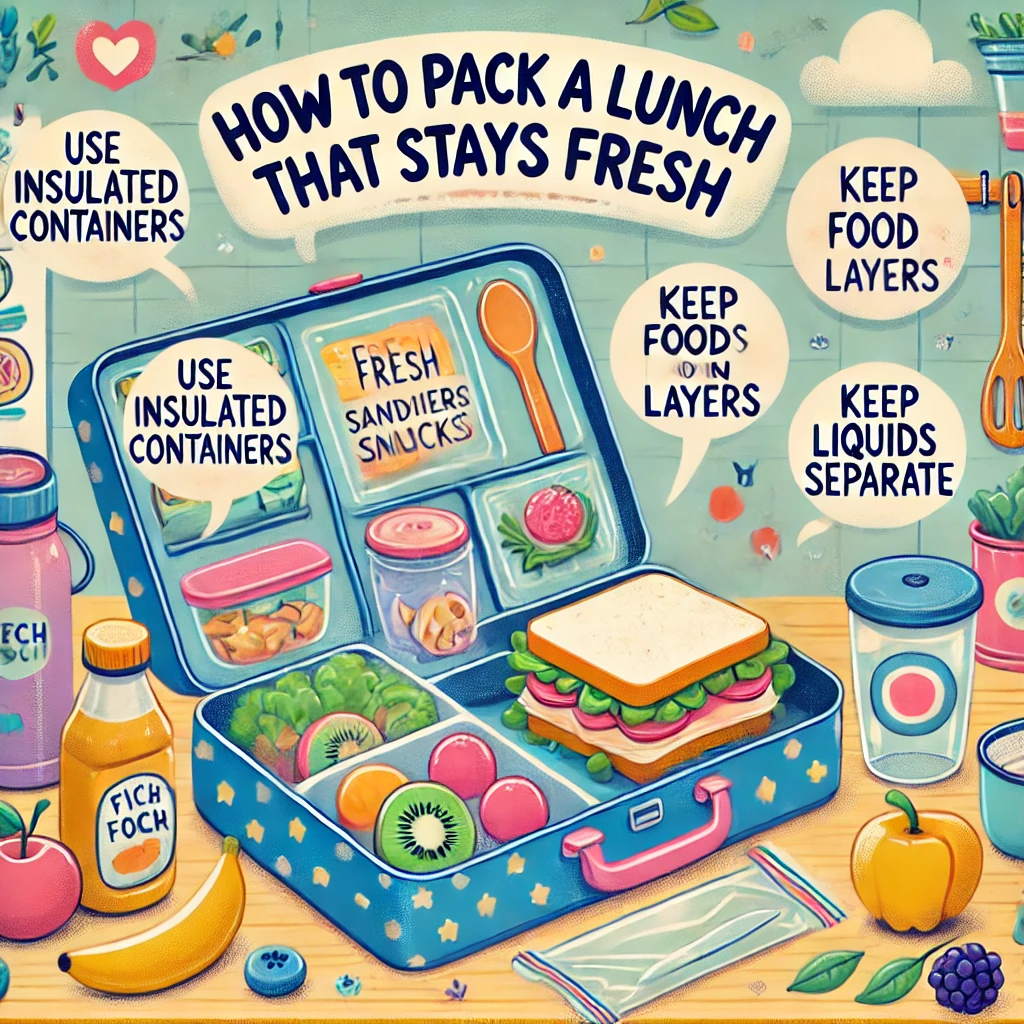
Lunch That Stays Fresh
Packing a lunch that stays fresh all day is essential for enjoying a tasty and safe meal. With the right planning and techniques, you can keep your food fresh, flavorful, and ready to eat no matter how long it stays in your lunchbox. Here’s how to do it step by step.
1. Choose the Right Lunch Container
Why It’s Important:
The container you use plays a big role in keeping your food fresh.
How to Do It:
- Insulated Lunchbox: Keeps food cool or warm for hours.
- Leak-Proof Containers: Prevent sauces or liquids from spilling.
- Bento Boxes: Great for separating different foods.
Tip: Use eco-friendly or reusable containers to reduce waste.
2. Use Ice Packs for Perishable Items
Why It’s Important:
Keeping food at a safe temperature prevents spoilage.
How to Do It:
- Add a reusable ice pack to your lunchbox to keep items cold.
- Freeze water bottles or juice pouches to double as cooling agents.
- Place perishable items, like yogurt or cheese, near the ice pack.
Tip: Use smaller ice packs if space is limited.
3. Pack Foods That Stay Fresh Longer
Why It’s Important:
Some foods naturally hold up better over time.
Examples:
- Fruits: Apples, grapes, and oranges hold up better than bananas or berries.
- Veggies: Carrots, celery, and cherry tomatoes stay crisp.
- Sandwiches: Use hearty breads like whole wheat or ciabatta to avoid sogginess.
Tip: Avoid foods that wilt easily, like lettuce or sliced avocado, unless packed separately.
4. Use Separate Compartments for Wet and Dry Foods
Why It’s Important:
Separating components prevents sogginess and preserves texture.
How to Do It:
- Pack dressings, sauces, or dips in small containers.
- Keep crunchy items, like crackers or chips, in separate bags or compartments.
- Assemble foods like tacos or sandwiches right before eating.
Tip: Use silicone cupcake liners inside containers for easy separation.
5. Wrap Foods Properly
Why It’s Important:
Proper wrapping prevents foods from drying out or becoming stale.
How to Do It:
- Use wax paper or parchment paper to wrap sandwiches tightly.
- Store cut fruits and veggies in airtight bags or containers.
- Add a squeeze of lemon juice to apples or avocados to prevent browning.
Tip: Aluminum foil works well for keeping hot items warm.
6. Include Foods That Can Be Eaten at Room Temperature
Why It’s Important:
Some meals are naturally delicious without heating or chilling.
Examples:
- Pasta salads with vinaigrette (avoid creamy dressings).
- Wraps or roll-ups made with tortillas.
- Protein-packed snacks like nuts, hard-boiled eggs, or jerky.
Tip: Experiment with recipes that taste great cold or at room temperature.
7. Pack Beverages Wisely
Why It’s Important:
The right drink can complement your meal and stay fresh.
How to Do It:
- Use insulated bottles to keep drinks cold or hot.
- Avoid sugary drinks that might spill or attract pests.
- Freeze water bottles to use as ice packs and drink as they thaw.
Tip: Match your drink choice with your meal, like iced tea for salads or warm soup for winter lunches.
8. Test the Seal of Your Lunchbox
Why It’s Important:
A secure seal keeps freshness in and spills out.
How to Do It:
- Check that container lids snap or screw tightly.
- Test your lunchbox zipper or clasp for a proper seal.
- Opt for containers with rubber gaskets for extra protection.
Tip: Periodically clean and inspect your lunchbox for wear and tear.
9. Plan Your Packing Order
Why It’s Important:
Packing items strategically ensures freshness and prevents crushing.
How to Do It:
- Place heavier items, like sandwiches, on the bottom.
- Pack delicate items, like fruits or chips, on top.
- Keep chilled foods closer to ice packs for maximum cooling.
Tip: Pack in the reverse order of how you’ll eat to access items easily.
10. Avoid Overpacking
Why It’s Important:
Overpacking can crush food and reduce airflow, affecting freshness.
How to Do It:
- Leave a little space in your lunchbox for proper air circulation.
- Use stackable containers to fit more items without overcrowding.
- Plan portion sizes to prevent overstuffing.
Tip: If needed, use a second small bag for snacks or drinks.
Sample Lunchbox Ideas
1. Balanced Lunchbox
- Main: Turkey and cheese wrap.
- Side: Baby carrots with hummus.
- Fruit: Grapes.
- Drink: Frozen water bottle.
2. Vegetarian Option
- Main: Pasta salad with cherry tomatoes and spinach.
- Side: Crackers and cheese.
- Fruit: Apple slices with lemon juice.
- Drink: Iced tea in an insulated bottle.
Final Thoughts
Packing a lunch that stays fresh is all about using the right tools and techniques. With an insulated lunchbox, thoughtful food choices, and proper packing, your meals will stay delicious and enjoyable all day.
For more tips on meal prep and creative lunch ideas, check out helpful resources to make your lunchbox game stronger!
Добавить комментарий