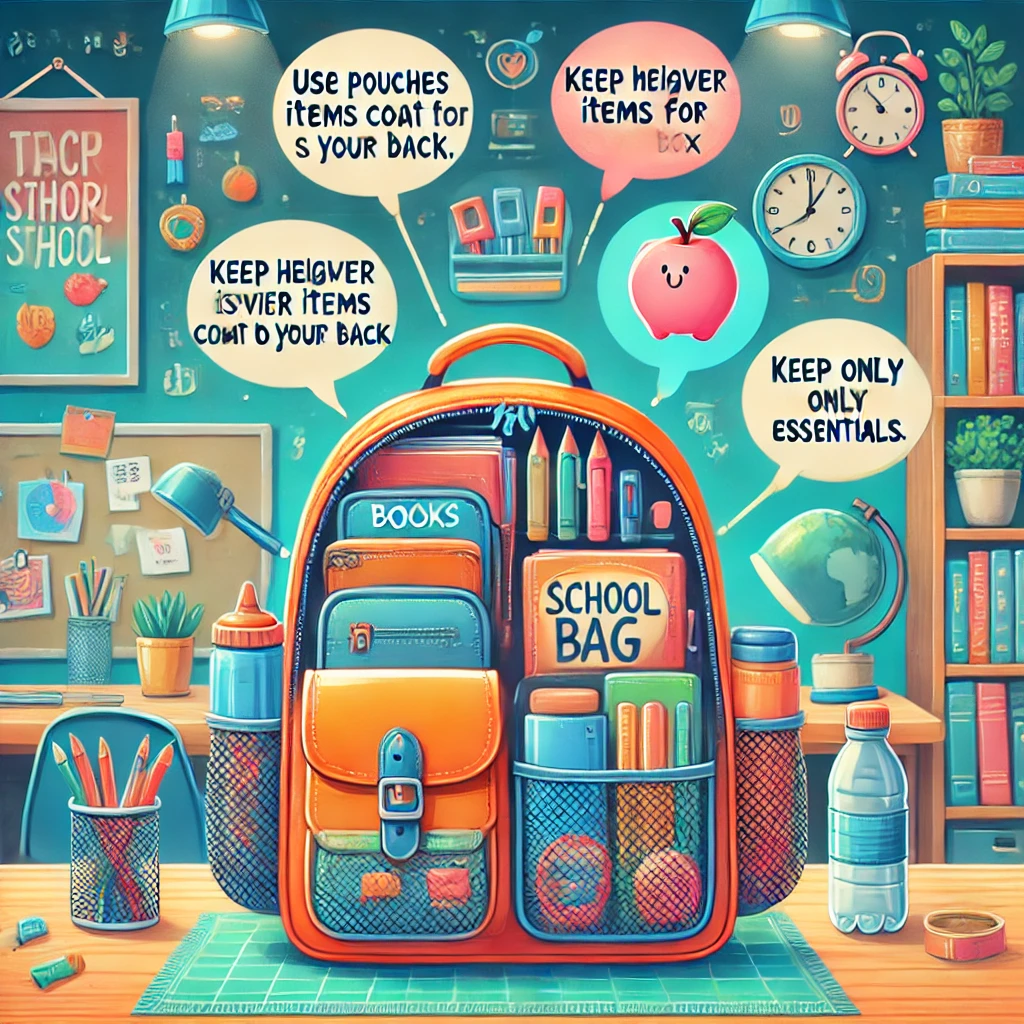
Tips for Organizing
A well-organized school bag can save you time, reduce stress, and help you stay on top of your schoolwork. With just a little planning, you can ensure everything you need is easy to find and your bag stays neat. Here’s how to organize your school bag effectively.
1. Choose the Right Bag
Why It’s Important:
A well-designed bag with compartments makes organizing easier.
How to Do It:
- Pick a backpack with multiple sections for separating items.
- Look for padded straps and back support for comfort.
- Ensure it’s the right size to fit your books, laptop, and other essentials.
Tip: Bags with side pockets are great for quick-access items like water bottles or snacks.
2. Declutter Regularly
Why It’s Important:
Removing unnecessary items keeps your bag light and organized.
How to Do It:
- Empty your bag once a week to remove trash, unused papers, and old snacks.
- Sort through your items and only keep what you’ll need for the current school day.
- Check for broken or worn-out supplies that need replacing.
Tip: Use this time to restock essentials like pens, tissues, and hand sanitizer.
3. Use Pouches for Small Items
Why It’s Important:
Pouches prevent small items from getting lost and keep your bag tidy.
How to Do It:
- Use a pencil case for pens, pencils, erasers, and markers.
- Store personal items like tissues, lip balm, and hand sanitizer in a separate pouch.
- Keep chargers and earphones in a dedicated pouch to avoid tangles.
Tip: Choose pouches in different colors to quickly identify what’s inside.
4. Organize by Priority
Why It’s Important:
Placing frequently used items in accessible spots saves time.
How to Do It:
- Put heavy items like textbooks and laptops close to your back for better weight distribution.
- Store daily essentials (notebooks, planner, and pens) in the main compartment.
- Use outer or smaller pockets for quick-grab items like your phone, wallet, or ID.
Tip: Arrange items in order of use to minimize rummaging during class.
5. Use Dividers or Folders for Papers
Why It’s Important:
Loose papers can easily crumple or get lost in your bag.
How to Do It:
- Store notes, handouts, and homework in labeled folders or binders.
- Use a folder with sections for different subjects to keep everything in one place.
- Consider accordion-style folders for better organization.
Tip: Opt for plastic folders—they’re durable and resistant to spills.
6. Pack Only What You Need
Why It’s Important:
Overloading your bag makes it harder to stay organized and can strain your back.
How to Do It:
- Check your schedule each night and pack only the books and supplies you’ll need for the next day.
- Leave non-essential items, like extra gadgets or outdated notes, at home.
- Pack snacks in a reusable container to avoid bulky packaging.
Tip: Use a checklist to make sure you have everything important without overpacking.
7. Keep Hydration and Snacks Separate
Why It’s Important:
Spills and crumbs can ruin books and electronics.
How to Do It:
- Store your water bottle in a side pocket or an upright section of your bag.
- Pack snacks in a leak-proof container to prevent messes.
- Use a separate lunchbox if you’re bringing a full meal.
Tip: Choose a bottle with a secure lid to avoid accidental leaks.
8. Maintain a Daily Routine
Why It’s Important:
Sticking to a routine keeps your bag organized over time.
How to Do It:
- Pack your bag the night before to avoid last-minute scrambling in the morning.
- Review your class schedule or to-do list to ensure you’ve packed everything.
- Check your bag again when you get home and unpack anything you no longer need.
Tip: Develop a habit of putting everything back in its designated place after use.
9. Label Everything
Why It’s Important:
Labels prevent confusion and make it easy to find items quickly.
How to Do It:
- Label your folders, notebooks, and pouches by subject or purpose.
- Use tags or stickers on your bag for easy identification in crowded areas.
- Mark your name on personal items like water bottles and pencil cases.
Tip: Use durable, waterproof labels to keep them intact.
10. Use a Locker or Desk for Extra Storage
Why It’s Important:
Offloading unnecessary items reduces bag clutter and weight.
How to Do It:
- Keep rarely used items, like extra notebooks or project materials, in your locker or desk.
- Swap out books and supplies as needed between classes.
- Use a small bag or pouch to carry only the essentials when visiting your locker.
Tip: Keep a backup set of supplies in your locker for emergencies.
Final Thoughts
An organized school bag saves time, keeps your items in good condition, and makes your school day less stressful. By following these tips, you can create a system that works for you and keeps your bag neat and functional.
For more tips on staying organized and efficient in school, check out helpful resources to streamline your routine!
Добавить комментарий