Public Speaking
Fear of public speaking is one of the most common anxieties people face, but it’s a skill you can improve with the right strategies. Whether you’re presenting in class, speaking at an event, or leading a meeting, here are effective ways to overcome your fear and build confidence.
1. Understand Your Fear
Why It’s Important:
Identifying the root of your fear helps you address it effectively.
How to Do It:
- Reflect on what makes you anxious—fear of judgment, making mistakes, or forgetting your lines.
- Remind yourself that nervousness is natural and even experienced speakers feel it.
- View public speaking as an opportunity to share your ideas, not a test of perfection.
Tip: Recognizing the source of your anxiety helps you develop targeted strategies for improvement.
2. Prepare Thoroughly
Why It’s Important:
Preparation boosts your confidence and reduces uncertainty.
How to Do It:
- Outline your speech and practice it multiple times.
- Research your topic thoroughly so you feel knowledgeable.
- Memorize key points, but avoid scripting every word to maintain a natural tone.
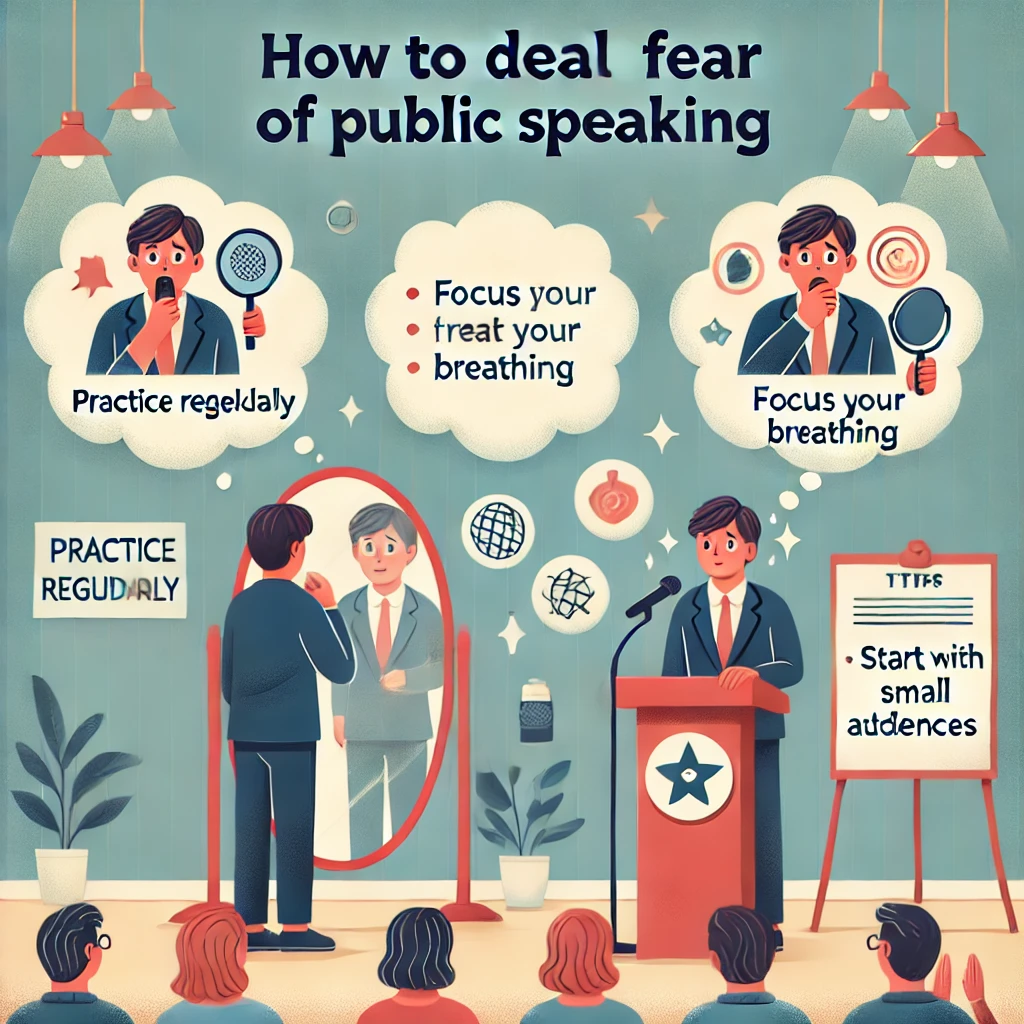
Tip: Practice in front of a mirror or record yourself to spot areas for improvement.
3. Practice Deep Breathing
Why It’s Important:
Breathing exercises calm your mind and reduce physical symptoms of anxiety.
How to Do It:
- Before speaking, take deep breaths: inhale for 4 seconds, hold for 4 seconds, and exhale for 6 seconds.
- During your speech, pause briefly to take a calming breath if you feel overwhelmed.
- Pair breathing with positive affirmations, such as, “I am calm and prepared.”
Tip: Deep breathing lowers your heart rate and keeps you grounded.
4. Start Small
Why It’s Important:
Building confidence gradually helps you face bigger speaking challenges over time.
How to Do It:
- Practice speaking in front of close friends or family.
- Join a supportive group like Toastmasters or participate in small classroom presentations.
- Volunteer for low-pressure speaking opportunities, such as introducing someone or leading a discussion.
Tip: Each successful experience builds your confidence for larger audiences.
5. Visualize Success
Why It’s Important:
Positive visualization helps you shift your focus from fear to confidence.
How to Do It:
- Imagine yourself delivering your speech confidently and receiving positive feedback.
- Picture the audience smiling and engaged as you speak.
- Use visualization before every speaking opportunity to set a positive tone.
Tip: Visualization prepares your mind for success and reduces anxiety.
6. Focus on Your Audience, Not Yourself
Why It’s Important:
Shifting your attention to your audience reduces self-consciousness.
How to Do It:
- Remember, the audience is there to listen and learn, not to judge.
- Make eye contact with friendly faces in the crowd.
- Treat your speech as a conversation rather than a performance.
Tip: The more you focus on delivering value, the less you’ll worry about being judged.
7. Embrace Mistakes as Learning Opportunities
Why It’s Important:
Understanding that mistakes are natural helps you stay calm under pressure.
How to Do It:
- If you lose your place or stumble, pause, take a breath, and continue.
- Use humor or a light comment to recover gracefully if appropriate.
- Reflect on what went well and what you can improve after each speaking experience.
Tip: Audiences are forgiving—they’ll remember your poise, not your mistakes.
8. Develop a Pre-Speaking Routine
Why It’s Important:
Having a routine helps you feel prepared and grounded before stepping on stage.
How to Do It:
- Warm up your voice with simple exercises like humming or reciting tongue twisters.
- Do light stretches or shake out your arms to release nervous energy.
- Repeat a mantra or affirmation to boost your confidence.
Tip: Find a routine that works for you and stick to it before every speech.
9. Use Visual Aids Effectively
Why It’s Important:
Visual aids support your message and take some pressure off you as the speaker.
How to Do It:
- Use slides, charts, or props to emphasize key points.
- Avoid overcrowding slides with text; keep visuals simple and clear.
- Practice using your visual aids to ensure smooth transitions during your speech.
Tip: Visuals help engage your audience and make your speech more memorable.
10. Seek Feedback and Practice Regularly
Why It’s Important:
Feedback helps you identify strengths and areas for improvement, while regular practice builds confidence.
How to Do It:
- Ask trusted friends, teachers, or mentors to provide constructive feedback.
- Record your speeches and watch them to evaluate your performance.
- Set aside time to practice regularly, even if it’s just in front of a mirror.
Tip: Continuous improvement makes public speaking feel less intimidating over time.
Final Thoughts
Overcoming the fear of public speaking is a gradual process that requires practice, patience, and a positive mindset. By preparing thoroughly, focusing on your audience, and embracing opportunities to improve, you can transform anxiety into confidence. Remember, every great speaker started somewhere—your journey begins now!
For more tips on improving communication skills and managing public speaking anxiety, check out these helpful resources designed to boost your confidence.
Добавить комментарий