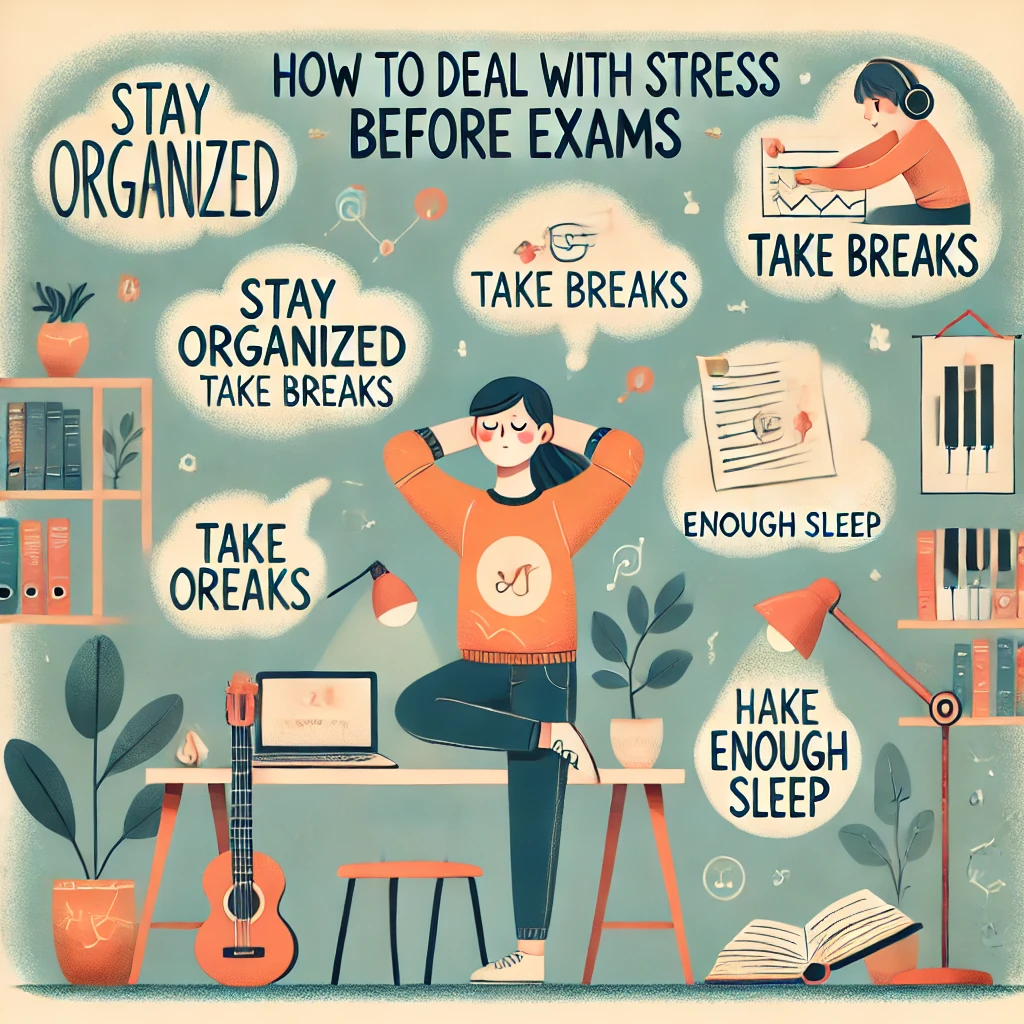
Stress Before Exams
Exams can bring a lot of stress, but managing it effectively is key to performing your best. The good news is that with the right strategies, you can reduce anxiety, stay focused, and walk into your exam feeling confident. Here are some practical tips to help you deal with stress before exams.
1. Create a Study Plan
Why It’s Important:
A clear plan helps you feel organized and reduces last-minute cramming.
How to Do It:
- Break your syllabus into manageable sections and set daily goals.
- Allocate more time to challenging subjects or topics.
- Use tools like a planner or calendar to keep track of what to study and when.
Tip: Having a structured plan can improve your productivity and help you stay on track.
2. Practice Relaxation Techniques
Why It’s Important:
Relaxation helps calm your mind and reduces physical symptoms of stress.
Techniques to Try:
- Deep Breathing: Inhale for 4 seconds, hold for 4 seconds, and exhale for 6 seconds.
- Progressive Muscle Relaxation: Tense and release each muscle group in your body.
- Mindfulness Meditation: Focus on the present moment to quiet your thoughts.
Tip: Incorporate relaxation exercises into your daily routine to keep stress levels low.
3. Stay Active
Why It’s Important:
Physical activity boosts mood and helps you focus better.
How to Do It:
- Go for a brisk walk, jog, or try yoga for at least 20 minutes a day.
- Take short movement breaks during long study sessions to refresh your mind.
- Use exercise as a way to release pent-up stress and tension.
Tip: Even a simple activity like stretching can make a big difference in how you feel.
4. Get Enough Sleep
Why It’s Important:
A well-rested brain is more efficient at processing and retaining information.
How to Do It:
- Aim for 7–8 hours of sleep each night, especially during the week leading up to exams.
- Establish a consistent bedtime routine to improve sleep quality.
- Avoid caffeine and screen time an hour before bed.
Tip: Prioritizing sleep helps you absorb what you study more effectively.
5. Break Down Tasks
Why It’s Important:
Tackling smaller chunks of work prevents feeling overwhelmed.
How to Do It:
- Divide large tasks into smaller, manageable steps.
- Focus on completing one step at a time before moving on to the next.
- Celebrate small wins to keep yourself motivated.
Tip: Completing small tasks can build confidence and reduce exam stress.
6. Avoid Procrastination
Why It’s Important:
Procrastination increases stress and leaves less time for thorough preparation.
How to Do It:
- Start with the easiest or most interesting task to build momentum.
- Use the Pomodoro Technique to stay focused (work for 25 minutes, then take a 5-minute break).
- Reward yourself after completing a study session to stay motivated.
Tip: Overcoming procrastination improves your focus and reduces last-minute pressure.
7. Stay Hydrated and Eat Well
Why It’s Important:
Good nutrition and hydration fuel your brain and improve concentration.
How to Do It:
- Drink plenty of water throughout the day.
- Eat brain-boosting foods like fruits, vegetables, nuts, and whole grains.
- Avoid heavy or sugary meals that can cause energy crashes.
Tip: Keep healthy snacks, like almonds or carrots, nearby while studying.
8. Talk to Someone You Trust
Why It’s Important:
Sharing your concerns can provide relief and helpful advice.
How to Do It:
- Talk to a parent, teacher, or friend about your stress.
- Join a study group to share tips and motivate each other.
- Consider speaking with a school counselor if stress feels overwhelming.
Tip: Sometimes, just talking about your worries can help you gain a new perspective.
9. Visualize Success
Why It’s Important:
Positive visualization boosts confidence and reduces anxiety.
How to Do It:
- Imagine yourself confidently completing the exam and doing well.
- Picture a positive outcome, such as feeling proud of your hard work.
- Use affirmations like, “I am prepared and capable of succeeding.”
Tip: Combine visualization with deep breathing for a calming effect.
10. Take Regular Breaks
Why It’s Important:
Overworking can lead to burnout, while breaks improve focus and retention.
How to Do It:
- Take a 5–10 minute break after every 30–45 minutes of studying.
- Use breaks to stretch, grab a snack, or listen to music.
- Avoid using breaks to scroll social media, as it can make you lose track of time.
Tip: Schedule longer breaks after completing major study tasks to recharge.
Final Thoughts
Managing stress before exams is about finding balance and staying proactive. With a clear plan, regular self-care, and positive thinking, you can tackle exams with confidence. Remember, preparation is key, and taking care of your well-being will help you perform your best.
Start small, stay consistent, and believe in your ability to succeed!
Добавить комментарий