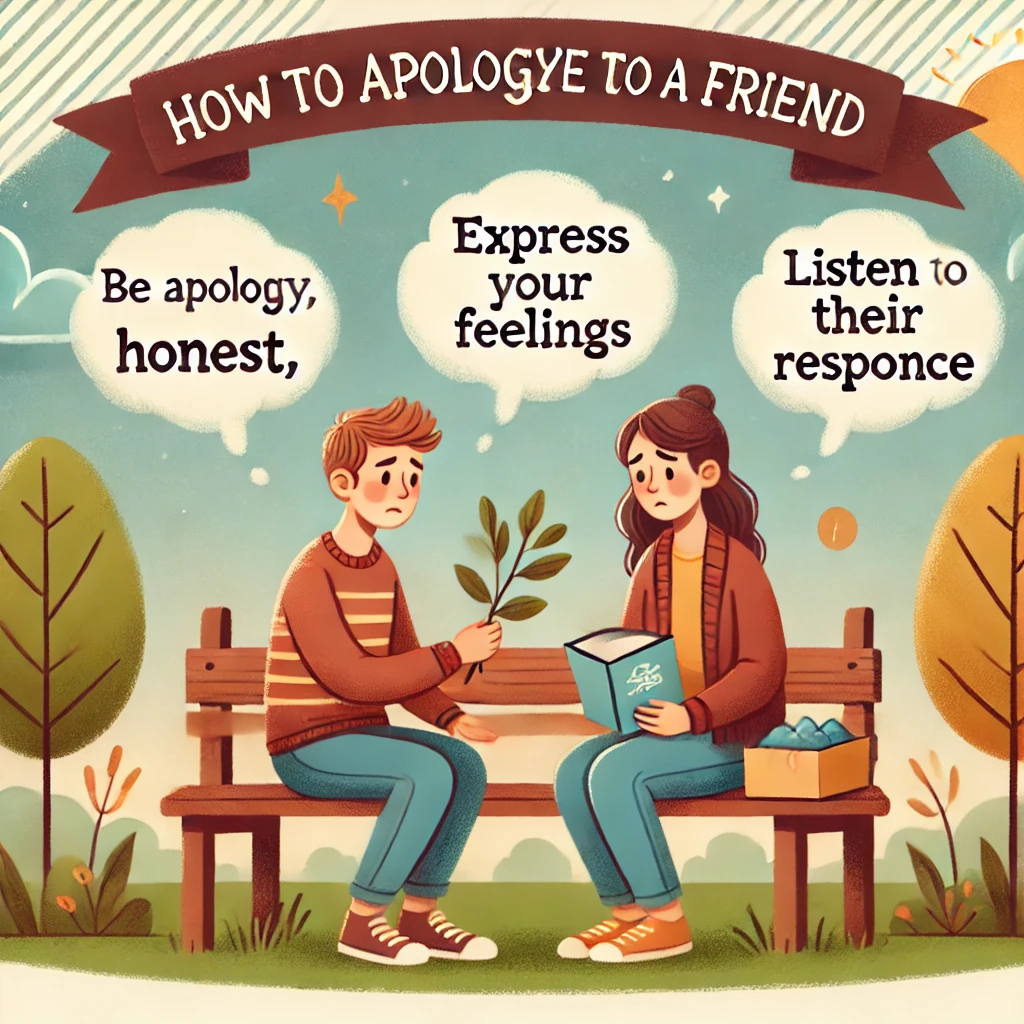
Apologize a Friend
Apologizing to a friend can feel challenging, but it’s an important step in repairing trust and showing that you value the friendship. A sincere apology demonstrates accountability and respect. Here’s how to apologize effectively and mend your bond.
1. Reflect on What Happened
Why It’s Important:
Understanding your actions and their impact ensures your apology is genuine.
How to Do It:
- Think About the Situation: What did you do or say that hurt your friend?
- Consider Their Perspective: How might they feel about what happened?
- Take Responsibility: Acknowledge your role without making excuses.
Tip: Write down your thoughts if you’re nervous about expressing them clearly.
2. Choose the Right Time and Place
Why It’s Important:
A private and calm setting makes the conversation more meaningful.
How to Do It:
- Find a quiet time when you can talk without distractions.
- Approach them in person if possible; face-to-face apologies feel more heartfelt.
- If in-person isn’t an option, a phone call or heartfelt message can work.
Tip: Avoid apologizing when they’re visibly upset or busy.
3. Start with a Sincere Statement
Why It’s Important:
Beginning with sincerity sets the tone for your apology.
Examples:
- “I want to apologize for what happened.”
- “I’ve been thinking about what I said, and I realize I hurt you.”
- “I feel terrible about my actions, and I want to make things right.”
Tip: Use their name to make it more personal and direct.
4. Acknowledge Your Mistake
Why It’s Important:
Taking accountability shows that you understand the impact of your actions.
How to Do It:
- Be specific: “I shouldn’t have said what I did during our argument.”
- Avoid blaming others or making excuses: “I was wrong, and it’s my responsibility.”
- Show empathy: “I can see how my actions hurt you.”
Tip: Avoid phrases like “If I hurt you” or “I’m sorry you feel that way”—they can come across as insincere.
5. Express Genuine Regret
Why It’s Important:
Showing regret demonstrates that you care about their feelings.
Examples:
- “I feel awful for hurting you because your friendship means so much to me.”
- “I wish I could take back what I said.”
Tip: Focus on their feelings rather than defending yourself.
6. Offer to Make Amends
Why It’s Important:
Taking steps to repair the situation shows you’re committed to change.
How to Do It:
- Ask how you can make it better: “Is there anything I can do to fix this?”
- Offer specific solutions: “I’ll be more mindful about how I communicate in the future.”
Tip: Follow through on your promises to rebuild trust.
7. Give Them Time to Respond
Why It’s Important:
They may need time to process your apology before fully accepting it.
How to Do It:
- Let them share their feelings without interrupting.
- Be patient if they’re not ready to forgive immediately.
- Respect their boundaries if they need space.
Tip: Reassure them that you’re open to talking whenever they’re ready.
8. Learn From the Experience
Why It’s Important:
Understanding what went wrong helps prevent similar issues in the future.
How to Do It:
- Reflect on how you can improve as a friend.
- Implement changes in your behavior to show personal growth.
Tip: Apologies mean more when paired with genuine actions.
Sample Apology Script
- Start with an apology:
“I want to apologize for what I said yesterday. I know it was hurtful.” - Acknowledge your mistake:
“I wasn’t thinking about how my words would affect you, and I realize now that I crossed a line.” - Express regret:
“I feel terrible for making you upset because your friendship is really important to me.” - Offer to make amends:
“I’ll do my best to communicate better in the future. Please let me know if there’s anything I can do to make this right.” - End with understanding:
“I understand if you need time, but I hope we can move past this.”
Common Mistakes to Avoid
- Deflecting Blame: Saying “It wasn’t my fault” or blaming someone else undermines your apology.
- Over-Apologizing: Excessive apologies can make the situation feel awkward.
- Expecting Instant Forgiveness: Give your friend time to process and heal.
- Ignoring the Issue: Avoiding the conversation can make the situation worse.
Final Thoughts
Apologizing to a friend takes courage and sincerity. By owning your actions, expressing regret, and showing a willingness to change, you can mend your relationship and strengthen your bond. Remember, true friendships often grow stronger when you navigate challenges together.
Добавить комментарий