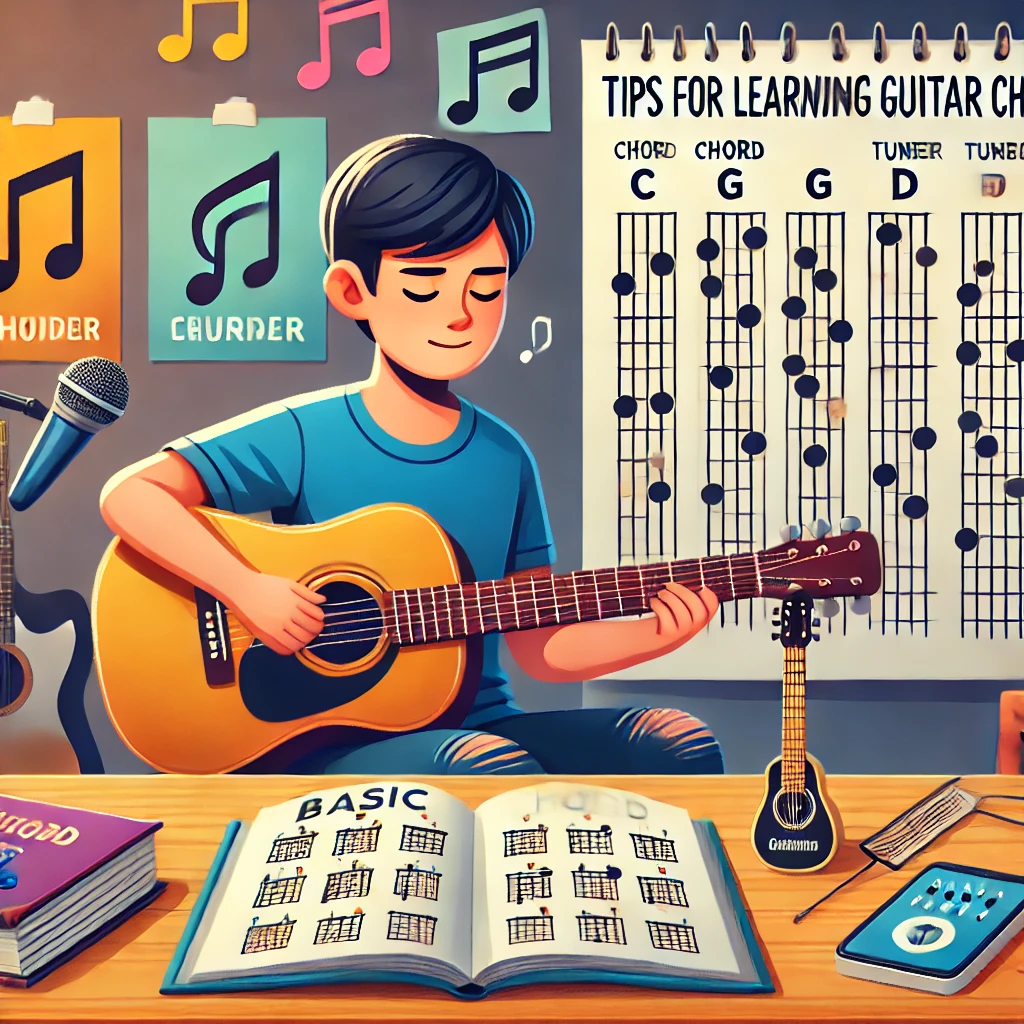
Guitar Chords
Learning guitar chords is a fundamental step for any guitarist. Chords form the backbone of most songs, and mastering them allows you to play and create music more confidently. Here are practical tips to help you learn and practice guitar chords effectively.
1. Start with Basic Chords
Why It’s Important:
Basic chords are the foundation of most songs and are easier for beginners to play.
Focus on These Chords First:
- Major Chords: C, G, D, A, E
- Minor Chords: Am, Em, Dm
- Basic Seventh Chords: G7, C7
Tip: Stick to open chords (chords with open strings) as they require less finger stretching and are easier to play.
2. Learn Proper Finger Placement
Why It’s Important:
Accurate finger placement ensures clean sound and prevents muted or buzzing strings.
How to Do It:
- Place your fingertips firmly on the strings just behind the frets (not directly on them).
- Use the tip of your fingers to avoid accidentally touching adjacent strings.
- Keep your thumb positioned at the back of the neck for better control.
3. Memorize Chord Shapes
Why It’s Important:
Memorizing shapes helps you switch between chords quickly without constantly checking your fingers.
How to Do It:
- Practice one chord at a time until you can form it without hesitation.
- Visualize the shape when away from the guitar to reinforce memory.
- Use flashcards or apps like Chordify to review chord diagrams.
4. Practice Switching Between Chords
Why It’s Important:
Smooth transitions between chords are essential for playing songs seamlessly.
How to Do It:
- Pick two chords (e.g., G and C).
- Practice switching back and forth slowly at first.
- Gradually increase your speed as you become more comfortable.
- Use a metronome to maintain a steady rhythm.
5. Play Songs with Simple Chord Progressions
Why It’s Important:
Playing songs makes practice enjoyable and gives you real-world application for the chords.
Easy Songs for Beginners:
- «Three Little Birds» by Bob Marley (A, D, E)
- «Knockin’ on Heaven’s Door» by Bob Dylan (G, D, Am, C)
- «Horse with No Name» by America (Em, D6/F#)
Tip: Start with songs that use 2–3 chords and simple strumming patterns.
6. Strum Slowly and Consistently
Why It’s Important:
Focusing on strumming ensures you’re hitting the right strings and playing smoothly.
How to Do It:
- Start with downstrokes on all strings in the chord.
- Gradually add upstrokes for variety.
- Use a basic strumming pattern like Down, Down, Up, Up, Down.
7. Strengthen Your Fingers
Why It’s Important:
Strong fingers make it easier to press down strings and hold chords for extended periods.
Exercises:
- Practice squeezing a stress ball to build finger strength.
- Use finger stretches to improve flexibility.
- Spend a few minutes each day playing scales or simple finger exercises.
8. Use Mnemonics and Patterns
Why It’s Important:
Mnemonics make chord names and shapes easier to remember.
Example Mnemonic:
- For the CAGED system (C, A, G, E, D chord shapes): «Cats Always Go Eat Dinner.»
Tip: Recognize patterns in chord shapes and how they relate across the fretboard.
9. Practice with a Capo
Why It’s Important:
A capo can make some songs easier to play and allows you to use the same chord shapes in different keys.
How to Use:
- Place the capo on a fret and play the chords as you normally would.
- This helps you play along with songs that require higher-pitched chords without learning new shapes.
10. Be Patient and Persistent
Why It’s Important:
Learning chords takes time, and persistence is key to mastering them.
How to Stay Motivated:
- Set small, achievable goals, like mastering one new chord each week.
- Celebrate progress, even if it’s small.
- Remind yourself that every guitarist started as a beginner.
Bonus Tip: Use Technology
- Chord Apps: Use apps like Yousician or Ultimate Guitar to learn chords interactively.
- YouTube Tutorials: Channels like Justin Guitar and Marty Music offer excellent beginner lessons.
Final Thoughts
Learning guitar chords is an exciting journey that requires patience and consistent practice. Start with the basics, focus on proper technique, and enjoy the process of making music. With dedication, you’ll be playing your favorite songs and mastering chords in no time!
Добавить комментарий