Navigating Nature’s Fury: Strategies for Handling Disasters in Civilization VI
When you’re deeply engrossed in expanding your empire in Civilization VI, plotting diplomatic maneuvers, or optimizing your cities, nature can still throw a spanner in the works with an array of disasters. The introduction of natural disasters in the Gathering Storm expansion adds a dynamic layer of complexity to the game, challenging players to adapt and prepare for unforeseen calamities. Here’s how you can not only survive but thrive in the face of these unexpected events.
Understanding Disasters in Civilization VI
Types of Disasters:
Disasters in Civilization VI can range from the mildly inconvenient to the catastrophically destructive. Here’s a quick overview:
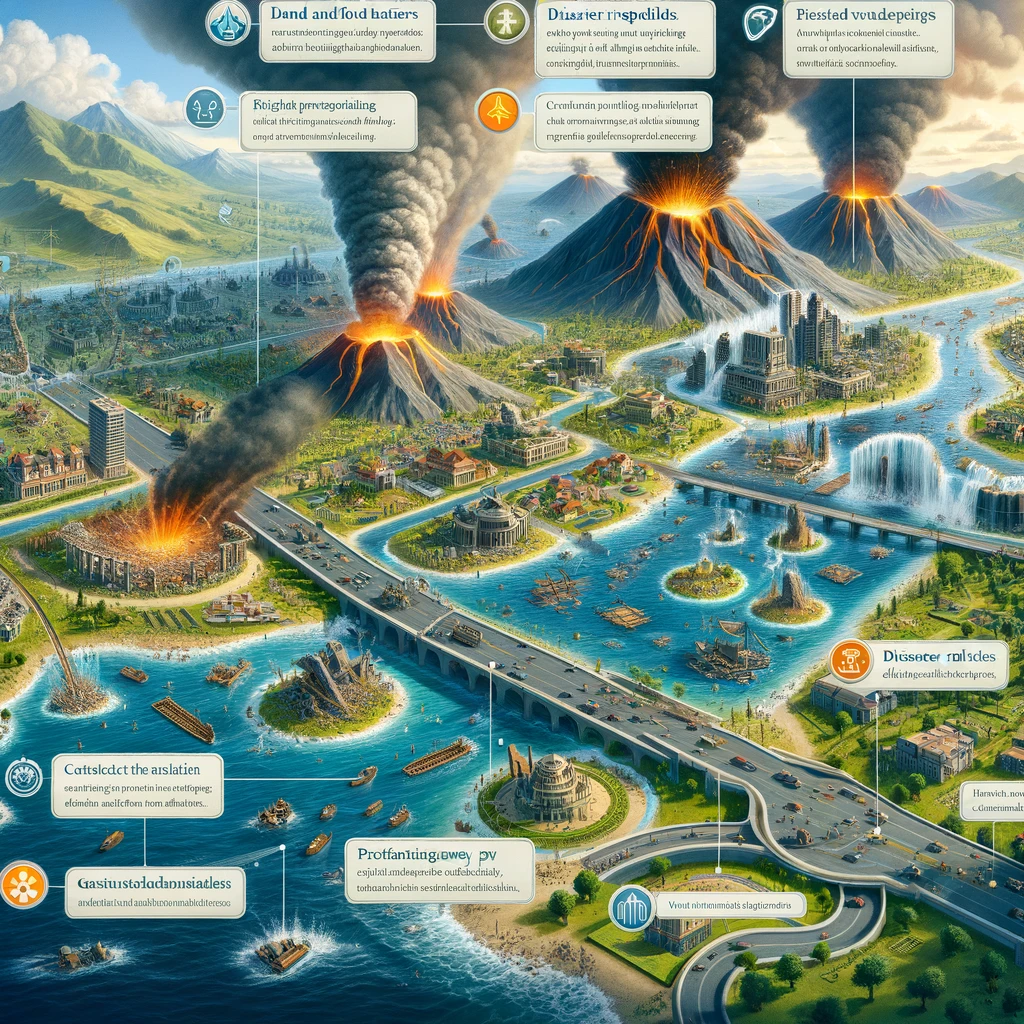
- Floods: Occur along riverbanks, boosting fertility after receding but damaging structures and possibly killing population.
- Volcanic Eruptions: Erupt randomly, destroying nearby units and structures but enriching adjacent tiles with fertile soil.
- Storms (Hurricanes, Tornadoes, Blizzards, Sandstorms, and Cyclones): Travel across the map, damaging units, structures, and depleting resources.
- Droughts: Reduce food output, affecting city growth and resource production.
- Rising Sea Levels: Caused by global warming, this can permanently flood coastal tiles.
Preparation and Response Strategies
1. Choose Your Settlements Wisely
Location Matters:
Avoid settling near active volcanoes or on floodplains unless you’re prepared for the risks. If the strategic or resource benefits outweigh the dangers, plan for mitigative infrastructures, such as dams and aqueducts.
2. Utilize Adaptive Construction
Engineering Solutions:
Certain structures can mitigate the effects of disasters:
- Dams: Essential for managing flood risks. Dams protect your cities and their surroundings from flood damage while allowing the beneficial effects of floods to boost tile fertility.
- Aqueducts and Canals: Help manage water effectively, crucial in both drought and flood conditions.
- Flood Barriers: Later in the game, these can prevent rising sea levels from flooding your coastal tiles.
3. Embrace Policy Changes
Governmental Adaptation:
Policies and governments in Civ VI can be switched to adapt to current needs. Use policies that increase your civilization’s resilience to disasters, like those that boost construction speed for defensive structures or enhance the benefits from improved tiles.
4. Prioritize Technological Advancements
Innovative Responses:
Focus on technologies that enhance your ability to deal with disasters. For instance, researching Engineering early allows for dam construction, which is crucial for cities near rivers.
5. Manage Environmental Impact
Sustainable Development:
Monitor and manage your environmental impact:
- Carbon Emissions: High industrial activity can lead to accelerated global warming, increasing the frequency and severity of storms and sea-level rise. Investing in renewable energy sources can mitigate these effects.
- Reforestation: Planting trees can help recover from deforestation-linked floods and storms, stabilizing the environment.
6. Recovery and Rebuilding Efforts
Post-Disaster Recovery:
After a disaster, quick response and recovery are key to minimizing its long-term impact. Have a reserve of resources or funds to repair buildings and units quickly. Additionally, leveraging builders to repair tiles and restore production ensures your civilization’s swift return to stability.
Conclusion
In Civilization VI, natural disasters add a layer of unpredictability that requires flexible, forward-thinking strategies. By choosing settlement locations wisely, constructing disaster-mitigating infrastructures, adapting policies to current needs, and focusing on sustainable practices, you can shield your civilization from nature’s worst while potentially benefiting from the aftermath of these events.
Remember, in Civilization VI, every disaster can be turned into an opportunity. Whether it’s fertile land from a flood or volcanic soil, with the right preparation, your civilization can weather any storm and emerge stronger on the other side. So, keep your builders ready, your policies flexible, and your eye on the horizon; you never know when you’ll need to spring into action!
Добавить комментарий