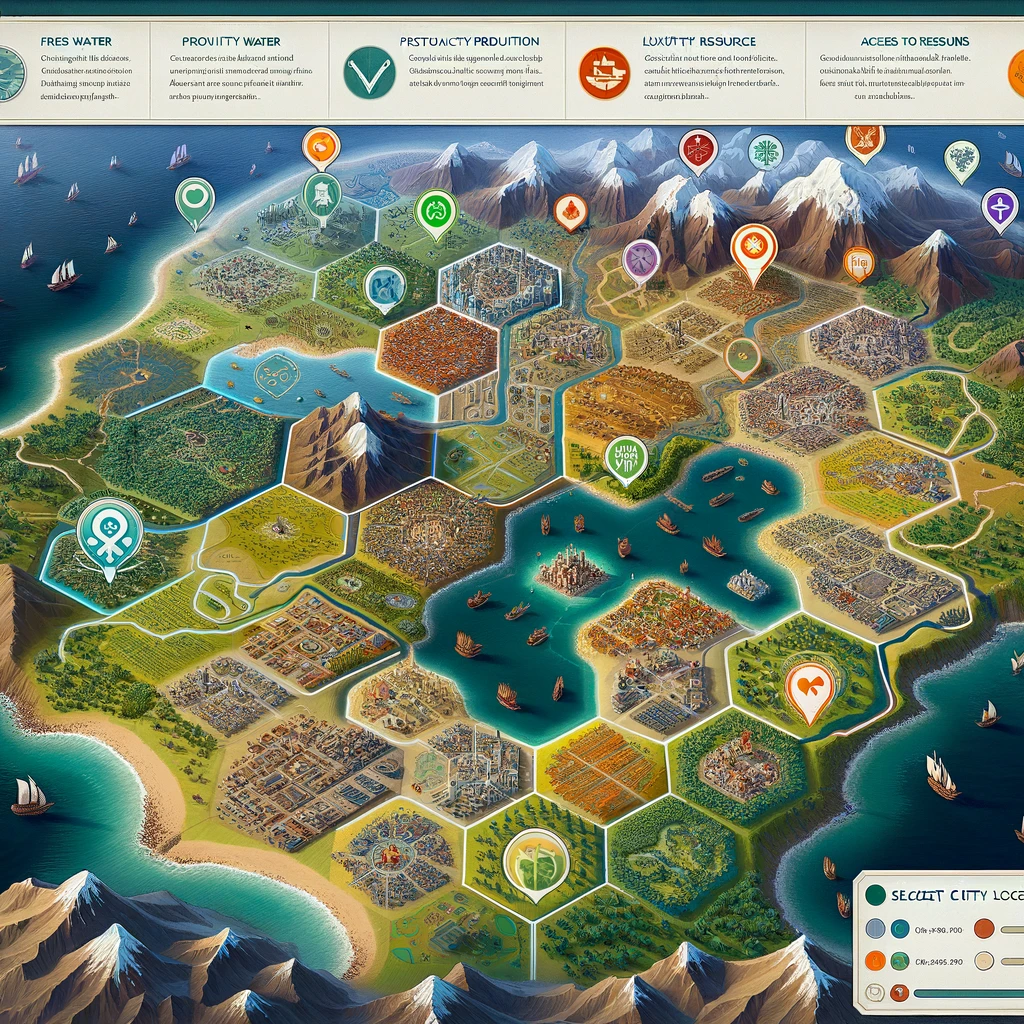
How to Select the Best City Location in Civilization VI: A Comprehensive Guide
Introduction: Foundations of Empire
Choosing the right location for your cities in Civilization VI is crucial for the success of your civilization. The ideal city site balances resource availability, defensive positioning, and potential for future growth. Here’s a detailed guide on how to select the most advantageous locations for your cities to thrive.
1. Evaluate Resource Access
Key Resources:
- Food and Water: Look for tiles near fresh water sources like rivers, lakes, or oases, which provide essential food and housing bonuses. Coastal tiles are also viable but generally offer less housing.
- Luxury and Strategic Resources: Prioritize locations near multiple types of resources to ensure a steady flow of crucial materials and amenities. This includes luxuries (for happiness) and strategic resources (for military and technology advancements).
- Bonus Resources: While not as crucial as luxury or strategic resources, bonus resources like wheat, cattle, and rice can significantly boost a city’s early growth.
2. Consider Strategic and Defensive Positioning
Geography for Defense:
- Natural Barriers: Utilize mountains, hills, and bodies of water as natural defenses. Mountains are particularly valuable as they are impassable and can protect cities from one direction.
- Visibility and Reach: Settle on hills when possible; they provide a defensive combat bonus and increase the city’s visibility range.
3. Plan for District and Wonder Placement
Future Development:
- District Synergies: Anticipate where you can place districts. For instance, campuses benefit from being adjacent to mountains and rainforests, while harbors generate more income next to sea resources.
- Wonder Considerations: Some wonders have specific placement requirements (e.g., must be adjacent to a river). Consider future wonder construction when planning your city layout.
4. Expand for Influence and Control
Strategic Expansion:
- Regional Dominance: Position cities to control critical areas of the map, blocking competitors from strategic resources or expansion paths.
- City Clustering: Place cities close enough to support each other but far enough apart to maximize resource usage. Typically, cities should be about six tiles apart, allowing room for districts and avoiding overlap where it isn’t beneficial.
5. Utilize Civilization and Leader Bonuses
Civ-Specific Advantages:
- Tailor city placement to your civilization’s unique strengths. For example:
- Rome: Gains a free building in its city center for each new city it founds, encouraging rapid expansion.
- Russia: Receives extra tiles upon city founding, making it beneficial to settle in resource-sparse areas to maximize land acquisition.
- Norway: Excels in coastal cities due to its naval orientation and unique ability to harvest sea resources.
6. Adjust for Game Difficulty and Strategy
Adapt to Circumstances:
- Difficulty Level: Higher difficulty levels may require more conservative or strategic city placement due to aggressive AI behavior.
- Victory Type: Aim for city locations that support your desired victory path. Cultural victories benefit from cities with high appeal, while science victories gain from proximity to mountains for research.
Conclusion: Building Your Civilization Wisely
The decision of where to settle your cities in Civilization VI can define your strategy and impact your ability to compete on the world stage. By considering resources, defense, district potential, expansion goals, and your civilization’s unique traits, you can place your cities to optimize growth, stability, and influence throughout your campaign.
Добавить комментарий