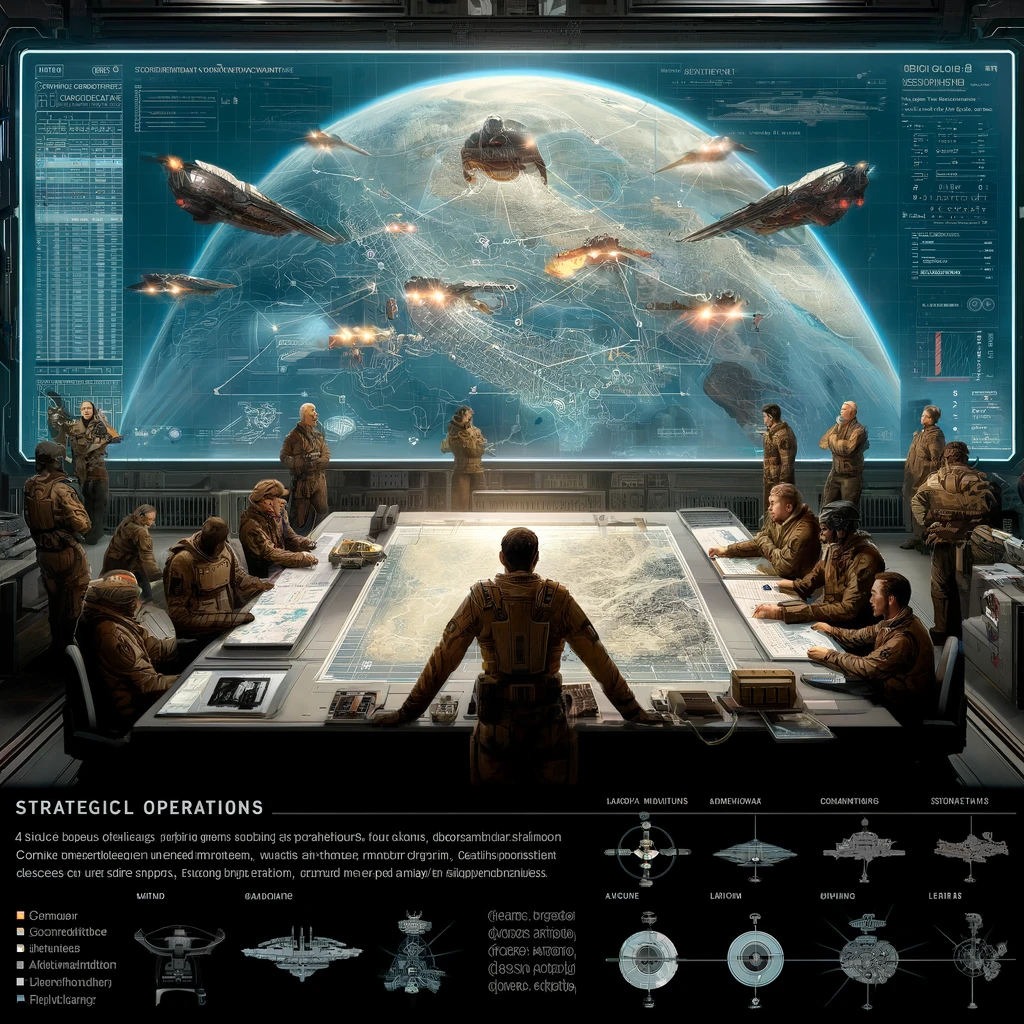
Strategic operations planning in EVE Online is critical for executing successful campaigns, whether they involve large-scale fleet battles, territory control, espionage, or economic warfare. Due to EVE’s complexity and the permanence of loss in the game, thorough planning and coordination can mean the difference between victory and defeat. Here’s a guide to help you master strategic operations planning in EVE Online:
1. Define Objectives and Scope
- Clear Objectives: Determine the specific goals of your operation. Are you looking to capture territory, disrupt a rival’s economy, gather intelligence, or stage a significant battle?
- Scope and Scale: Assess the size and scope of the operation. Consider how many players will be involved, the duration of the operation, and the resources required.
2. Intelligence Gathering
- Know Your Enemy: Gather as much information as possible about your target. Use spies, scout their territory, monitor their fleet movements, and analyze their usual tactics.
- Area Reconnaissance: Understand the terrain where the operation will occur. Familiarize yourself with the system(s), including stargate locations, station services, and any existing structures that could affect the operation.
3. Fleet Composition and Roles
- Fleet Doctrine: Design a fleet doctrine that suits your objectives. This includes deciding on ship types, fittings, and roles required for the operation. Consider having variations to adapt to different enemy compositions or tactics.
- Specialized Teams: Depending on the operation, you might need specialized teams such as electronic warfare units, logistics (healers), fast tackle to pin down enemies, and heavy hitters for damage.
4. Logistics and Supply Lines
- Pre-Staging: Ensure that all participants have their ships ready at a staging location. This includes having spare ships and equipment close to the operation area for quick reshipping if needed.
- Supply Lines: Secure and maintain supply lines for long operations. This may involve setting up forward operating bases or ensuring secure transport routes for reinforcements and supplies.
5. Timing and Coordination
- Timers and Time Zones: Plan the operation taking into account any relevant game mechanics, such as structure vulnerability windows, and the time zones of your members and the enemy.
- Communication: Set up clear communication channels for all participants. Decide on command structure and brief your fleet commanders and special teams on their specific roles and objectives.
6. Contingency Planning
- Expect the Unexpected: Have contingency plans in place for potential surprises or setbacks. This could involve having a rapid response force on standby, alternate targets, or escape routes for extraction.
- Adaptability: Be prepared to adapt your strategy on the fly. The fluid nature of EVE Online’s battles means that flexibility can often outweigh meticulous planning.
7. Post-Operation Analysis
- Debrief: Conduct a debriefing session with key participants to discuss what went well and what didn’t. This is crucial for learning and improving future operations.
- After-Action Reports: Compile after-action reports detailing the operation’s execution, outcomes, and lessons learned. Share these with your organization to build institutional knowledge.
Additional Tips
- Practice Makes Perfect: Regularly conduct drills or smaller-scale operations to keep your members sharp and familiar with working together.
- Use Tools and Software: Utilize EVE Online’s third-party tools for planning and coordination. Mapping tools, intel software, and fleet management applications can provide a significant advantage.
Strategic operations planning in EVE Online combines military tactics, espionage, logistics, and diplomacy, reflecting the game’s depth and complexity. Success comes from careful planning, effective execution, and the ability to adapt to the ever-changing dynamics of New Eden. Remember, every operation, whether successful or not, is a learning opportunity that can pave the way for future victories.
Добавить комментарий