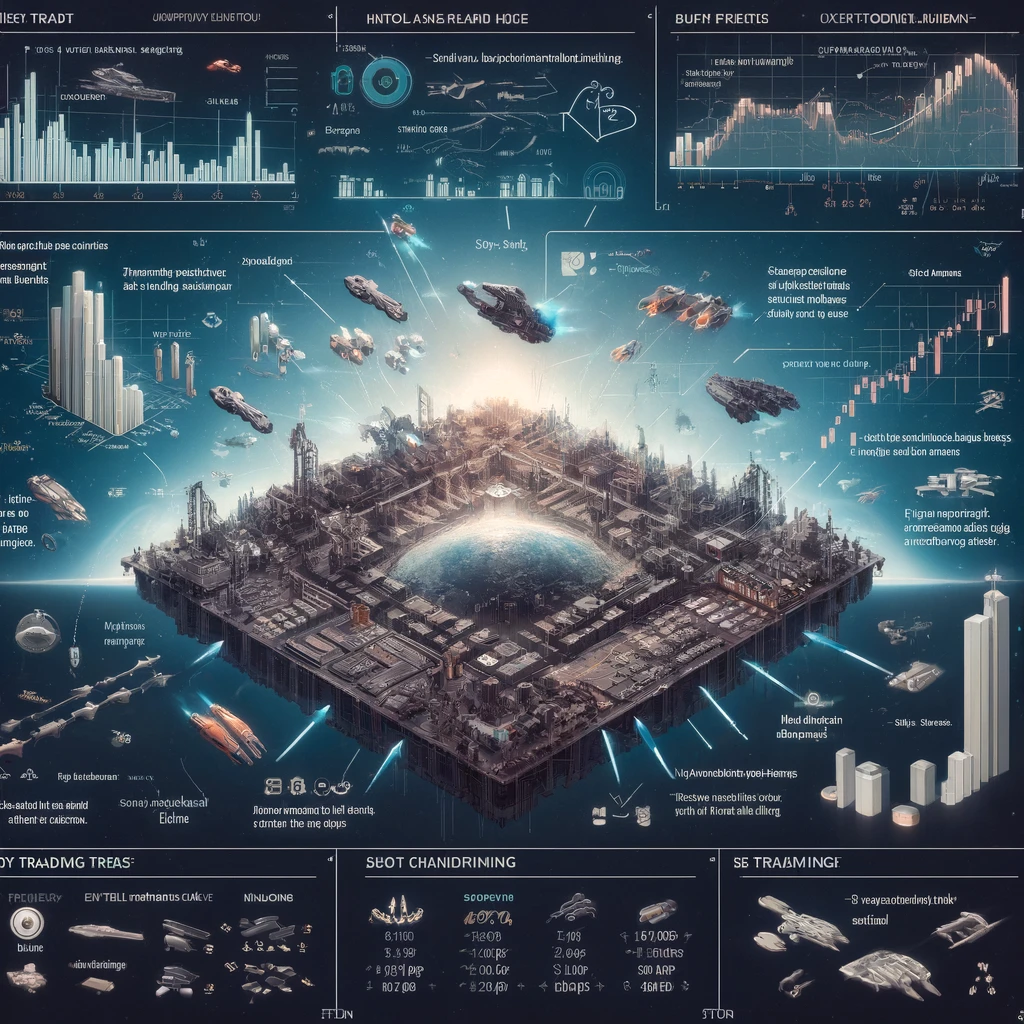
Trading in EVE Online is one of the most lucrative, yet complex activities players can engage in to earn ISK, the game’s currency. It involves buying goods at a low price and selling them at a higher price, either in the same market (station trading) or by transporting goods between markets (inter-regional trading). Here’s a beginner’s guide to help you start your trading empire in EVE Online:
Understand the Market
- Market Window: Spend time familiarizing yourself with the Market window in-game. It displays buy orders (bids), sell orders (asks), price history, and volume of transactions.
- Item Selection: Start with items you are familiar with, such as materials from your current profession (mining, mission running, etc.), as you’ll have a better understanding of their market demand.
Skills to Train
- Trade: Increases the number of active market orders. Start by training this to increase your ability to have multiple buy and sell orders.
- Retail, Wholesale, and Tycoon: Further increase the number of active market orders at higher levels.
- Margin Trading: Reduces the amount of ISK you need in your wallet to place buy orders. Be cautious, as this also increases risk.
- Accounting and Broker Relations: These skills reduce transaction taxes and broker fees, increasing your profit margins.
Starting Capital
- You can start trading with relatively small amounts of ISK, but having a larger capital allows for greater flexibility and profit potential. Aim for at least a few million ISK to start with, which can be obtained through missions, exploration, or other activities.
Choosing a Market
- Trade Hubs: Major trade hubs like Jita, Amarr, Dodixie, Rens, and Hek have the highest volume of trades, making them ideal for station trading due to the large number of potential buyers and sellers.
- Lesser Hubs: For beginners, starting in a smaller hub might be less overwhelming and still profitable, though the trade volume will be lower.
Market Analysis
- Price History Tab: Use this to understand the historical price trends of an item. Look for items with consistent demand and stable prices.
- Volume: High-volume items mean more frequent buys and sells, ideal for quick profits but may also mean more competition.
Station Trading Tips
- Buy Low, Sell High: Place buy orders for items at a lower price and sell orders for a higher price. Monitor and adjust your orders frequently to compete with other traders.
- 0.01 ISK Game: Many traders will update their orders by 0.01 ISK to remain the highest buy or lowest sell order. While effective, it requires constant attention.
- Spread Your Investments: Don’t put all your ISK into one item. Spread it out across multiple items to reduce risk.
Inter-Regional Trading
- Identify Price Differences: Look for items that are significantly cheaper in one region than in another. Tools like EVE Market Data can help you identify these opportunities.
- Transportation: Consider the risks and costs of moving goods between regions, including potential pirate attacks in low-sec space and fuel costs for larger hauls.
Risk Management
- Scams: Be wary of market manipulation and scams. If a deal seems too good to be true, it probably is.
- Diversify: Just like with any investment, don’t put all your eggs in one basket. Diversify your portfolio to mitigate risks.
Trading in EVE Online mirrors real-world trading in many ways, requiring patience, research, and a bit of risk-taking. As you gain experience, you’ll start to notice patterns and opportunities that can lead to substantial profits. Remember, every successful trader in EVE started with a single buy or sell order.
Добавить комментарий