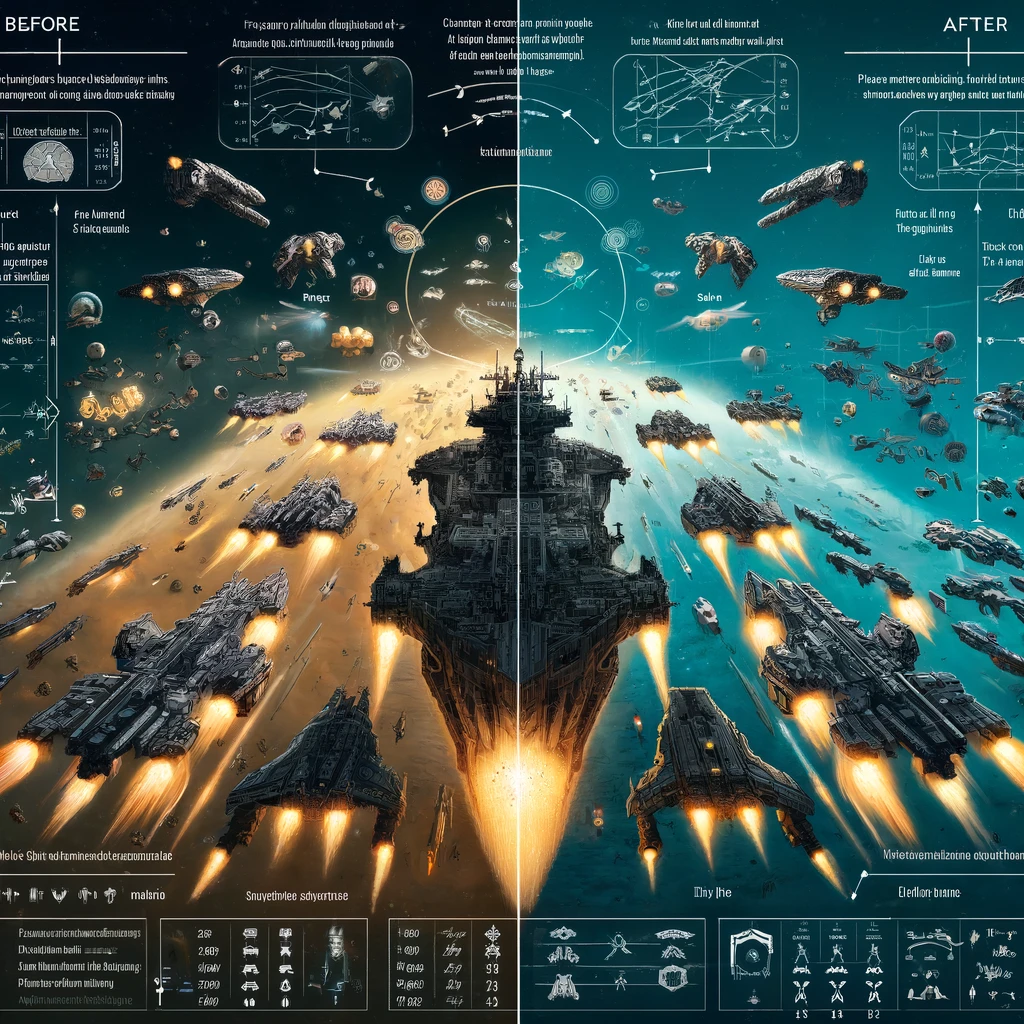
Ship rebalancing is a regular part of EVE Online’s development, ensuring gameplay remains dynamic, fair, and interesting. These adjustments can significantly impact various aspects of the game, from individual player strategies to the overarching meta of fleet compositions in both PvE and PvP contexts. Understanding the potential impacts of ship rebalancing can help players adapt and thrive in New Eden’s ever-evolving landscape.
Impact on PvP Meta
- Shifts in Fleet Compositions: Rebalancing often shifts the PvP meta, as certain ship classes may become more or less effective. Fleets that were once dominant might fall out of favor, requiring alliances and small groups to adapt their strategies and compositions.
- Solo and Small Gang PvP: The viability of specific ships for solo and small gang operations can change, influencing players’ choices for engagements. A ship that becomes more agile or receives a boost to its damage output, for example, could become a new favorite among solo PvPers.
Influence on PvE Strategies
- Mission Running and Ratting: Changes to ships’ tanking abilities, damage output, or speed can alter their efficiency in PvE activities. Players may need to find new ship fits or strategies to maintain their level of income or effectiveness against NPC enemies.
- Exploration and Hacking: For exploration-focused ships, rebalancing can affect their survivability in hostile space or their efficiency in scanning down and hacking sites. This might necessitate adjustments in players’ approaches to exploration.
Economic Ramifications
- Market Fluctuations: Demand for certain ship hulls, modules, and rigs can shift dramatically following rebalancing, affecting market prices. A ship receiving a significant buff might see a surge in demand, whereas nerfed ships could experience a drop.
- Manufacturing and Industry: Industrial players must stay attuned to these market changes, as the profitability of producing certain ships or components can vary with the evolving meta. This might lead to shifts in resource allocation and production focus.
Adaptation in Ship Fitting and Engineering
- Fitting Adjustments: Rebalancing can lead to new optimal fits, as changes in power grid or capacitor efficiency, for example, open up new possibilities or close off old ones. Players will need to experiment with and share new fits to find what works best in the new balance landscape.
- Engineering and Research: Players involved in the research and development of ship modules may find new opportunities or challenges as the demand for specific module types changes with the rebalancing.
Changes in Player Skill Training Plans
- Long-Term Skill Planning: Significant ship rebalances might influence players’ long-term skill training plans, especially if they specialize in ships or weapons systems that have been altered. Adapting to the new meta might require training skills for different ship classes or weapon types.
Community and Meta-Game Impact
- Discussion and Theorycrafting: Rebalancing often sparks extensive discussion within the EVE community, from forums and Reddit to in-game chat channels. Theorycrafting new ship fits and strategies becomes a crucial activity as players work to adapt.
- Strategic Alliance Decisions: For player alliances, especially those involved in sovereignty warfare, rebalancing can influence strategic decisions on a grand scale, potentially altering the outcomes of conflicts based on the newly adjusted capabilities of their fleets.
Conclusion
Ship rebalancing is a pivotal aspect of EVE Online’s development, intended to maintain a healthy, competitive, and engaging game environment. While it can temporarily disrupt players’ familiar strategies, it also encourages innovation and adaptation, keeping the gameplay experience fresh and vibrant. Staying informed, flexible, and ready to embrace change is key to navigating the waves of rebalancing in the vast ocean of New Eden.
Добавить комментарий