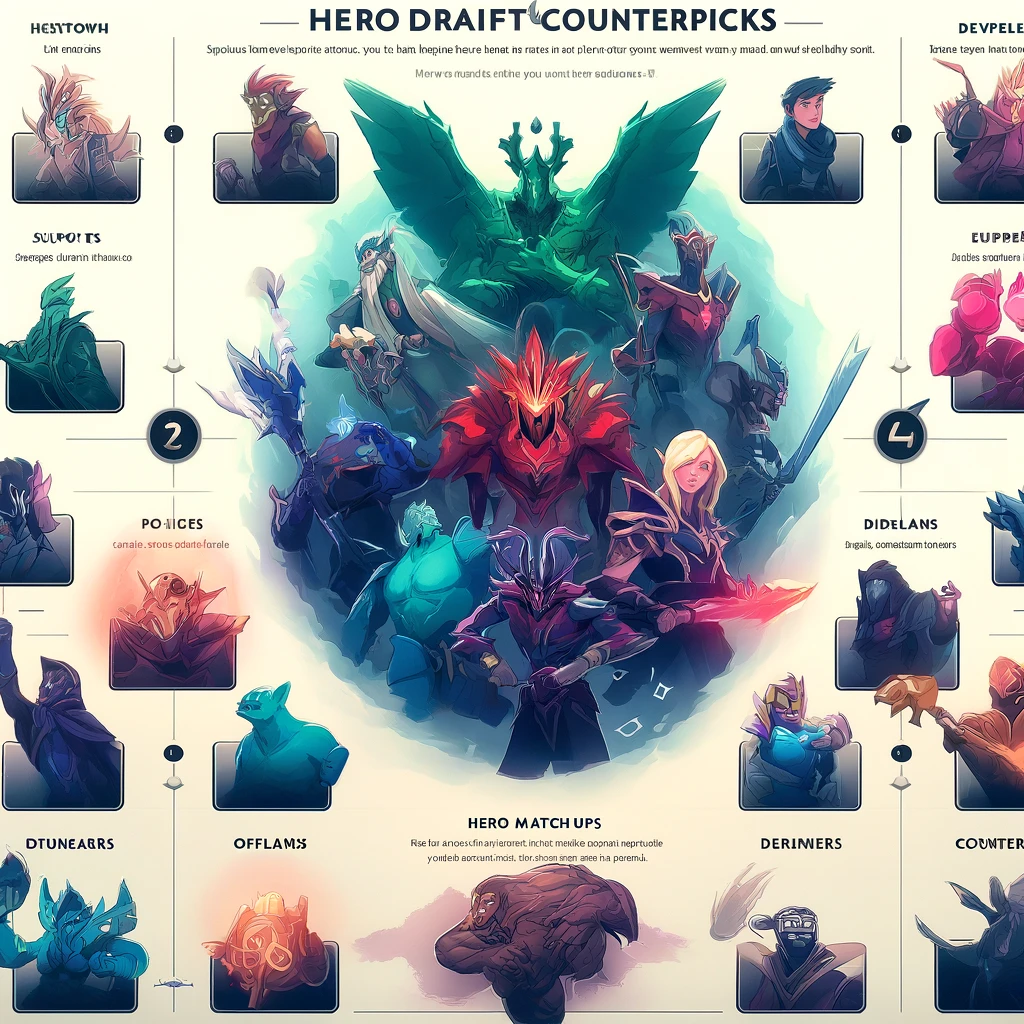
In Dota 2, the drafting phase is as strategic and crucial as the gameplay itself. Effective drafting involves not just picking heroes that synergize well but also selecting heroes that can counter the enemy’s lineup. Counterpicking disrupts the enemy’s strategy, giving your team a significant advantage from the start. Here’s a guide to understanding and executing counterpicks in Dota 2 drafts:
Understanding Hero Counters
- Direct Counters: Some heroes naturally counter others due to their abilities. For instance, Phantom Lancer can be countered by Earthshaker, whose Echo Slam becomes more devastating against numerous units like PL’s illusions.
- Strategic Counters: Beyond direct hero counters, consider how a hero can counter the enemy team’s overall strategy. For example, if the enemy team is reliant on prolonged team fights, picking heroes with strong burst damage can negate their advantage.
Key Considerations for Counterpicking
- Identify Enemy Cores: Focus on countering the enemy’s core heroes, especially their carry and mid, as these roles often dictate the enemy team’s success.
- Flexibility: Opt for heroes that are versatile and can fulfill multiple roles or adapt to different item builds. This flexibility can keep your strategy concealed and give you an edge in the draft.
- Team Synergy: While counterpicking is essential, ensure your picks still maintain synergy within your own lineup. A hero that counters an enemy but doesn’t fit your team’s strategy might do more harm than good.
- Late-Game Scalability: Consider how the counterpicks scale into the late game. Securing a hero that can effectively counter early but falls off later might not be ideal unless you plan to end the game quickly.
Examples of Effective Counterpicks
- Anti-Mage vs. High Mana Dependence: Heroes like Storm Spirit or Medusa rely heavily on their mana pool, making Anti-Mage, with his Mana Void, an effective counter.
- Silencer vs. Spell Reliant Heroes: Heroes that depend on casting combos, such as Invoker or Enigma, can be severely hampered by Silencer’s global silence during key engagements.
- Bristleback vs. Physical Damage Lineups: Bristleback thrives against physical damage due to his Bristleback passive, making him a tough target to bring down for right-click heavy lineups.
Drafting Tools and Resources
- Draft Simulators: Utilize draft simulation tools available online to practice drafting scenarios and counterpicking strategies against various lineups.
- Hero Meta Statistics: Refer to Dota 2 hero win rate statistics by rank to understand which heroes are currently effective counters in the meta.
- Community Guides and Discussions: Engage with the Dota 2 community through forums, subreddits, and guides where players often discuss current meta strategies and effective counterpicks.
Practicing Counterpicking
- In-game Experience: The best way to learn counterpicking is through experience. Pay attention to which hero combinations work well or fail in your games.
- Watch Professional Matches: Observing professional and high MMR games can provide insights into effective drafting and counterpicking strategies.
Counterpicking is a dynamic aspect of Dota 2 that evolves with the meta. Staying informed about current hero strengths, weaknesses, and the competitive landscape will enhance your ability to draft effectively and secure an advantage before the game even begins.
Добавить комментарий